How to Grow Bellflowers? Detailed Guide to Care Methods and Precautions
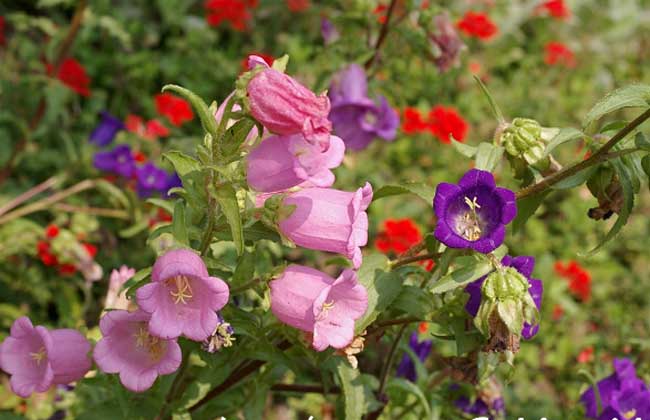
Bellflower, also known as clock flower, tile-tube flower, bellflower, etc., is an annual, biennial or perennial herbaceous plant of the genus Campanula in the family Campanulaceae. It is suitable for use as flowerbed and flower border material in small courtyard gardens, mainly used as potted flowers, and can also be used in open ground for flower borders. It is suitable for use as flowerbed and flower border material in small courtyard gardens. Let's take a look below at how to grow bellflowers!
Bellflower Growth Habits
Bellflowers are native to the North Temperate Zone, the Mediterranean region and tropical mountainous areas, and there are many cultivated ornamental species. They require an environment that is warm in winter and cool in summer, with sufficient light and good ventilation. They are not tolerant of dry heat, and their cold hardiness is not strong. They prefer deep, fertile, well-drained neutral soil, and can also grow normally in slightly alkaline soil.
Bellflower Propagation Methods
1. Bellflowers are mainly propagated by sowing. The seeds are very small, so the soil covering should not be too thick. The suitable germination temperature is 20-24°C. After flowering, they form capsules containing many seeds. The seeds are extremely small and can be dried in the sun for storage. In spring or late winter to early spring, sow with insulation in a plastic tunnel. They can also be sown in autumn. Generally, seedlings sown in autumn of the same year need to be cultivated until the following spring and summer before they can bloom.
2. According to the requirements for small seeds, the soil should be prepared carefully. Deeply plow and break up the soil more than 2 times, scrape the ground level, and water thoroughly. Then scatter the seeds evenly. After sowing, do not cover with soil again, or cover thinly with sieved fine soil. During the seedling stage, use a sprayer to spray water, and thin out or fill in seedlings according to the growth of the seedlings. The seeds can also be sown with insulation in a sand tray, and compound fertilizer can be applied once seedlings emerge.
3. When bellflower seedlings are about 10 cm tall, transplant them to the nursery field or pot them for final planting. For planting in the nursery field, a spacing of 20x40 cm is more suitable. After transplanting, water thoroughly to settle the roots, and then follow general management.
4. Bellflowers can also be propagated by division or cuttings. Division is mostly carried out in autumn. After being cultivated for one winter, they can bloom the following year. For cuttings, mostly in spring, pick new shoots sprouting from the base and insert them into a wet sand bed, spraying frequently to maintain moisture. After rooting, transplant them.
Bellflower Cultivation Methods
1. Soil: Bellflowers prefer loose, fertile and well-drained loam.
2. Watering: Before the radicle appears, bellflowers should maintain a relatively high relative humidity, and the substrate should also be relatively moist. If necessary, cover the new seedlings with a layer of coarse vermiculite to retain moisture.
3. Sunlight: Bellflowers prefer long-day conditions. With 14 hours of sunlight per day, they can bloom naturally. If you want to advance the flowering period, you only need to treat them with 4 hours of interrupted darkness for 30 days.
4. Fertilizing: If you want bellflower seedlings to grow quickly, you can apply 30 to 50 PPM calcium nitrogen fertilizer, and then apply calcium fertilizer on that basis to make them grow quickly.
5. Pests and diseases: Common diseases of bellflowers are powdery mildew, leaf spot and rust, which can be sprayed with 50% carbendazim wettable powder diluted 1500 times. Pests are mainly aphids and thrips, which can be killed by spraying with 40% omethoate emulsifiable concentrate diluted 1500 times.
6. Pruning: Bellflowers do not need growth regulation or pinching treatment. During early growth, the appearance of bellflowers is messy, but in later growth they will naturally adjust to be neat and compact, so no special pruning or regulation is needed.