How to Grow Gemstone Plants? Detailed Guide to Cultivation Methods and Precautions
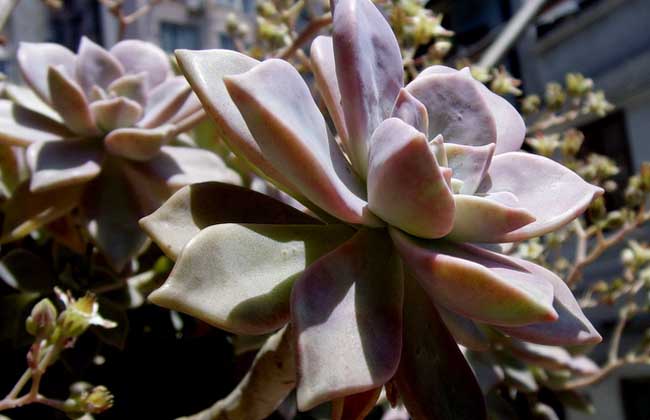
Gemstone plant is a general term for a class of succulents, commonly referring to rosette-shaped succulents such as Pachyphytum oviferum (Moonstones), Echeveria 'Hercules', Graptopetalum paraguayense (Ghost Plant), Echeveria 'Black Prince', and Pachyphytum 'Amethystinum'. Their thick, fleshy leaves are shaped like gemstones, with multiple branches of overlapping leaves clustered together. The rosette-shaped leaf disc resembles a blooming lotus, which is how they got their name. They have a unique form and are easy to care for, making them very suitable for home cultivation.
Growth Habits of Gemstone Plants
Gemstone plants prefer warm, dry, and well-ventilated environments. They enjoy sunlight and sandy loam rich in humus, but can also adapt to poor soil. They are extremely drought-tolerant and can survive several weeks without watering because each leaf acts like a small reservoir, storing water for use during droughts. They are also cold-tolerant, shade-tolerant, and tolerant of stuffy indoor environments, with very strong adaptability. In winter, the temperature should not drop below 10°C. Plants kept in shaded areas for long periods tend to become leggy with sparse leaves. South of the Yangtze River, they can be grown outdoors.
Propagation Methods for Gemstone Plants
1. Leaf cuttings: Lay complete mature leaves flat on moist sandy soil, with the leaf surface facing up and the back facing down. No need to cover with soil. Place in a cool, shaded area. After about 10 days, small leaf clusters and new roots will grow from the base of the leaf. Bury the roots in the soil. Afterward, let it get plenty of sunlight, water and fertilize appropriately, and it will gradually grow into a robust new plant.
2. Stem cuttings: Single leaves, offshoots, or top cuttings can be used. The length of the cutting is not limited, but the cut end must dry before removing the lower leaves and inserting into a sand bed. Roots generally form after about 20 days. The cutting medium should not be too wet, otherwise the cut end is prone to yellowing and rotting. When roots reach 2-3 cm, pot them up. Leaf cuttings can also be used.
Cultivation Methods for Gemstone Plants
1. Soil: Gemstone plant potting soil should be loose, fertile, and have good drainage and aeration. You can use half leaf mold or peat soil and half coarse sand or vermiculite, mixed with a small amount of bone meal or other calcium-rich materials. Since the soil is moist, newly planted specimens do not need much water. Keep it semi-dry to help the root system recover.
2. Temperature: Gemstone plants prefer warm, humid, and semi-shaded growing conditions. The optimal growing temperature is 20-30°C, and the overwintering temperature is 15°C. In winter, if the nighttime temperature is not below 5°C and the daytime temperature is above 15°C, the plant can continue to grow, and normal watering and appropriate fertilization can be applied. If watering is controlled to induce dormancy, it can also tolerate temperatures as low as 0°C.
3. Light: During high summer temperatures and cold winters, gemstone plants are in a dormant state. The main growing season is in the cooler spring and autumn. During the growing season, they require ample sunlight. Insufficient light can cause the plant to become loose and untidy, affecting its ornamental value. Plants grown in sufficient light have thick, plump leaves, a compact form, and beautiful leaf color.
4. Watering: Water gemstone plants according to the principle of "don't water until dry, water thoroughly when you do." Avoid prolonged waterlogging to prevent root rot, but do not let them get too dry either, otherwise the plant won't die but will grow slowly, with dull leaf color and a lack of vitality. During high summer temperatures, leaf water evaporation is high, and water demand is greater. If lacking water, leaves easily wilt, so mist the leaves frequently while keeping the environment humid, but be sure to avoid water accumulating in the pot, which can cause root rot.
Precautions for Gemstone Plants
1. When cultivating gemstone plants, be careful never to overwater, otherwise they are prone to rot. Especially in winter under low-temperature conditions, excessive moisture can easily cause root rot, turning the plant into one without roots.
2. Gemstone plants need fertilization, but do not over-fertilize, otherwise it will also cause leggy growth of stems and leaves. During the growing season, place the pot in a well-ventilated, well-lit location. In winter, bring indoors to keep warm, with a room temperature of around 10°C, and provide ample light.
Ornamental Value of Gemstone Plants
1. Gemstone plants are common succulents with rosette-arranged leaves that are thick and plump like jade, with elegant posture and a shape like a lotus in a pond, offering high ornamental value. Potted plants are excellent for indoor green decoration, and they can also be planted in the ground for flower border accents.
2. Gemstone plants have a unique form, resembling a lotus pedestal carved from jade, luxurious and elegant, evergreen throughout the four seasons, and are deeply loved by everyone. In tropical and subtropical regions, they can be planted in the open ground or used as accents at flower bed edges and in rock crevices. In the north, they are grown in pots for ornamentation and are excellent plant materials for decorating coffee tables in living rooms, studies, and other spaces.
Four-Season Care for Gemstone Plants
1. Spring: In early spring, when temperatures are low, gemstone plants are in a semi-dormant state, so watering should be strictly controlled, keeping the potting soil on the dry side to completely dry. When spring temperatures stabilize above 10°C, repot, which can also be done in September-October. Use loose, well-draining sandy loam for the potting soil. After mixing, it is best to sterilize the soil with high heat before use, or sun-dry it to kill bacteria. Generally repot once every 2 years. Ensure ample light. During the peak growing season, apply a small amount of fertilizer. During rainy weather, reduce watering frequency.
2. Summer: Gemstone plants tolerate high temperatures and intense sunlight, but too much light can cause leaves to age and affect ornamental value. Therefore, during hot weather, place them on a balcony or windowsill that receives morning and evening sunlight. When temperatures are high, growth slows, so control watering to prevent root rot from high heat and humidity. After temperatures cool in late summer, move them into the light and increase watering.
3. Autumn: In autumn, gemstone plants are suitable for placement on east-, south-, and west-facing balconies. After temperatures cool, stop fertilizing. As the weather gradually cools, gradually reduce watering, keeping the potting soil on the dry side to completely dry, until dormancy. When temperatures drop to around 5°C, protect against frost damage.
4. Winter: Gemstone plants are not cold-tolerant. In winter, the balcony temperature should be kept above 5°C. At this time, gemstone plants are in a semi-dormant state, so watering should be strictly controlled, keeping the potting soil on the dry side to completely dry, and ensuring ample light. When the balcony temperature is above 10°C, they can grow slowly, and appropriate watering should be applied.
Pest Control for Gemstone Plants
1. When few plants are affected, use a bamboo strip or a soft brush to scrape or brush off adult insects, or use tweezers to remove and kill the insects, but do not damage the leaf surface. You can also combine this with pruning by cutting off heavily infested parts and burning them.
2. During the hot, humid summer season, strengthen ventilation, control watering, reduce air humidity, and maintain appropriate dryness.
3. During the newly hatched nymph stage, use clean water or a 70-100x dilution of neutral laundry detergent to wash off and kill the insects.
4. During the newly hatched nymph stage, spray with a 1000x dilution of 40% omethoate emulsifiable concentrate, or an 80-100x dilution of Jiemanling, once every 7 days, for 2-3 consecutive sprays.
5. During the infestation period, bury 15% aldicarb granules in the potting soil, applying 1-2 grams per pot (15 cm diameter). You can also bury 3% carbofuran, applying 3 grams per pot (15 cm diameter). Alternatively, drench the root zone with a 2000x dilution of 40% omethoate emulsifiable concentrate, applying 50-100 milliliters per pot (15 cm diameter).