How to grow Venus flytraps best? Master these care techniques
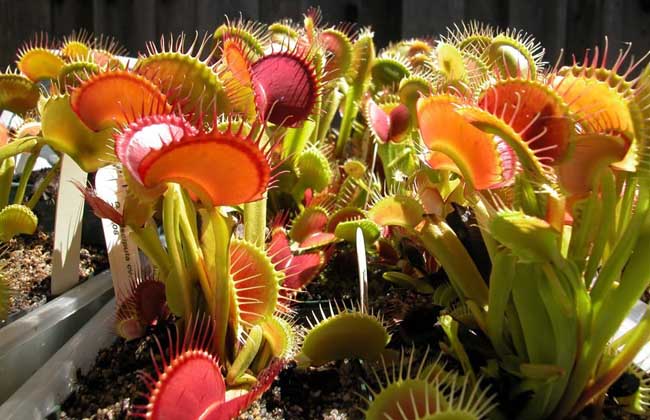
The Venus flytrap is a perennial herbaceous plant native to North America, a very interesting carnivorous plant with a very short stem, and at the tip of each leaf grows a trap that resembles a "shell" and can secrete nectar. When a small insect intrudes, it can clamp it shut at extremely fast speed and digest and absorb it. Let's take a look below at how to grow Venus flytraps best!
Growth habits of the Venus flytrap
The Venus flytrap prefers a cool, moist environment and needs sufficient light during the growing season. The suitable growth temperature is 15-20°C, and indoors it should be placed in a brightly lit spot. In summer, when temperatures are high, direct sunlight leads to poor growth, so shading should be provided; especially in the tropical and subtropical regions of the south, excessive temperatures must be prevented so as not to affect growth. In winter in northern regions, it should be brought into a greenhouse or into the home of a household with heating, placed in a spot that receives sunlight, with the temperature kept above 10°C and never below 7°C, so as to avoid frost damage that causes leaf drop.
Asexual propagation of the Venus flytrap
1. Leaf cuttings: Peel a whole leaf off the mother plant, insert it obliquely or lay it flat on a clean substrate such as sphagnum moss, keep humidity high and light bright, and in about 2 months buds can grow.
2. Division: The Venus flytrap often grows side shoots. When they grow large enough, the divided bulbs will naturally separate from the mother plant; at this point you can dig them out and grow them separately, or separate and plant them when repotting.
3. Flower bud method: The flower bud of the Venus flytrap sometimes turns into a plant. It is already known that this phenomenon is caused by temperature differences; if the day-night temperature difference is very large, it will induce the flower bud of the Venus flytrap to transform into a new plant. At this point you can cut off this small plant and plant it in soil, and it becomes another new Venus flytrap.
Seed propagation of the Venus flytrap
1. Flower pot: Fill the flower pot with substrate, then place it in a glass jar or water basin containing pure water, so that the substrate absorbs water until the surface is moist, then use a spray bottle to mist the surface (spray in mist form).
2. Sowing: Carefully open the seed packaging, evenly scatter the seeds on the substrate surface, and cover with 0.3 cm of potting soil.
3. Spraying water: Use a spray bottle to mist the surface (spray in mist form), spraying carefully so the seeds are not washed away.
4. Cultivation: Place the flower pot with the sown seeds together with the glass jar or water basin on the inner side of a sunny windowsill. If it is a water basin, add a plastic cover with an opening at the top to retain moisture. Take care to replenish water in time; generally they sprout in about 10 days (at 20 degrees).
5. Seedlings: When the seedlings grow 2-3 true leaves, they can be transplanted. For transplanting, use sphagnum moss to wrap the base of the plant (not too high; wrapping the roots is sufficient), with a certain firmness (when pinched with a finger, it should give way and then spring back to shape). After transplanting, water thoroughly with clean water to settle the roots.
How to grow the Venus flytrap
1. Substrate: Growing Venus flytraps requires a substrate with good water retention that is acidic or even strongly acidic, with a pH between 3 and 5. You can use pure sphagnum moss or a mixed substrate of 2 parts peat plus 1 part perlite or coarse sand; for the tray method of growing, a mix of 1 part peat and 1 part perlite or coarse sand can be used. When planting, bury the white bulb portion entirely in the substrate. If the leaves curve downward and make it hard to work, you can wrap sphagnum moss around the stem for easier insertion, or lift the leaves upward before inserting. The substrate can generally be changed once every one or two years according to actual use; repotting before growth begins in early spring is best. When repotting, clean away the dead leaves thoroughly, and if there are divisions they should be planted separately to promote growth. The Venus flytrap bulb grows in a creeping manner, and after a period of time the plant will shift position in order to obtain more nutrients. When repotting, replant it in the center of the pot or leave more distance in the direction of the growth point.
2. Water: The Venus flytrap is relatively sensitive to salt; if the mineral concentration in the water is too high, the plant will decline and eventually die, showing as the plant stopping growth or becoming smaller, and non-aged traps, leaf edges, and terminal buds beginning to wither. Therefore water with low mineral content must be used. The Venus flytrap likes moisture and cannot tolerate dryness. During the growing season the substrate must maintain relatively high humidity but must not be waterlogged. In addition to daily watering, you can also use the low-water-level tray method for growing. The substrate absolutely must not dry out completely; after drying out, the plant shrivels, causing serious damage or even death. During dormancy the substrate needs to remain moist but not wet; if too wet, the plant easily rots.
3. Humidity: The air humidity for Venus flytraps should be kept above 50%. A general growing environment can satisfy this, and no special humidification is needed as long as the potting soil is moist. However, newly planted Venus flytraps must maintain high humidity to avoid dehydration and shriveling; after the roots are established and the plant begins normal growth, gradually lower the air humidity.
4. Temperature: The suitable growth temperature is 20-30 degrees, and it can survive at -7 to 38 degrees. High summer temperatures (maximum temperature exceeding 35 degrees) easily cause stem rot; good ventilation in the environment, cooling of the roots, good light, and a large day-night temperature difference all help reduce the occurrence of disease. When the winter temperature is below 10 degrees, it will go dormant; during dormancy most leaves wither, leaving only a very small dormant leaf in the center. If the temperature drops further to around 0 degrees, then the leaves and roots may all wither, leaving only the underground bulb to overwinter. The dormant bulb is relatively cold-resistant and can withstand short periods of low temperature down to -7 degrees.
5. Light: The Venus flytrap is a light-loving plant and can accept full sun. Suitable light can make the plant strong, with larger traps and vivid colors. But in summer, to avoid high temperatures, appropriate shading can be used; you can shade with a shade net of about 50% shading rate or place it in a bright spot that does not get sun around midday. Insufficient light will make the plant weak and small, grow slowly, with dark green thin tender leaves and small traps; traps or leaf stalks that are normally red turn green (in this case, do not immediately provide strong light, lest sunburn occur from not being adapted to strong light; instead, gradually increase light).
6. Nutrients: During the growing season, a general-purpose compound fertilizer diluted five thousand times can be sprayed on the foliage, 1-2 times per month. When fertilizing, it is better to apply thin fertilizer frequently; never use too high a concentration, to avoid the serious consequences of fertilizer burn or even fertilizer death. If you have no experience, do not fertilize at will. You can also use the feeding method, feeding insects or fresh lean meat, and the size must be appropriate, preferably about 1/3 the size of the trap, so the trap can completely enclose the food. The number of traps fed must not exceed 1/3 of the total number of traps. But even if you do not fertilize or feed, the Venus flytrap will not "starve to death"; the substrate also contains necessary nutrients, and the plant must also obtain growth through photosynthesis. Feeding cannot replace photosynthesis either, and good light must still be maintained.
7. Pests and diseases: In summer, when it is stuffy, hot, and humid, leaf spot disease and stem rot easily occur, and a broad-spectrum fungicide can be sprayed for prevention and control. Good ventilation in the environment, cooling of the roots, good light, and a large day-night temperature difference all help reduce the occurrence of disease. If part of the stem is found to have already rotted, immediately remove the rotted part thoroughly, then soak it in fungicide for 5 minutes, and plant it into a sterilized clean substrate.