You do not need to cover everything when caring for roses - just do these 8 things well
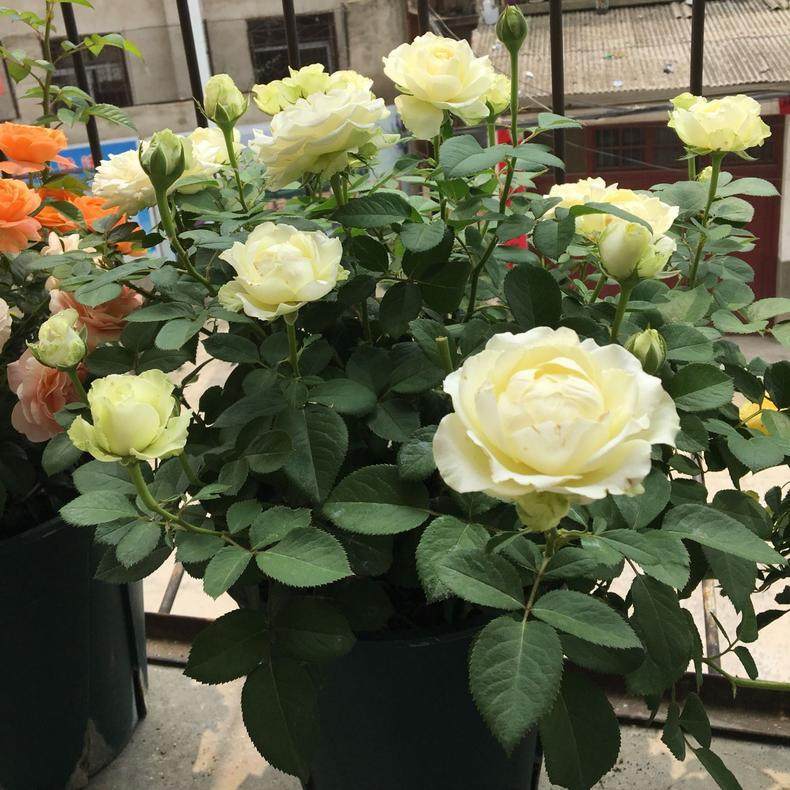
For many flower lovers, roses are a very attractive flowering plant. As long as they bloom, you will quickly be drawn in by their bright flowers. So, regarding growing roses, we have already talked about many techniques before. Flower lovers cannot "cover everything", but the following 8 points must be done well.
1. Maintain good temperature conditions
18°C to 25°C during the day and 10°C to 15°C at night are the most suitable conditions for rose flower growth. Above 30°C, growth becomes poor. The summer flowers that everyone has long complained about are caused by temperatures that are too high. We can lower the temperature artificially, such as with shading, shade nets, and heat insulation. These methods all work, and watering more is also a big help. Spraying water on the leaves can lower the temperature through transpiration at the same time, but remember that this can only be done in the morning and evening.
2. Maintain good light conditions
The importance of light is self-evident. For roses, light should not be less than six hours per day to help them carry out photosynthesis and accumulate nutrients. Some enclosed balconies that cannot meet the conditions can use flower stands, flower stools, and so on, or be moved outside in time to get some sun.
3. Supply enough nutrients
Nutrition must keep up whether during the flowering period or the growth period. Only by giving enough energy accumulation during the growth period can there be a continuous supply during the flowering period. Likewise, replenishment after the flowering period is especially important. The general recommendation is that during the growth period, use an organic liquid fertilizer specially for roses every 7 days, diluted 500 times, and pour it at the roots once; before flowering, it can be combined with spraying a 0.2% potassium dihydrogen phosphate solution, and after flowering, rose organic liquid fertilizer should also be used for topdressing.
4. Remove overly dense rose buds
In spring, overly dense young buds should be removed in time. Keep 2 to 3 strong buds on each main branch. From the beginning of spring until winter dormancy, carry out bud removal at any time to avoid excessive consumption of nutrients, so as to benefit flowering during the flowering period.
5. Remove flower buds in time
For many rose varieties with larger flowers and side buds, the side buds should be thinned in time after budding. After the side buds are removed, nutrients can be supplied in a concentrated way to the main bud, so the rose flowers will not keep getting smaller and smaller.
6. Prune spent flowers
In addition, it is also necessary to frequently cut off dead branches, diseased branches, weak branches, and inner branches to avoid these branches taking up nutrients and affecting flower bud formation. During the flowering period, those about to wither can also be cut off and kept for flower arranging, or making dried flowers is also a good choice. Cutting off spent flowers can also help those unopened buds by directing more nutrients to them. The next flowers will naturally bloom fully and will no longer have problems because of nutrition.
7. Prune branches
Branches must be pruned regularly. Some plants look lush and full of branches, but in the end they are all an empty frame, with only a few flowers blooming, and some even have none at all. So do not feel sorry for these branches. Prune boldly. Only by giving something up can you gain something.
8. Choose a suitable pot
The size of the pot is also very important. Change pots regularly so the plant has a more ample environment to grow in. Burying some base fertilizer at the same time as repotting is also extremely beneficial. Flower lovers should be reminded that in the high temperatures of summer, ceramic pots gather heat, so some methods may not work. You can switch to plastic pots or other materials.
When growing roses, as long as you can satisfy the environmental conditions for their growth, they can bloom continuously and maintain their variety characteristics, with large flowers and bright colors. If the living conditions they require are not available, their normal growth will be affected, so the flowers will keep getting smaller and smaller, or even fail to bloom. Therefore, if you cannot cover everything, then just do the above 8 points well.