Is Plectranthus amboinicus (Cuban oregano) toxic? An article to help you understand its toxicity
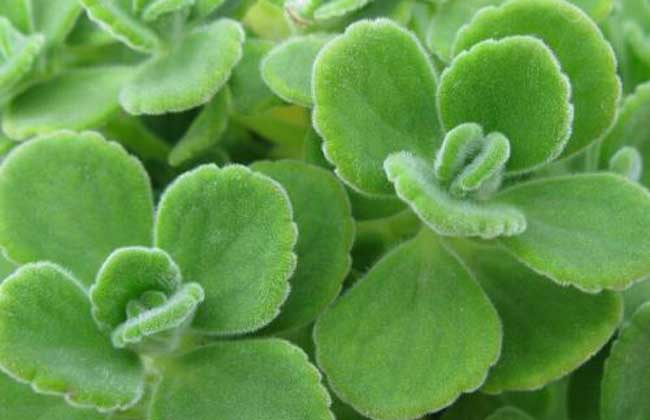
Plectranthus amboinicus, also known as Yimo Xiang, Chuliu Xiang (Chu Liuxiang), and velvet-scented Plectranthus, is a subshrub-like perennial herbaceous plant in the genus Plectranthus of the Lamiaceae family. It enjoys the elegant name "Pengpeng Xiang" (Touch-Me Fragrance) because it releases a pleasant aroma when touched, and is also known as "Apple Scent" because its fragrance is rich and sweet, much like the smell of apples. Now let us take a look at whether Plectranthus amboinicus is toxic!
Is Plectranthus amboinicus toxic?
Plectranthus amboinicus is not toxic. The fragrant green cellular substance of the plant is non-toxic and harmless, and it can be eaten. The leaves make a surprisingly fragrant and inviting tea and wine, and can also be used in cooking, soups, stir-fries, and cold dishes. Blended into juice with honey and eaten raw, it soothes sore throats; brewed as a tea, it relieves bloating and colds; mashed and applied externally, it reduces inflammation and swelling and can care for the skin.
Why Plectranthus amboinicus releases fragrance
The reason Plectranthus amboinicus releases its fragrance is similar to the principle behind the mimosa's "shyness." When the leaves are stimulated by touch, the water within the cells reacts, causing the turgor pressure of the pulvinus to change. Under the effect of turgor pressure, the leaves of Plectranthus amboinicus do not contract; instead, the stomata inside used for air exchange expand, and an easily volatile substance with an apple-like scent diffuses through the stomata into the air. In fact, Plectranthus amboinicus normally also releases a faint fragrance, but this scent is too light to be easily noticed. When its leaves are touched, the fragrance becomes stronger (and remains on the hands), which is why people feel it becomes fragrant as soon as it is touched.
How to grow Plectranthus amboinicus
1. Soil: Plectranthus amboinicus prefers loose, well-drained soil.
2. Sunlight: Plectranthus amboinicus likes sunlight. Only in an environment with sufficient sunlight will its fleshy leaves be thick; with insufficient light, the leaves become flat and thin.
3. Temperature: Plectranthus amboinicus tolerates shade but fears cold, and needs to be cultivated in a greenhouse. It does not tolerate waterlogging, prefers warmth, and cannot withstand cold. In winter it needs a temperature of 5-10°C.
4. Watering: Plectranthus amboinicus does not tolerate moisture, but when too wet it easily rots at the roots and dies. The soil should be allowed to dry out between waterings. On cloudy days, watering and fertilizing should be reduced or stopped. After summer, be sure to water less; in winter, watering must be controlled even more. Generally, water only when the leaves have wilted, otherwise the plant easily becomes leggy.
5. Pruning: Because Plectranthus amboinicus branches very easily and grows along a horizontal plane, the spacing between plants and rows should be wide when planting so that the branches and leaves can spread out. Moderate pruning can promote branching and make growth robust.
6. Fertilizing: It does not tolerate heavy fertilization; once a month during the growing season is enough. Use mainly phosphorus and potassium fertilizers, and apply less nitrogen fertilizer.