How to Grow Pennywort? Detailed Guide to Cultivation Methods and Precautions
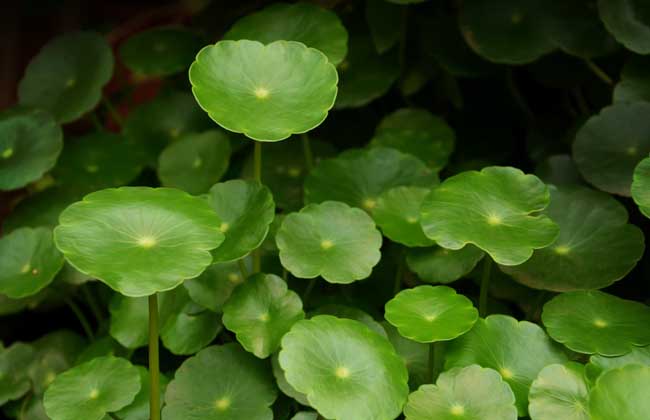
Pennywort, also known as South American pennywort, coin grass, round coin grass, shield-leaved pennywort, money lotus, and so on, is a perennial herbaceous plant in the Apiaceae family. The plant has a trailing habit and very strong spreading ability, making it an excellent ground cover plant. Its shape resembles both a copper coin and small lotus leaves. It is one of the most beautiful and easy-to-grow aquatic plants. Let's take a look at the cultivation methods and precautions for pennywort!
Growth Habits of Pennywort
Pennywort is native to Europe and is now widely distributed in tropical and subtropical regions of the world. In China, it is mainly distributed in the provinces south of the Yangtze River. It prefers warm and humid conditions, and is best cultivated in partial sun or shaded locations, avoiding direct sunlight. It is not particular about soil, but soft, well-draining soil is best, or it can be grown directly in water. The optimal water temperature is 22-28 degrees. It is shade-tolerant, moisture-tolerant, slightly drought-tolerant, highly adaptable, robust by nature, easy to plant, and fast to propagate. It can grow both in water and on land.
Propagation Methods for Pennywort
Pennywort is mainly propagated by division or cuttings, mostly carried out from March to May each year. It is easy to cultivate; keep the soil moist, and roots will develop in about 1-2 weeks. Seeding can also be used for propagation. For the growing medium, a mixed substrate of leaf mold, river mud, and garden soil can be used, with a volume ratio of 0.5:2:2. It is moisture-tolerant and an emergent-type plant, so it is also suitable for cultivation in water basins and ponds. If grown in water, be sure to change the water weekly and add a specialized liquid fertilizer for foliage plants.
Cultivation Methods for Pennywort
1. Soil: Pennywort is not strict about soil requirements. It can grow in yellow soil, red soil, or black soil, and even in poor soil. However, its drought resistance is not strong, and it grows best in fine, slightly acidic, moist, low-fertility loam. It is suitable for fertile, loose soil with high water absorption and good water retention, and can also be cultivated in moist riverbanks, swamps, grasslands, or low-hardness freshwater. The growing medium can be a mix of leaf mold, river mud, and garden soil in a ratio of 5:2:2.
2. Fertilizing: Pennywort has a relatively high demand for fertilizer. During the vigorous growth stage, apply fertilizer every 2-3 weeks. If grown in pots or containers, only a small amount of fertilizer is needed. A quick-acting fertilizer such as Hyponex No. 2 can maintain its effectiveness in water for a longer period, ensuring the water quality is slightly acidic or neutral.
3. Watering: Pennywort prefers a relatively moist growing environment. Because it has many leaves and a high transpiration rate, in summer it should be sprayed with water frequently to maintain high air humidity, and the leaves should be kept clean to facilitate photosynthesis. In winter, the potting soil should be kept on the drier side. Follow the principle of preferring moist over dry when watering, and avoid waterlogging, which can easily cause root rot. Tap water in northern regions should be left in the sun for 1-2 days before use. During the growing season, water once every 2-3 days to keep the potting soil moist. For water cultivation, change the water once every 7-10 days in spring and summer, and once every half month in autumn and winter. If grown in water, be sure to change the water once a week and add a specialized liquid fertilizer for foliage plants. If using soil cultivation, be sure to retain water long-term. Water once every morning, but do not overwater; water until it flows out of the drainage holes at the bottom, ensuring the potting soil is thoroughly moistened.
4. Temperature: Pennywort prefers warm and humid environments but is not cold-tolerant. It grows well at temperatures of 10-25°C. When summer temperatures rise above 32°C, it stops growing. In winter, the temperature must not drop below 5°C.
5. Light: Pennywort is shade-tolerant, and partial sun or shaded locations are best. Avoid strong direct sunlight. The more shaded the environment, the more likely the leaves will rot. Pennywort does not compete for light, but if it receives 4-6 hours of scattered light daily, or 8-10 hours of artificial light, it will grow even better.
6. Disease Prevention: Pennywort has very few pests and diseases. It has strong adaptability and requires no special care. After growing for some time, pennywort will fill the entire container. Frequently spray water on the leaf surface to clean the leaves and keep them green and glossy. After dense growth, pay attention to ventilation, otherwise the plant is prone to yellowing.
Precautions for Growing Pennywort
1. Pennywort prefers warmth and high temperatures, with 80% sunlight being ideal. Insufficient light or excessive shading will cause the stems to become leggy and the leaves to yellow and rot. Use a medium with good water retention and keep it moist at all times. The amphibious pennywort is commonly found in aquatic ponds, wetlands, and similar spaces, and is also well-suited for water trays and aquariums.
2. Pennywort generally does not require extensive pruning. When the leaves become too dense, promptly remove withered bottom leaves and outer old and diseased leaves to improve light and ventilation conditions. In spring, when the pot is full of roots, repot and divide and reshape the plant. If the plant grows too tall, prune it down to encourage new shoots from the base of the stems and leaves.
3. Pennywort, which loves sunlight and water, can be grown hydroponically, in soil, or in a semi-water semi-soil setup. Its round leaves are very cute and it is very easy to grow. In short, you can grow it however you like. It does not compete for fertilizer but loves light and water. As long as it has sufficient light and water, it will be full of vitality.
4. Pennywort does not need a very large pot. A relatively large bowl can also be used, and a narcissus pot works too. When planting, it can be planted flat. Cover the rhizomes so they are not visible, but be careful not to plant too deep. Then place it in a semi-shaded area for a week and wait for new leaves to grow before exposing it to sunlight.
5. Pennywort sometimes develops yellowing leaves, mainly caused by the following reasons, which should be avoided as much as possible. First, the potting soil is waterlogged or too dry for a long time, failing to water when the soil is dry. Second, the roots have been damaged by frost in winter. Third, in spring, it is moved outdoors too eagerly, and pennywort cannot adapt to the sudden climate change. Fourth, it is kept in a poorly ventilated environment for a long time. Fifth, the leaves have not been sprayed and cleaned for a long time, accumulating dust and hindering photosynthesis.
6. If new leaves are found to be generally yellowing, spray a compound fertilizer primarily containing nitrogen on the leaf surface. If water moss appears on the roots or in the water, immediately clean and change the water, otherwise it will be harmful to plant growth and affect its ornamental value. Pay attention to whether the water in the container is sufficient to avoid drying out.
Handling Pennywort Flowering
Pennywort is often grown as a foliage plant, but it also blooms. However, the flowers have a slightly faint foul odor. How to deal with pennywort flowering mainly depends on the grower's own preference. Here we provide a brief analysis for reference. If you want to keep the flowers, just let them grow; if not, simply cut them off when they appear. Flowering consumes nutrients. When there are more and more flowers, nutrients are consumed and the leaves begin to yellow. It is mainly appreciated as a foliage plant, and the flowers are not attractive and have a somewhat stinky smell. Of course, pennywort can produce seeds, but compared to division, seed germination rates are low and the growth cycle is long.
Uses of Growing Pennywort
1. Ornamental Value: Pennywort has distinct nodes, one after another, with each node bearing a leaf, and it can extend continuously. Its underground creeping stems grow at an astonishing rate, spreading wherever they reach. It is one of the most beautiful and easy-to-grow aquatic plants.
2. Landscaping: Pennywort has round, shield-shaped leaves like a copper coin, with long petioles and wavy margins. It produces small yellow-green flowers in summer and autumn. Pennywort is simple to cultivate and manage, with an attractive plant shape and jade-green leaves that are very pleasing to look at. It is currently one of the most popular aquatic plants among gardening enthusiasts and is widely praised. This plant can be potted outdoors in warm regions and is suitable for water trays, aquariums, ponds, wetlands, and indoor water landscaping. When grown in aquariums, it is often used as a foreground plant.
3. Feng Shui Significance: Pennywort can be used for indoor water landscaping and can purify water quality. Its green leaves can also purify indoor air, so it is beneficial to the indoor environment. Furthermore, in Chinese culture, which emphasizes symbolism and homophones, pennywort's round leaves resemble mini lotus leaves, looking quite cute, like ancient copper coins, symbolizing reunion and continuous good fortune. Moreover, its name incorporates the characters for "copper" and "coin," giving it a naturally different symbolic meaning. Having pennywort at home is believed to bring rolling wealth, so it is regarded as a symbol of wealth.
4. Medicinal Uses: Pennywort can also be used as a medicinal herb to dispel wind, firm the intestines, improve eyesight, clear summer heat, clear heat and remove dampness, detoxify, and promote urination.
Hydroponic Cultivation of Pennywort
1. Water Quality: Pennywort actually has no specific requirements for water quality; ordinary water is sufficient, but river water is best because it is relatively rich in organic matter. Generally, the water only needs to be changed about once a week, and when changing, roughly half the container should be replaced. In winter, it is a bit different; change only one-third of the water.
2. Water and Fertilizer: Pennywort synthesizes its own nutrients. If growing hydroponically, it is recommended to fertilize sparingly. However, during the early growth stage, hydroponic fertilizer can be used, adding some hydroponic nutrient solution, but be careful not to make it too concentrated.
3. Light: If pennywort is grown hydroponically, its sunlight requirements are still relatively demanding. Generally, at least half a day of sunlight is needed. If growing in a greenhouse, it is recommended to use fluorescent lights to ensure 5 hours of light per day.
4. Pests: Generally, no insects will grow on the leaves. However, since it is grown in water, there is no guarantee that some aquatic pests will not appear in the water, so it is recommended to remove them promptly.
5. Temperature: Because of pennywort's original growing environment, the most suitable temperature is 20°C. Since it is hydroponic, it will generally be fine as long as the temperature does not drop below 10°C. But it should not be too high or too low, because that will inhibit its growth.
Growing Pennywort from Seed
1. Obtaining Seeds: You can purchase them from reputable online stores or flower markets, or receive them from other gardening enthusiasts.
2. Seeds need to be exposed to air. If clay pellets and stones are placed too early during hydroponic cultivation, the seeds will more or less fall beneath the stones and will be very difficult to germinate. So, it is generally recommended to first find a bottle cap (a beverage bottle cap will do), then prepare some sun-exposed tap water, plastic wrap, and a small rubber band, and everything is ready.
3. If purchased from an online store or flower market, when you open the seed package, you will find that the seeds are wrapped in a green powder coating. Do not blindly crush it; that is really not the seed shell. Pour the seeds into the bottle cap, but do not pour them all at once, to prevent failure and keep a backup for next time. Pour in a small amount of water, just enough to dissolve the green coating, then cover with plastic wrap.
4. Place the prepared bottle cap in a dark place and wait 2-4 days. You will see that some seeds have already cracked open, and some may even show white roots. Every evening, remove the plastic wrap to let the seeds breathe, which prevents root rot.
5. When the white roots reach 4-6 mm, they can be exposed to sunlight. However, it is best to do so between 8-9 o'clock to avoid sunburn. If not exposed to sunlight, the leaves will not easily grow out.
6. When the seeds germinate to the point of about to shed their shells, they can be potted. Place clay pellets or small stones into a cup, put the small sprouts in, gently fix the roots with the clay pellets or small stones, and add water. It is best to pour water along the edge of the cup, otherwise the fixed seedlings will be washed away. Pour water until it just touches the roots.
7. Expose them to sunlight every day, avoid strong winds, add water as needed, and if necessary add a little hydroponic nutrient solution, and the seedlings will grow vigorously.