Detailed Explanation of Cypress Pest and Disease Control Techniques and Methods
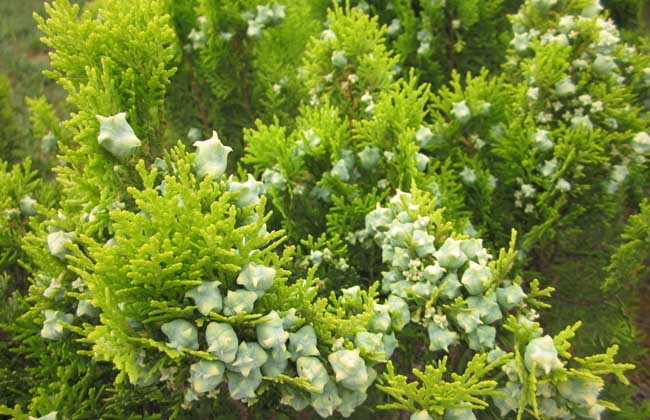
Cypress is a general term for plants of the cypress family. Cypress includes multiple genera such as Platycladus (Chinese arborvitae), Sabina (Chinese juniper), Chamaecyparis (false cypress), and Chamaecyparis pisifera (sawara cypress). It is widely distributed in China, from Inner Mongolia and Jilin in the north to Guangdong and northern Guangxi in the south, and its cultivated range covers almost the entire country. It is an excellent landscaping tree species. Let us take a look at cypress pest and disease control techniques below!
Platycladus orientalis (Chinese arborvitae) giant aphid
1. Utilize natural enemies: such as the seven-spot ladybird, the harlequin ladybird, the sunbeam wasp, the aphidid wasp, the large hoverfly, green lacewings, and aphid hoverflies. When the infestation is not severe in spring, avoid spraying pesticides as much as possible; instead, spray clean water to wash off the aphids, so as to protect the reproduction and development of natural enemies later on.
2. Chemical control: When the infestation is severe, spray 25% acetamiprid water-dispersible granules or 20% imidacloprid concentrated soluble concentrate at 5000 times dilution. There are about 20 generations per year, the body size is relatively large, and it causes damage year-round. For control, you can spray 1.2% nicotine-tobacco oil emulsifiable concentrate at 1000-1500 times dilution, or spray 10% imidacloprid wettable powder at 2000 times dilution.
Platycladus orientalis (Chinese arborvitae) red spider mite
1. When it does not affect tree growth and ornamental value, you can spray clean water to wash them off, or spray 0.1-0.3 degree lime sulfur mixture to wash them off.
2. Evenly scatter the granules at the bottom of the trench, then cover with soil and water thoroughly. Alternatively, in curved trenches (or open basins), irrigate with 100 times dilution of 40% omethoate emulsifiable concentrate, applying 2-3 kg per cm of trunk diameter; after it seeps in, seal the basin. The efficacy lasts a long time, the effect is good, and it does not pollute the air or harm natural enemies. For spraying, use 800 times dilution of 20% dicofol emulsifiable concentrate or 2000 times dilution of 73% propargite emulsifiable concentrate and other acaricides. When spraying, be sure to seize the early outbreak period, spray evenly, and strive to spray once in early May and once in early October each year, which can basically control the mite damage.
Platycladus orientalis (Chinese arborvitae) leaf blight
1. In autumn and winter, sweep up diseased leaves under the trees and burn them to eliminate the source of infection. Eliminate overwintering pathogens and reduce the first infection.
2. From May to August, spray 1:1:100 Bordeaux mixture once every two weeks for prevention. Pay special attention to strictly controlling initial infection. If an initial infection center is found, blockade it to prevent spread.
3. Overly dense cypress forests should be appropriately thinned to improve ventilation and light penetration within the forest and reduce conditions for disease development.
Platycladus orientalis (Chinese arborvitae) leaf blight (Pestalotiopsis)
1. Prune moderately to improve the growing environment of Platycladus orientalis and reduce sources of infection.
2. Apply more fertilizer to promote growth.
3. During the peak period of ascospore release, spray 40% carbendazim, or 40% carbendazim, or 40% chlorothalonil at 500 times dilution for control.
4. Select disease-resistant varieties.
Platycladus orientalis (Chinese arborvitae) caterpillar
1. Agricultural control: Strengthen forest management, prune and fell in a timely and appropriate manner. During the overwintering period of this pest, girdle the bark, gather and burn it, and during major outbreaks of larvae, manual collection can be carried out.
2. Physical control: Based on the phototaxis of adults, set up black light traps to kill adults.
3. Biological control: This pest has many natural enemies. When the population is not large, try not to use chemical control, and pay attention to protecting natural enemies, such as releasing parasitic wasps.
4. Chemical control: When larval density is high, treat early. Use aircraft for low-volume spraying of 25% chlorbenzuron No. 3 to control larvae, using 23-45 grams per mu, with a spray volume of 10.5 kg, and the control effect can reach 98%. Aerial control should be carried out under sunny conditions with wind force below level 3. For manual spraying of 25% chlorbenzuron No. 3 at 1:1500 dilution to control larvae, the effect can reach over 90%. Generally, control should be carried out during the 2nd to 4th instar stages, and a small amount of pyrethroid pesticides can be added as needed.
Semiannotatus borer (double-striped fir longhorn beetle)
1. Strengthen management: ① Deeply dig and loosen the soil, dig trenches and press green manure, apply farmyard manure to promote rapid growth of seedlings and enhance tree vigor. ② In winter, thin the forest, remove pest-infested trees, weakened trees, suppressed trees, etc., so that stand density is appropriate, ventilation and light penetration are good, trees grow vigorously, and resistance to pests is enhanced. ③ In summer, promptly cut down dead trees and wind-broken trees, remove root-collar sprouts, clear branches and twigs in the forest, and maintain forest hygiene.
2. Manual capture: ① Before overwintering adults leave to become active, in forest land where pests occurred the previous year, brush tree trunks below 2 m with whitewash to prevent adults from laying eggs. ② During the period when overwintering adults leave to become active and mate, capture adults in the forest. ③ At places where newly hatched larvae cause damage, use a small knife to scrape open the bark and search for and kill the larvae. You can also use a wooden mallet to strike resin-flowing spots to kill newly hatched larvae.
3. Chemical control: ① In the adult stage, in forest areas with high pest density and high canopy density, dichlorvos smoke agents can be used for fumigation. ② In the newly hatched larval stage, use 100 times dilution of 6% wettable benzene hexachloride, 50% methyl omethoate emulsifiable concentrate, 20% dimethoate emulsifiable concentrate, 20% trichlorfon emulsifiable concentrate, or 25% chlordimeform aqueous solution, or a mixture of 1 part 8% dichlorvos and 9 parts No. 1 oil (diesel or kerosene), and spray tree trunks below 3 m until wet or focus spraying on resin-flowing spots. The effect is very good.
4. Utilize natural enemies: During the larval and pupal stages of the double-striped fir longhorn beetle, there are many natural enemies such as braconid wasps, bethylid wasps, red-headed braconid wasps, and white-bellied braconid wasps, which should be protected and utilized.