Cypress Bonsai Making Methods and Detailed Steps
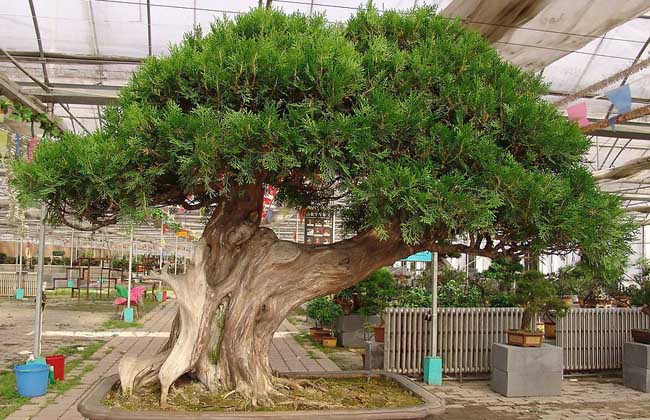
Cypress is a general term for plants of the cypress category, including Platycladus, Sabina (Chinese juniper), Chamaecyparis, and Chamaecyparis pisifera, among other genera. It is widely distributed in China, from Inner Mongolia and Jilin in the north to Guangdong and northern Guangxi in the south, and its cultivated range covers almost the entire country. It is an excellent landscaping tree species and is also suitable for making bonsai. Let's take a look together at the methods for making cypress bonsai!
Growth Habits
Cypress belongs to the division Gymnospermae (naked-seed plants) and is mainly distributed across the Northern and Southern Hemispheres. It prefers light, but seedlings and young trees have some shade tolerance. It generally grows on the shady side of mountains, is relatively cold-hardy, and has poor wind resistance. It tolerates drought and prefers moisture, but does not tolerate waterlogging. It tolerates poor soil and can grow in soils ranging from slightly acidic to slightly alkaline. It generally grows relatively fast in the juvenile and young stages, grows at a moderate to somewhat slow rate after maturity, and old trees grow even more slowly.
Material Selection
1. The sources of cypress bonsai material: one is the sowing method, starting from seedlings for cultivation and shaping. Since young seedlings tolerate transplanting and are easy to shape, they can be gradually worked on and shaped according to design requirements. Although it takes a long time, the bonsai produced is relatively ideal. Another method is digging from the wild.
2. In nature, some old cypress stumps, after years of wind and rain, lightning strikes, and damage by animals or humans, form bizarre and varied shapes. Some are broken, some are hollow, some have exposed roots, and some have dead trunks. These are all ideal materials for making bonsai. Cypress has a well-developed root system, especially abundant fibrous roots. When digging, the main root can first be cut, keeping the fibrous roots. The above-ground part should have the branches and trunk shortened, and the messy branches and foliage clustered on the branches and trunk, as well as long stalks and parallel branches, should be cut off beforehand, taking care to retain dead trunks.
3. Because cypress grows relatively slowly, as many branches as possible should be retained. The best digging time is after early winter and before early spring before bud break. When transplanting, a soil ball should be carried to protect the root system. When it is impossible to carry a soil ball, every effort should be made to keep the fibrous roots intact, and measures such as spraying water and shading should be used. It should be potted as soon as possible to reduce the time out of soil. Bare-root transplanting can be done during the rainy season.
Assessing the Tree and Determining the Style
1. Cypress does not fear severe cold; even when struck by snow and frozen, it remains green as usual, hence the praise of "evergreen pine and cypress." In making cypress bonsai, the characteristics of vigor, uprightness, and majestic momentum are often emphasized. Some ancient cypresses have bark that has already split, or are hollow, yet still have luxuriant branches and leaves and undiminished majesty. Such ancient cypresses can be made into the deadwood style.
2. Some trunks naturally lean, and the bark is mottled with a strong air of antiquity, so they can be made into the slanting-trunk style, and depending on the condition of the branches and trunk, a single trunk or double trunk can be determined.
3. Some ancient cypresses grow on cliffs, in mountain ravines, or in rock crevices, with the trunk bending greatly from the root collar, like a waterfall plunging straight down with magnificent momentum, and can be made into the cascade style.
4. Some cypress stumps have branches and trunks that coil and twist, bending left and spiraling right, with a momentum like a swimming dragon, with peculiar and natural forms, and can be made into the lying-trunk style or the coiled-trunk style. Some have root systems that are exposed or suspended, with old roots crisscrossing, and can be made into the exposed-root style bonsai. In short, based on the natural form of the cypress stump, one should follow its posture, capture its spirit, and highlight its inner character.
Pruning and Shaping
1. Because cypress grows slowly, heavy pruning is generally not done. The method of mainly cultivation combined with pruning adjustment is mostly used, so that it has a natural manner while not being stiff or rigid.
2. Old cypress stumps have the characteristic of spiral twisting, with a natural rhythm and unique grace. Therefore, the shaping of cypress stumps does not use the spiral-wrapping method, so that the trunk forms spiral vertical cracks, presenting elegant arc-shaped curves.
3. Some tree stumps have branches and roots that are withered, decayed, or eroded. One can guide the situation along its tendency, shape it according to its type, and appropriately carry out artificial carving, achieving an effect that follows nature yet surpasses nature.
4. Newly dug tree stumps have relatively messy and long branches. For overly dense branches, retain the drooping branches and the branches at the lower part of the crown, suppress strong branches, make the structure of the main trunk and side branches compact with natural distribution, and traditional binding and hanging-pulling techniques can be used to work according to natural growth patterns.