A Detailed Guide to Platycladus orientalis Planting Techniques and Cultivation Management Methods
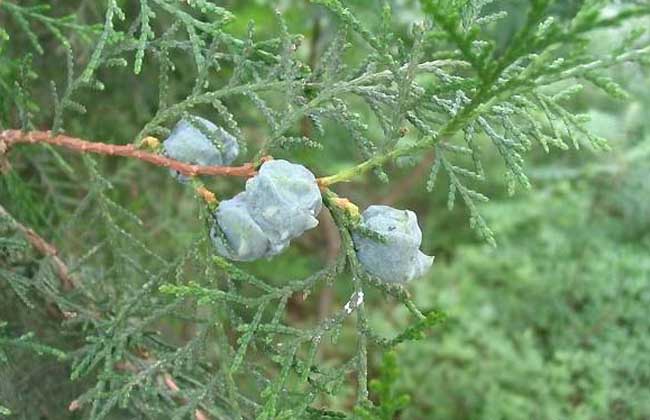
Platycladus orientalis (Chinese arborvitae) is a type of cypress and a specialty of China. It is distributed throughout the country except Qinghai and **, has a very long lifespan, and is often used as a tree species for afforestation on sunny slopes. It is also a common garden landscaping tree species. Its wood can be used for construction and furniture, its leaves and branches are used in medicine and can astringe and stop bleeding, promote urination and strengthen the stomach, and remove toxins and dissipate blood stasis. Its seeds have the effect of calming the nerves and providing nourishment and strengthening. Let us now take a look at Platycladus orientalis planting techniques!
Platycladus orientalis Planting Value
Platycladus orientalis is a precious timber tree species. Its wood is moderately soft and hard, has a fragrance, is corrosion-resistant, and has a dense, straight grain. It is an excellent material for shipbuilding and docks, and is also widely used in construction, bridges, utility poles, mine props, and railway sleepers. It can also be used to make furniture and as material for carved joinery. At the same time, the tree has a beautiful shape, lush branches and leaves, stays green all year round, has a fragrance, suffers few pests, and has strong adaptability, making it a common landscaping tree species often planted in temples and mausoleums. In addition, the seeds of Platycladus orientalis can be used in medicine and for oil pressing, and can also be used to make spices.
Platycladus orientalis Planting Environment
1. Growth habits: Platycladus orientalis is light-loving, slightly shade-tolerant when young, and highly adaptable. It is not demanding about soil and can grow in acidic, neutral, calcareous, and mildly saline-alkaline soils. It is drought-tolerant and tolerant of barren conditions, has strong sprouting ability, moderate cold resistance, tolerates strong sunlight, tolerates high temperatures, and has a shallow root system. It grows well below an altitude of 400 m. Its wind resistance is relatively weak. It has a shallow root system, but its lateral roots are well developed, its sprouting ability is strong, it tolerates pruning, and it has a long lifespan. It resists smoke and dust and harmful gases such as sulfur dioxide and hydrogen chloride.
2. Origin and distribution: Platycladus orientalis is distributed in Liaoning, Sichuan, Ningxia, Hubei, Henan, Shaanxi, Qinghai, Gansu, Inner Mongolia, Yunnan, Shandong, Hebei, Beijing, Tianjin, Shanxi, and other places in China. Its vertical distribution varies by location: in Jilin Province it is distributed below an altitude of 250 m, in Huashan it is distributed in areas at an altitude of 1000-1200 m, and in Shaanxi and Yunnan it is distributed in areas at altitudes of about 1500 m and 2600 m respectively.
Platycladus orientalis Planting Techniques
1. Woodland selection: Platycladus orientalis is not demanding about soil and can grow normally in various types of rock or soil. However, it is not tolerant of waterlogging and has relatively low wind resistance, so it is not suitable for planting in waterlogged low-lying land, mountain areas at wind gaps, or sites with relatively high wind speeds.
2. Afforestation density: Platycladus orientalis grows slowly during the first 100 years, has a narrow crown, and its root system is also relatively shallow, so canopy closure takes a very long time. Therefore, in order to promote canopy closure, the initial planting density is 5000-6000 plants/hectare, and later thinning is carried out according to canopy closure conditions.
3. Mixed tree species: Because Platycladus orientalis grows slowly and has a narrow crown, weeds are likely to grow in the woodland. To inhibit weed growth, it is often mixed during afforestation with arbor tree species such as Chinese pine, Acer truncatum, and black locust, or with shrub species such as amorpha, sea buckthorn, and Elaeagnus.
4. Careful site preparation: In the afforestation process of Platycladus orientalis, careful site preparation is an important guarantee for improving afforestation survival rate and preservation rate. Platycladus orientalis afforestation usually selects dry and barren mountain land, so site preparation methods usually include fish-scale pit site preparation, horizontal ditch site preparation, and horizontal terrace site preparation. It is best to carry out site preparation 1 season in advance.
5. Afforestation techniques: Platycladus orientalis afforestation can be carried out in spring, or in the rainy season or autumn. Severe cold and dry winter is not suitable for afforestation. Afforestation seedlings usually use 1- to 3-year-old bare-root seedlings, 1- to 2-year-old container seedlings, and 2- to 3-year-old transplanted seedlings. Afforestation methods commonly include direct seeding afforestation, seedling planting afforestation, and container seedling afforestation. Large seedling afforestation can also be used, but large seedling afforestation requires multiple transplantings to cultivate a well-developed root system.
6. Management and protection of young forests: First, loosening the soil and weeding, which can use manual weeding and chemical weeding. Second, overwintering cold protection, which can use soil covering and grass covering for cold protection, and whitewashing for cold protection. Third, agroforestry intercropping. Because Platycladus orientalis grows slowly and has a narrow crown, after planting it can be intercropped with crops to increase the value of land use.