A Detailed Guide to Cypress Planting Techniques and Care Management Methods
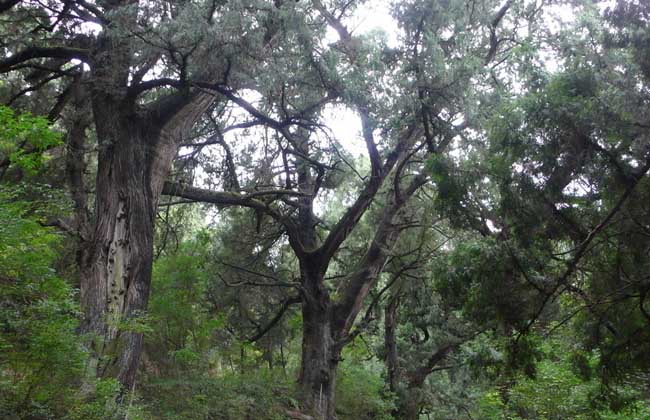
Cypress is a general term for plants of the cypress group; cypress includes multiple genera such as Platycladus, Sabina (juniper), Chamaecyparis, and Thujopsis. Its cultivated range covers almost the entire country, and it is an excellent landscaping tree species. Every part is valuable: the resin, tree oil, fruit, twigs, leaves, seeds, roots, and bark can all be used medicinally, giving it high planting value. Let us take a look at cypress planting techniques together below!
Ecological Habits of Cypress
Cypress belongs to the phylum Gymnospermae and is mainly distributed across the Northern and Southern Hemispheres. It is light-loving, but seedlings and young trees have some shade tolerance. It generally grows on the shady side of mountains, is relatively cold-resistant, has poor wind resistance, is drought-tolerant, prefers moisture but does not tolerate waterlogging, and tolerates poor soil. It can grow in soils ranging from slightly acidic to slightly alkaline.
Cypress Propagation Methods
Cypress seeds can be stored for about 2 years. They are generally harvested in November, dried in the sun for storage, and must be strictly protected from moisture. In spring, soak the seeds in warm water at 50-55°C for about 1 hour before sowing, and they will germinate after 2 weeks. Sow in drills or in holes, or broadcast sow. The nursery bed should first be leveled and irrigated; when the surface soil is slightly dry, sow in holes, or after irrigation, wait for the water to seep down and then broadcast sow, then cover with soil. Autumn sowing is also possible, with seedlings emerging the following spring.
Cypress Planting Techniques
When planting, choose smaller seedlings; generally the seedlings should not be taller than 1.5 m. When planting, bury them deep, water sparingly, and use a wooden stake to support the main stem. Water once more after a week, and remove the wooden stake after a month. The first leaves produced by cypress are needle-like leaves, later scale-like leaves appear, and after 2 years all are scale-like leaves. Generally, growth is faster in the juvenile and young stages, medium to somewhat slow after maturity, and even slower in old trees.
Cypress Pest and Disease Control
1. Platycladus aphid (Cinara tujafilina)
① Use natural enemies: such as the seven-spot ladybird, the harlequin ladybird, the sunfly, Aphytis wasps, the large grey hoverfly, green lacewings, and hoverflies. When infestations in spring are not severe, try not to spray chemicals; you can spray clean water to wash off the aphids, so as to protect the reproduction and development of natural enemies later on.
② Chemical control: when the infestation is severe, spray 25% thiamethoxam water-dispersible granules or 20% acetamiprid soluble concentrate at 5000 times dilution. About 20 generations occur each year; the body is relatively large, and it damages throughout the year. For control, spray 1.2% nicotine-matrine emulsifiable concentrate at 1000-1500 times dilution, or spray 10% imidacloprid wettable powder at 2000 times dilution.
2. Platycladus red spider mite
① When tree growth and ornamental value are not affected, spray clean water to wash them off, or spray lime-sulfur mixture at 0.1-0.3 degrees Baumé to wash them off.
② Evenly scatter the granules at the bottom of the trench, then cover with soil and water thoroughly. Alternatively, in curved trenches (or around the base of the tree), irrigate with 100 times dilution of 40% omethoate emulsifiable concentrate, applying 2-3 kg per cm of trunk diameter; after it seeps in, seal the base. The effective period is long, the effect is good, and it does not pollute the air or harm natural enemies. For spraying, use acaricides such as 800 times dilution of 20% dicofol emulsifiable concentrate or 2000 times dilution of 73% propargite emulsifiable concentrate. When spraying, be sure to seize the early stage of occurrence, spray evenly, and strive to spray once in early May and once in early October each year, which can basically control the mite damage.
3. Platycladus leaf blight
① In autumn and winter, sweep up diseased leaves under the trees and burn them to eliminate the source of infection. Destroy the overwintering pathogens and reduce the first infection.
② From May to August, spray Bordeaux mixture at 1:1:100 once every two weeks for prevention. Pay special attention to strictly controlling primary infection; when initial infection centers are found, block them off to prevent spread.
③ Overly dense cypress stands should be properly thinned to improve ventilation and light penetration within the stand and reduce conditions favorable to disease.
4. Platycladus caterpillar
① Agricultural control: strengthen forest management, prune and fell in a timely and appropriate manner, ring-bark the trees during the pest's overwintering period and burn the bark in a centralized manner, and hand-collect the larvae when outbreaks occur.
② Physical control: based on the adult's phototaxis, set up black-light lamps to trap and kill adults.
③ Biological control: this pest has many kinds of natural enemies. When the population is not large, try not to use chemical control; pay attention to protecting natural enemies, such as releasing parasitic wasps.
④ Chemical control: when larval density is high, treat early. Use aircraft low-volume spraying of 25% chlorbenzuron No. 3 to control larvae, using 23-45 g of pesticide per mu, with a spray volume of 10.5 kg; the control effect can reach 98%. Aerial control should be carried out on sunny days with wind force below grade 3. For manual spraying of 25% chlorbenzuron No. 3 at 1:1500 dilution to control larvae, the effect can reach over 90%. Generally, control should be carried out during the 2nd to 4th instars, and a small amount of pyrethroid pesticides can be added as needed.