A Detailed Guide to the Growing Environment and Planting Conditions of Four-Leaf Clover
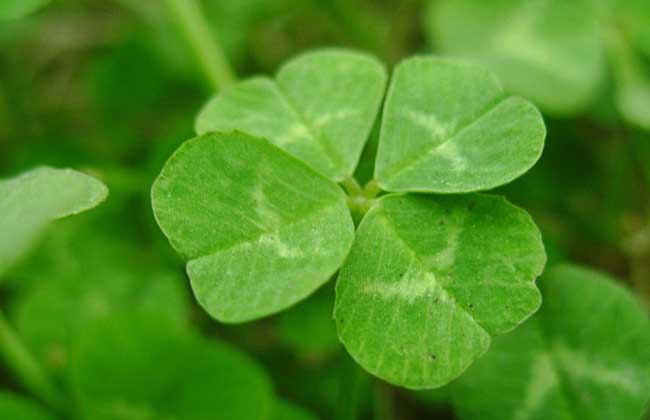
Four-leaf clover is a rare variant of plants in the genus Trifolium (clover). It is rich in protein and minerals, cold-resistant and heat-tolerant, and can adapt to both acidic and alkaline soils. It can be used as green manure, a protective grass species for embankments, lawn decoration, as well as a nectar source and medicinal material. Let us take a look at the growing environment of four-leaf clover below!
The Growing Environment of Four-Leaf Clover
Four-leaf clover is not demanding about soil and can adapt to various soil types, growing well in slightly acidic soil. It prefers warm, sunny conditions with good drainage. Under drought conditions it grows slowly, and in high-temperature seasons some plants may die back. It is tolerant of pruning and trampling, with strong regeneration ability; within 10 days after pruning, new small leaves can grow. After high-intensity trampling or rolling, it can recover in 3 to 5 days. It has strong cold resistance; when the temperature drops to 0°C, some old leaves turn yellow and withered, the small leaves on the main root cling close to the ground and stop growing, but they remain green. Under strong shading it tends to grow leggy, resulting in poor growth. It has strong resistance to harmful gas pollution and to pests and diseases.
The Geographic Distribution of Four-Leaf Clover
1. Global distribution: Four-leaf clover is native to Europe and North Africa and is cultivated worldwide. The countries that have bred the most forage grass varieties include Australia, New Zealand, the United Kingdom, Denmark and the Netherlands. Breeders in other countries such as Sweden, Germany, the United States, France, Italy, Canada and Poland have also bred many famous varieties.
2. Domestic distribution: In China, four-leaf clover is mainly distributed in temperate to tropical regions, and appears semi-wild in moist grasslands, riverbanks and roadsides. Wild species and cultivated species are distributed from Mengla County in Yunnan in the south to Shangzhi County in Heilongjiang in the north. There are about 10 or more wild species and species or varieties introduced and promoted for large-scale planting, and more than 200 species or cultivated varieties have been introduced for trial planting. In Yunnan Province alone, 14 species and 162 varieties have been introduced and cultivated.
The Planting Value of Four-Leaf Clover
1. Economic value: Four-leaf clover is widely distributed and highly adaptable. It is not only excellent feed for livestock, but also a good preceding crop for agricultural crops, as well as an excellent low-growing crop for orchard ground cover. It is also used for soil and water conservation, as a nectar source, for medicinal purposes, as green manure, as a lawn ground-cover plant, and as an excellent soil-improving crop. Since it was successfully introduced for trial planting in the Kunming area in the 1970s, it has been promoted and applied over large areas, producing good economic, social and ecological benefits, and is suitable for large-scale artificial planting.
2. Medicinal value: Four-leaf clover tastes sour and sweet, is cool in nature, and has the effects of clearing heat and draining dampness, and of detoxifying and reducing swelling. It is mainly used for colds with fever, enteritis, urinary tract infections, urinary tract stones, neurasthenia and other conditions. For external use, it treats traumatic injuries, venomous snake bites, carbuncles, swellings and sores, athlete's foot, eczema, burns and scalds, and other conditions.