What are the cultivation values of clover? A detailed introduction
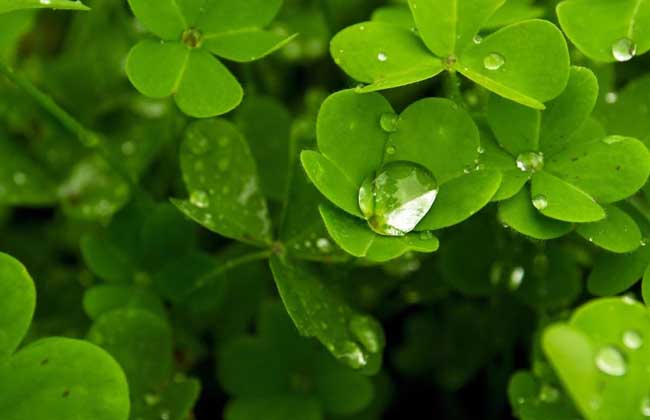
Clover (the four-leaf clover is a rare variant of clover) is a general term for various herbaceous plants that have trifoliate palmate compound leaves. It is native to Europe and North Africa and is cultivated throughout the world. In China, it is mainly distributed in temperate to tropical regions, and grows semi-wild in moist grasslands, riverbanks and roadsides. Let us take a look at the cultivation value of clover!
Economic value
Clover is widely distributed and highly adaptable. It is not only an excellent feed for livestock, but also a good preceding crop for agricultural crops, as well as an excellent low-growing crop for orchard ground cover. It is also used for soil and water conservation, as a nectar source, for medicinal purposes, as green manure, as a lawn ground cover plant and as an excellent soil-building crop. Since it was introduced to the Kunming area in the 1970s and successfully trial-planted, it has been promoted and applied over large areas, producing good economic, social and ecological benefits, and is suitable for large-scale artificial planting.
Medicinal value
Clover tastes sour and sweet, is cool in nature, and has the effects of clearing heat and draining dampness, and detoxifying and reducing swelling. It is mainly used for colds with fever, enteritis, urinary tract infections, urinary tract stones, neurasthenia and other conditions. For external use, it treats bruises, venomous snake bites, carbuncles, swellings and sores, athlete's foot, eczema, burns and scalds and other conditions.
Improving soil
Clover can increase soil organic matter and help build soil fertility. Because clover has a large growth volume and high biological yield, generally about 3000 kg per mu, when it naturally dies in summer or is cut and turned into the soil, it plays a significant role in improving the soil fertility of newly built orchards and increasing the soil organic matter of old orchards.
Soil cover
Clover can lower summer soil temperature. When the soil temperature reaches 35°C, the absorption capacity of fruit tree roots declines markedly. When clover grows well, it can reduce the ground temperature by about 6-8°C in summer, which is beneficial to the normal growth of fruit tree roots.
Drought resistance and moisture conservation
Clover can stabilize the air humidity in orchards, which is beneficial to fruit tree growth in summer, effectively promotes normal fruit expansion, reduces fruit cracking and fruit drop, and achieves high quality and high yield of fruit trees.
Preventing erosion
Clover can maintain good soil structure. Due to the good covering effect of clover, it can effectively avoid the erosion and deposition of soil by rainwater, maintain good soil structure, and is beneficial to the activity of soil microorganisms and the metabolism of fruit tree roots, as well as the decomposition of various fertilizers and the degradation of harmful substances.