How to propagate four-leaf clovers? A detailed explanation of common propagation methods
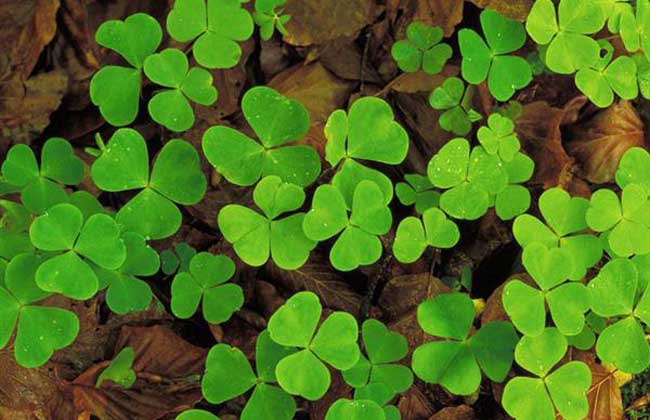
The four-leaf clover is an annual herbaceous plant with a once-a-year cycle, withering between July and September each year. White clover has seeds that can grow into new young plants in a suitable environment, but the four-leaf clover has no seeds and can only be found among 10 million ordinary three-leaf clovers. Let's take a look below at the propagation methods of the four-leaf clover!
Four-leaf clover propagation methods
The four-leaf clover is mainly propagated by division. Divide the plant in spring when repotting, splitting the mother plant into several clumps, planting them in pots, and placing them in a damp, shaded environment where they readily survive.
Four-leaf clover growing environment
The four-leaf clover is not demanding about soil and can adapt to various soil types, growing well in slightly acidic soil. It prefers warm, sunny conditions with good drainage. Under drought conditions growth is slow, and in hot seasons some plants die back. It tolerates pruning and trampling and has strong regeneration ability; within 10 days after pruning it can grow new small leaves. After heavy trampling or rolling it can recover in 3 to 5 days. It is highly cold-tolerant; when the temperature drops to 0°C, some old leaves turn yellow and the small leaves on the main root cling close to the ground and stop growing, but they remain green. Under heavy shade it tends to grow leggy, resulting in poor growth. It has strong resistance to harmful gas pollution and to pests and diseases.
Four-leaf clover planting and management
1. Fertilizer and water management: The four-leaf clover has relatively high requirements for soil moisture. Where irrigation is available, irrigate when the soil is dry or together with topdressing. In mixed-sowing grassland, because the forage grasses grow at different rates in early and late stages, competition for light, water and nutrients may cause uncoordinated growth, or excessive nitrogen application may inhibit growth. In such cases, apply more phosphorus and potassium fertilizer and use grazing to adjust growth, controlling the growth of grass-family forage so that it is not inhibited or lost from the mixed-sowing grassland.
2. Winter management: In winter, when temperatures are not high, potted four-leaf clovers grow slowly. Wrap the pot in the transparent cellophane used by florists to wrap flowers, wrapping it just like a bouquet with the top left open; or find a transparent plastic bag large enough to hold the pot. This is equivalent to putting the pot in a greenhouse. Opening the bag at noon each day to let in some air is enough. This refers to growing conditions where the temperature is below 5-8 degrees.
3. Disease control: The main diseases of the four-leaf clover are anthracnose and leaf spot, which can be controlled by spraying a 1000-fold dilution of 70% thiophanate-methyl wettable powder. Where indoor ventilation is poor, stems and leaves are prone to scale insect damage, which can be killed by spraying a 1000-fold dilution of 40% omethoate emulsifiable concentrate.