How do you grow Cymbidium orchids so they thrive?
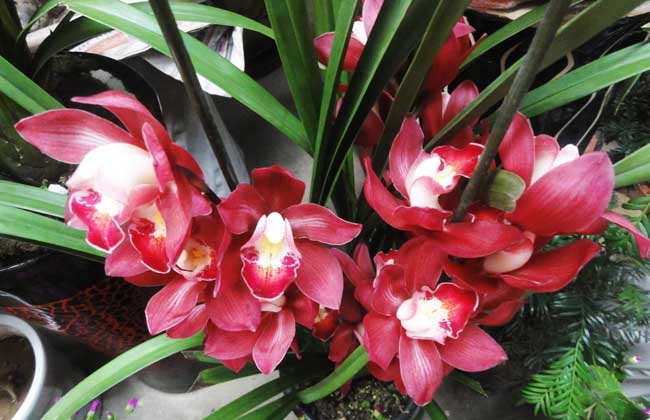
Cymbidium orchids are also known as Himbidian orchids, cicada orchids, Simbidium orchids, etc. They are a collective name for varieties in the Cymbidium genus that have been developed through artificial hybridization, with brilliant colors and large flowers. There are currently nearly 20,000 cultivated varieties, and they are very popular in domestic and international markets, making them a huge variety group among orchids. Now let us take a look at how to grow Cymbidium orchids!
Cymbidium orchid propagation methods
Cymbidium orchids often use the division propagation method. The division time is mostly after the plant blooms and before the new shoots have grown large, during this short dormant period. Before division, the plant should be appropriately dried until the roots are slightly white and soft. Vigorous plants are usually divided once every 2 to 3 years. After division, each cluster of orchid seedlings should carry 2 to 3 pseudobulbs, one of which must have been newly formed in the previous year.
How do you grow Cymbidium orchids?
1. Soil: Cymbidium orchids require a loose, breathable, well-drained growing medium. Leaf mold soil can be used for planting, or a mixture of moss, charcoal chips, fern roots, charcoal, bark chunks, crushed bricks, etc. Ordinary potting soil and potting soil for growing Chinese orchids are not suitable. Soil with poor aeration and drainage will cause root rot.
2. Watering: Cymbidium orchids like relatively high air humidity. In spring, summer, and autumn, while giving the roots sufficient water, the leaves should also be misted frequently. But in early spring after flowering, during the short dormant period of Cymbidium orchids, watering must be reduced, and only when the new shoots have grown larger new roots can more water be given.
3. Sunlight: Cymbidium orchids need sufficient scattered light for growth. In summer and autumn, a shade net should be used to provide about 50% shade. On cloudy days or in winter and spring when the sunlight is soft, the shade net should be opened to receive direct light. However, during the flowering period, the orchid plant should be placed in a location with weaker light so that its flowers are bright and beautiful.
4. Temperature: They like warm winters and cool summers, with an optimal growth temperature of 10°C to 25°C. The nighttime temperature is best at around 10°C, especially during the flowering period. Maintaining the temperature above 5°C and below 15°C can extend the flowering period by more than 3 months.
5. Fertilizing: During the growing period, apply light fertilizer frequently. Dilute chemical fertilizer or compound fertilizer can be applied as a top dressing. If more bone meal or decomposed soybean cake fertilizer is applied, the flowers can be larger and more numerous. Liquid fertilizer should be diluted at 1:1000 and applied once every 10 days. Sufficient fertilizer should be applied before flowering, and no fertilizer should be applied during the flowering period or in the hottest summer season.
6. Pests and diseases: If the growing environment is poor, Cymbidium orchids are prone to pest and disease damage. Common diseases include Fusarium disease, black rot, soft rot, anthracnose, gray mold, southern blight, etc. Therefore, a fungicide should be sprayed once every half month to prevent diseases. Special attention must also be paid to cleaning the environment, water sources, planting materials, and tools.
7. Pruning: The pseudobulbs of Cymbidium orchids generally contain more than 4 leaf buds. In order not to disperse nutrients, the newly grown small buds and their growing points must be completely removed. This operation should begin after the flowering period ends, with buds removed once a month, and stop before the new flowering period, so that nutrients can be concentrated, the mother pseudobulbs can be strengthened, and the flowers can bloom larger and more numerous.
Yellow leaves and scorched edges on Cymbidium orchids
1. Improper watering: Although Cymbidium orchids like moisture, because their potting medium has strong moisture retention and they have fleshy roots, they are relatively tolerant of mild drought. Therefore, it is recommended not to water too much or too frequently. Watering with clean water close to room temperature is sufficient. Do not water with fertilizer solution during the flowering period. Apply fertilizer only after the flowering period ends; otherwise, the flowering period will be shortened, and improper fertilizer use can also cause fertilizer damage. The interval between waterings can be controlled according to room temperature. When watering, pour slowly and gently, not hastily.
2. Improper repotting: The Cymbidium orchids and other New Year flowers currently sold on the market are all repotted into relatively beautiful and elegant porcelain pots. However, during the repotting process, because the pot is a bit larger, some merchants add some flower soil to the pot, but some of this flower soil has not been fully decomposed. After it is repotted and sold, when the organic matter ferments and releases heat, it causes damage to the flowers. The root system is scorched, root rot occurs, and the plant develops yellow leaves or dies. It is recommended to carefully check the flower potting soil to ensure the flowers grow vigorously.
3. Cold air damage: Although Cymbidium orchids are relatively cold-tolerant, they cannot withstand relatively low temperatures. On the way home after purchase, they may be exposed to cold air, causing damage to the leaves or flowers. It does not show at the time, and only after a few days do the symptoms slowly appear. For affected flowers of this type, the yellowed leaves can only be cut off and the plant slowly conditioned, but they generally will not die.
4. Unsuitable micro-environment: Cymbidium orchids are a type of flower that likes relatively high air humidity. If the indoor air humidity is low and the temperature is also on the high side, yellow leaves and scorched edges are very likely to appear. You can mist water several more times each day to increase the humidity of the micro-environment. In addition, if there is direct blowing from an air conditioner or proximity to heating, which easily creates a dry micro-environment, scorched edges and yellow leaves are also very likely to appear. When this phenomenon occurs, it can be addressed by making adjustments. But leaves that have already turned yellow can only be cut off.
5. Too little light: Cymbidium orchids like light but are afraid of strong direct light. Generally, scattered light is best. Too weak light will also cause poor growth and the appearance of some symptoms. Generally, when appreciating them indoors, the placement of the flowers is determined by the indoor location, but at this time attention should also be paid to whether the flowers are suited to the micro-environment of that location.