What plants are suitable for placing on an office desk?
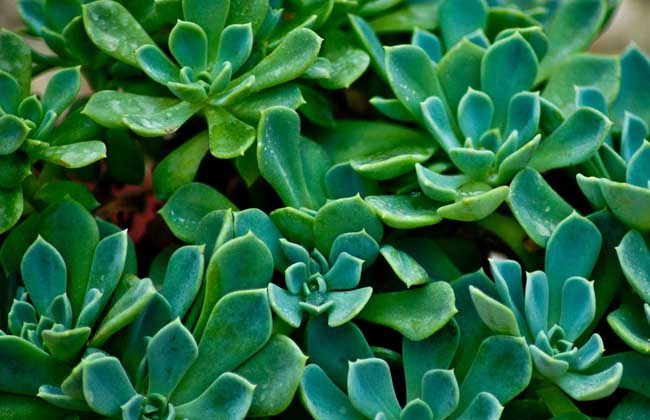
Placing a small potted green plant in a corner of the office desk can regulate one's mental state and relieve the monotony and fatigue brought by work. When choosing a green plant, pay attention to its size, color, and plant shape. The general principle is that the plant shape should be dignified and spreading, with warm colors as the main tone. So what plants are good to put on an office desk? Let's take a look together below!
Cactus
The cactus is a plant of the genus Opuntia, also known as Xianbazhang, Guanyinzhang, Bawang, Huozhang, etc. It often grows in dry environments such as deserts and is called the “hero flower of the desert”. It is a type of succulent plant. Its respiration mostly takes place at night when it is cooler and more humid. During respiration, it absorbs carbon dioxide and releases oxygen. Placing a cactus indoors, especially a hydroponic cactus (because hydroponic cacti are cleaner and more environmentally friendly), can help purify the environment.
Golden barrel cactus
The golden barrel cactus is a general term for plants of the Cactaceae family with a spherical shape. It has many varieties. Its native habitat is mostly desert areas. It likes high temperatures and arid climates. It generally blooms in the early morning or evening, lasting from a few hours to one day. Its stems, leaves, and flowers all have high ornamental value, and it is also an artistic masterpiece among hydroponic flowers. The golden barrel cactus can absorb electromagnetic radiation, is also a natural air freshener, and also has the effect of adsorbing dust and purifying the air.
Spider plant
The spider plant is also known as Chuipencao, Guilan, Diaolan, Lancao, Zhehelan, etc. It is a perennial evergreen herbaceous plant of the genus Chlorophytum in the Liliaceae family. Its branches are slender and drooping. In summer or when temperatures are high in other seasons, it produces small white flowers. The flowers are concentrated at the ends of the drooping branches, with yellow stamens, and the small tender leaves inside are sometimes purple. It can be used for potted ornamental display. It is easy to cultivate and highly adaptable, and is one of the most traditional hanging plants for rooms.
Aloe
Aloe is a perennial evergreen herbaceous plant of the genus Aloe in the Liliaceae family. It is native to the Mediterranean and Africa. Because it is easy to grow and is an ornamental plant with both flowers and leaves, it is quite popular among the public. It is a rising star among plants that combines food, medicinal, cosmetic, and ornamental uses. Its secretions (whose main active ingredients are anthraquinone substances such as aloin) have been widely used in medicine and daily chemicals. In Chinese folk medicine, it has been used as a natural medicine for beauty, hair care, and treating skin diseases. Aloe gel has a certain anti-itch effect on mosquito bites.
Cast iron plant
The cast iron plant is also known as Zhizhubaodan, Dayewannianqing, Zhuyepan, Jiulongpan, Zhujieshenjin, etc. It is a perennial evergreen perennial herbaceous plant of the genus Aspidistra in the Liliaceae family. Its leaves are upright and neat, the leaf color is deep green and glossy, its growth is robust, its adaptability is strong, and it is extremely shade-tolerant. It is an excellent shade-loving foliage plant for indoor greenery decoration and is suitable for placement in homes and offices. It can be enjoyed alone or arranged together with other flowering plants, and it is also a material for foliage in modern flower arrangements.
Ti plant
The ti plant is a shrub plant of the genus Cordyline in the Agavaceae family. Its underground part has well-developed creeping rhizomes and is prone to producing suckers. The main stem is upright, with a stem height of 1-3 m, unbranched or few-branched. The flowers are pale red to blue-purple, sometimes pale yellow. It is distributed in the tropical regions of southern China and is mostly cultivated in gardens as a foliage plant. The ti plant has a beautiful plant shape, magnificent and elegant colors, and good ornamental value. It is also a medicinal plant. Its flowers, leaves, and roots can all be used as medicine. In Guangxi, China, it was once used in folk medicine to treat hemoptysis, hematuria, bacillary dysentery, and other conditions.
Golden pothos
Golden pothos belongs to the large evergreen climbing vine of the genus Epipremnum in the Araceae family. It grows in tropical regions and often climbs on rocks and tree trunks in rainforests. It has strong twining ability and well-developed aerial roots, and can be grown hydroponically. It has an extremely strong air-purifying function and is known as a green purifier. It can convert formaldehyde into substances such as sugar or amino acids during metabolism, and can also decompose and even absorb benzene emitted by copiers and printers.
Snake plant
The snake plant is also known as Hupilan, Jinlan, Qiansuilian, Huweizhang, Huangweilan, Zhangmushed, etc. It is a perennial herbaceous foliage plant of the genus Sansevieria in the Liliaceae family. It has many varieties, and the plant shape and leaf color vary greatly. It has strong adaptability to the environment. The main varieties include golden-edged snake plant, silver-veined snake plant, etc. It is suitable for decorating studies, living rooms, and office spaces, and can be enjoyed for a relatively long time.
Asparagus fern
Asparagus fern is also called Yunpiansong, Citidong, Yunzhu, etc. It can reach several meters in height. It is native to South Africa and is distributed in central China, the northwest, the Yangtze River Basin, and various places in the south. It likes warm, humid, semi-shaded, and ventilated environments. It is not tolerant of severe cold in winter or drought, and in summer it should avoid direct sunlight. Asparagus fern is a highly ornamental plant. It can be placed in living rooms and studies. While purifying the air, it also adds a literary atmosphere. Its roots are used as medicine and can treat acute bronchitis, with the function of moistening the lungs and stopping cough.
Chinese rose
The Chinese rose is called the queen of flowers and is also known as Yueyuehong. It is a semi-evergreen low shrub of the genus Rosa in the Rosaceae family. It blooms in all four seasons, generally red, or pink, occasionally white and yellow. It can be used as an ornamental plant and also as a medicinal plant. China is one of the places of origin of the Chinese rose. Its flowers are elegant and beautiful, with diverse colors, and it blooms in all four seasons. It is deeply loved by people. In China, 52 cities have selected it as their city flower. In May 1985, the Chinese rose was rated as the fifth of China's top ten famous flowers.
Agave
Agave is also known as Longshezhang, Fanma, etc. It is a perennial evergreen large herbaceous plant of the genus Agave in the Agavaceae family. Its leaves are firm and remain green all year round. Its flowers are yellow-green. After flowering, very few bulbils form on the inflorescence. In its place of origin, it generally takes several decades to bloom, and after blooming the mother plant dies. It can only set seed through cross-pollination. It likes well-drained, fertile, and moist sandy loam. It is native to tropical America and is often introduced and cultivated in the provinces and regions of southern and southwestern China.
Ivy
Ivy is a perennial evergreen climbing shrub of the genus Hedera in the Araliaceae family. Its leaf shape is beautiful and it remains green all year round. In various places in the south, it is often used for vertical greening. It is mostly planted beside rockeries and at the base of walls, allowing it to naturally attach and grow vertically or cover the surface, achieving the effect of decorating and beautifying the environment. When potted, small and medium pots are mainly used, and various shapes can be created. It can be displayed indoors and can also be used to cover the walls of indoor gardens, making the indoor garden landscape more natural and beautiful.
Peyote
Peyote is a small, spineless cactus native to southwestern Texas in the United States to Mexico. It mainly grows in the Chihuahuan Desert, Tamaulipas, and San Luis Potosi. Its flesh is soft and its form is peculiar, with very high ornamental value. Putting peyote at home is the best choice. It likes warmth, dryness, and plenty of sunlight, fears waterlogging, is tolerant of drought and semi-shade, and requires a relatively large diurnal temperature difference. It can help you regulate the air better.
Bishop's cap cactus
The bishop's cap cactus is a succulent plant of the genus Astrophytum in the Cactaceae family. It is native to the central part of the Mexican plateau. It has relatively high horticultural value and ornamental value, and is a treasure eagerly collected by botanical gardens and succulent enthusiasts. Because the propagation rate of this type of plant is very low and its variability is relatively great, preserving various horticultural varieties is very difficult. Using tissue culture may be an effective way to solve the propagation and germplasm preservation of various horticultural varieties of Astrophytum and bishop's cap cactus, and it also has the significance of protecting endangered plants.
Mimosa
Mimosa is a perennial herbaceous plant or subshrub of the Fabaceae family. Because its leaves respond to heat and light and close immediately when touched by external force, it is named mimosa. Its flowers, leaves, and pods all have good ornamental effects, and it is relatively easy to keep alive. It is suitable as a potted flower on balconies and indoors (if people eat it or come into excessive contact with mimosa, it can also cause hair loss). It can also be planted in courtyards and other places.
Red camel's foot tree
The red camel's foot tree is also known as Honghua Zijing or Honghua Yangtijia. It is a tree of the genus Bauhinia in the Caesalpiniaceae family. Its crown is elegant and its flowers are large and gorgeous. Its leaf shape resembles the hoof of cattle and sheep and is extremely peculiar. It is an excellent ornamental tree species for tropical and subtropical regions and is suitable as a street tree and shade tree for courtyards and scenery. A single flower lasts 4-5 days, and the flowering period of the whole tree lasts nearly half a year. It is widely cultivated as a street tree in Hong Kong, China. It has five major characteristics: long flowering period, large flowers, beautiful flower shape, bright flower color, and strong fragrance. It has become a symbol of Hong Kong, China.
Zhuangyuan Hong
Zhuangyuan Hong is a famous osmanthus variety. It is an evergreen shrub or small tree of the genus Osmanthus in the Oleaceae family. Its crown is dense, its shape is good, its branching ability is strong, its growth volume is large, its flower diameter is large, its flower quantity is abundant, and its flower color is bright red. Its ornamental value is extremely high. It is very suitable for planting in parks, scenic spots, and residential courtyards, and is also a good material for potted cultivation in northern regions.
Chinese azalea
The Chinese azalea is also known as Huangzhizhu, Huangdujuan, Yangbushicao, Naoyanghua, Jingyanghua, Laohuhua, Yuzhi, etc. It is a deciduous shrub of the genus Rhododendron in the Ericaceae family. It grows on mountain slopes, grasslands, or in shrublands and mixed forests on ridges at an altitude of 1000 m. It is produced in Jiangsu, Anhui, Zhejiang, Jiangxi, Fujian, Henan, Hubei, Hunan, Guangdong, Guangxi, Sichuan, Guizhou, and Yunnan in China. One subspecies is produced in Japan. Its flowers are beautiful and brightly colored, and it also has relatively high Chinese herbal medicinal value. It is one of the famous toxic plants.
Tulip
The tulip is also known as Yanghehua, Caoshexiang, Yuxiang, Helanhua, etc. It is a herbaceous plant of the genus Tulipa in the Liliaceae family. It is a world-famous bulbous flower and also an excellent cut flower variety. The flowers are vigorous and upright, the leaf color is elegant and beautiful, and the lotus-like flowers are dignified and moving, making them endearing. In Europe and America, they are regarded as symbols of victory and beauty. Many countries such as the Netherlands, Iran, and Turkey treasure them as national flowers.
Haworthia truncata
Haworthia truncata, also known as Jiexing Shierjuan, is a succulent plant of the genus Haworthia in the Liliaceae family. The plant has no stem. Its fleshy leaves are arranged in two rows in a fan shape. The leaves are upright, slightly curved inward, and slightly sunken at the top. The surface is rough, green to dark green-brown, with small wart-like protrusions. The cross-section of new leaves is transparent and grayish-white. It is robust in habit and its root system is relatively thick. Some varieties also have grayish-white transparent patterns on the leaf cross-sections. Its horticultural variety Haworthia truncata 'Variegata' has yellow or pink markings on the leaves, making it even more beautiful.
Datura
Datura is also known as Dingxiang Mudan, Longchuanhua, etc. It is an evergreen tree of the genus Syringa in the Oleaceae family. Its leaves are green and shaped like peach leaves. Its flowers are mostly pinkish-white and open layer by layer. Its fragrance is deep and rich. According to observation, if its fragrant smell is smelled indoors for a long time, it can make people listless, short of breath, and weak. Therefore, it is not suitable to place datura indoors for viewing, and even more so not to place it in the bedroom at night.
Oleander
Oleander is an evergreen upright large shrub of the genus Nerium in the Apocynaceae family. It is cultivated in various provinces and regions of China, especially more in southern China. It is often cultivated in parks, scenic areas, roadsides, or around rivers and lakes. In areas north of the Yangtze River, cultivated plants must overwinter in greenhouses. It grows wild in Iran, India, and Nepal, and is now widely planted in tropical regions around the world. Its flowers are large, gorgeous, and have a long flowering period, and it is often used for ornamental purposes. The fiber from its stem bark is an excellent blended textile raw material. Its leaves, bark, roots, flowers, and seeds all contain various glycosides and are extremely toxic. If mistakenly eaten by humans or livestock, it can cause death.
Poinsettia
Poinsettia is also known as Xiangyahong, Laolailiao, Shengdanhua, Shengdanhong, Xingxingmu, etc. It is native to Central America and is widely cultivated in tropical and subtropical regions. It is cultivated in most provinces, regions, and municipalities in China and is commonly seen in parks, botanical gardens, and greenhouses for ornamental purposes. Its stems and leaves can be used as medicine and have a swelling-reducing effect, and can treat bruises and injuries.
Night-blooming jasmine
Night-blooming jasmine is a perennial vine-like twining herbaceous plant. Its flowers are fragrant, especially stronger at night, and are extremely harmful to people's health. Therefore, one should not linger in front of night-blooming jasmine flowers at night. It is often cultivated for ornamental purposes. In southern China, its flowers are sometimes taken and stir-fried with meat as a dish, and the flowers can be steamed to make fragrant oil. Its flowers and leaves can be used medicinally and have the effects of clearing the liver, improving eyesight, and removing eye films. In the folk medicine of southern China, it is used to treat conjunctivitis, malnutrition with eye symptoms, and other conditions.
Geranium
Geranium is also known as Yangxiuqiu, Shilahong, Rulahong, Rilanhong, Yangkui, etc. It is a perennial herbaceous plant of the genus Pelargonium in the Geraniaceae family. It is native to southern Africa and is commonly cultivated around the world. Young plants are fleshy herbs, and older plants become semi-woody. In the West, it is a very good flower for decorating windowsills. In continental Europe, such as Germany and Austria, it is especially common.
Lantana
Lantana is also known as Shandadan, Ruyicao, Wucaihua, Wuleidan, Wuse Xiuqiu, Biansecao, Dahong Xiuqiu, etc. It is an evergreen shrub of the genus Lantana in the Verbenaceae family. Its flowering period is generally from mid-to-late April to around mid-February of the following year. However, due to the influence of climate and temperature, it can be seen blooming almost all year round, so it can be said to be a plant that blooms constantly.
Bird's nest fern
Bird's nest fern is also known as Chaoue, Shansuhua, Wangguanjue, etc. It is a species under the genus Asplenium in the Aspleniaceae family. It is a perennial shade-loving herbaceous foliage plant. It is native to Southeast Asia, eastern Australia, Indonesia, India, and eastern Africa, and is widely distributed in tropical regions of China. It has the effects of strengthening muscles and bones and invigorating blood and removing stasis, and can also be used for bruises, fractures, blood stasis, headache, bloody strangury, impotence, and gonorrhea.
Haworthia
Haworthia is the abbreviated name for succulent plants of the genus Haworthia in the Liliaceae family, and it is also a perennial herbaceous plant. Its place of origin is South Africa. It is a relatively popular small succulent plant in recent years. It has many varieties and diverse forms. Its plant shape is small and exquisite, clear and elegant, and it is very suitable for individual cultivation and viewing. Among the many Haworthia varieties, there are both Haworthia fasciata and Haworthia cooperi suitable for ordinary household cultivation to decorate desks, writing desks, computer desks, windowsills, and other places, as well as varieties such as Haworthia truncata, Haworthia maughanii, and Haworthia cooperi var. truncata suitable for advanced enthusiasts to collect and cultivate.
Maidenhair fern
Maidenhair fern is a perennial herbaceous plant of the genus Adiantum in the Adiantaceae family, with a height of 0.1-0.6 m. Because its stems are slender and resemble iron wire in color, it is named maidenhair fern. Maidenhair fern is also an indicator of calcareous soil. Because it fears dryness and strong light, it must be placed in a place without direct sunlight for care. It is widely distributed in Taiwan, China, Fujian, Guangdong, Guangxi, Hunan, Hubei, and other places. It often grows on limestone beside flowing streams or on limestone cave bottoms and dripping rock walls, and is an indicator plant of calcareous soil.