How to Grow Spider Plants? Detailed Guide to Cultivation Methods and Precautions
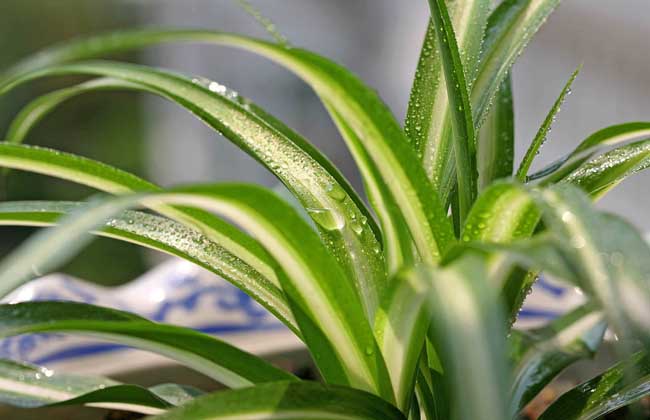
Spider plant, also known as ribbon plant, bracket plant, airplane plant, and spider ivy, is a perennial evergreen herbaceous plant of the genus Chlorophytum in the family Liliaceae (monocotyledon class). It blooms in May and fruits in August. Native to southern Africa, it is widely cultivated around the world and has high ornamental value. The plant helps purify the air, and the entire plant can be used medicinally. Let us take a look at the cultivation methods and precautions for spider plants!
Spider Plant Growth Habits
Spider plants prefer warm, humid, and semi-shaded environments. They are highly adaptable, relatively drought-tolerant, and not very cold-hardy. They are not particular about soil and grow best in well-drained, loose, fertile sandy soil. They are not demanding about light and generally grow well under moderate light conditions, and also tolerate weak light. The optimal growth temperature is 15-25°C, and the overwintering temperature is 5°C. Growth is fastest at 20-24°C, and they readily produce stolons (runners). Above 30°C, growth stops and leaves often turn yellow with dry tips. If indoor temperatures are maintained above 12°C in winter, the plant can grow normally, producing leaves and flowers. If temperatures are too low, growth slows or the plant goes dormant. Below 5°C, cold damage is likely to occur.
Spider Plant Propagation Methods ⟧7⟧1. Cuttings: Spider plant cuttings can be taken anytime from spring to autumn. Cut off the clustered stems and leaves on the stolons (which are essentially young new plantlets with leaves above and aerial roots below), plant them directly into a flower pot, water thoroughly, and place in a cool, shaded area for care. When planting cuttings, be careful not to bury them too deep, otherwise the crown may rot. When potting spider plants, the number of cuttings depends on the size of the pot. Generally, a small pot can hold 2-3 plants, a medium pot about 3, and a large pot up to 5-6.
1. Cuttings: Spider plant (Chlorophytum comosum) cuttings can be taken at any time from spring to autumn. Cut off the clustered stems and leaves on the spider plant's runners (these are in fact young new plantlets, with leaves above and aerial roots below), and plant them directly into a flower pot to grow, then water thoroughly and place in a shady spot for care. When taking cuttings, be careful not to bury them too deep, otherwise the crown is prone to rot. When potting spider plants, the number of cuttings depends on the size of the pot. Generally, a small pot can hold 2 to 3 plantlets, a medium pot about 3, and a large pot up to 5 to 6.
2. Division: To divide spider plants, take the plant out of the pot, remove old soil and dead roots, cut apart the old root mass so that each divided section retains three stems, then transplant and grow them separately. You can also cut off the clustered stems and leaves on the stolons (which are essentially young new plantlets with leaves above and aerial roots below) and plant them directly into a flower pot.
3. Seeding: Spider plant seed propagation can be done in March each year. Because the seeds are small, the soil covering them after sowing should not be thick, generally 0.5 cm is sufficient. At a temperature of 15°C, seeds germinate in about 2 weeks. After the seedlings take shape, transplant and grow them. When seed propagation is used for variegated varieties, the offspring revert to all-green varieties.
Spider Plant Cultivation Methods
1. Soil selection: For growing spider plants, use loose, fertile sandy loam soil that contains humus and has good permeability. For potted plants, you can use a mix of leaf mold or peat soil, garden soil, and river sand in equal parts with a small amount of base fertilizer as the growing medium. After repotting, be sure to prepare fresh soil.
2. Appropriate light: Spider plants prefer semi-shaded environments and are very sensitive to light. If exposed to direct sunlight in summer and autumn, the leaves will scorch and yellow, and the entire plant may even die. Therefore, avoid strong direct sunlight and place the plant in a cool, ventilated area, keeping the environment humid. At most, it should only receive some angled sunlight in the early morning and evening. In winter, since sunlight is not intense, spider plants can be given some direct sunlight.
3. Growing temperature: Spider plants prefer warm and humid climates and cannot tolerate severe cold or extreme heat. The optimal growth temperature for spider plants is 15-25°C, and indoor temperatures in winter must not drop below 5°C. During hot periods, avoid direct strong light and maintain partial shade. During cold periods, increase exposure to sunlight to keep the leaf color bright. In Guangdong Province, China, the temperatures in spring, summer, and autumn are all suitable for spider plant growth, but when winter temperatures drop below 5-7°C, attention must be paid to cold protection and insulation.
4. Watering: Spider plants love water. Because their fleshy roots have well-developed water-storage tissue, they are relatively drought-tolerant. However, during the peak growing period from March to September, they need more water. Water and mist frequently to increase humidity and keep the potting soil fully moist. During the winter dormant period, water after the top approximately one centimeter of potting soil has dried. Note that if the soil is too dry, the leaf rosette may temporarily lose color. Although the color will recover after watering again, the leaf tips may permanently turn brown. Around midday and in the evening, mist the leaves and stems.
5. Fertilization management: Spider plants are relatively fertilizer-tolerant. If fertilizer and water are insufficient, the plant easily becomes scorched and aged, with yellowing leaves, losing its ornamental value. For spider plants that have begun to produce plantlets, apply a nitrogen-based top dressing once every half month. Healthy, well-growing spider plants can go without fertilization.
6. Soil and pot replacement: Spider plants generally need repotting every 2-3 years. However, in specific care routines, to achieve lush stems and leaves, you can replace the soil and pot once every March.
7. Proper pruning: For pruning, routinely remove yellow leaves at any time. Each March, you can repot once, cutting away old roots, rotten roots, and excess fibrous roots. In early to mid-May, you can trim some of the old leaves to encourage the spider plant to sprout more new leaves and plantlets.
8. Hydroponic spider plants: Spider plants can also be grown hydroponically. To do this, first take the potted spider plant out of its pot, wash the soil off the roots with water, cut away old leaves and old roots, place it in a hydroponic container, and add clean water. Be careful not to add too much water; it should just reach the root crown. For vigorous growth, add a few drops of nutrient solution to the water. Containers can be wide-mouthed glass bottles, glass cups, or other containers. The water in the container can be changed every few days, or you can simply top it up.
Hydroponic Spider Plant Cultivation Methods
1. Choosing a container: Generally, choose a vase according to the size of the hydroponic spider plant. It can be fixed in place or not.
2. Selecting seedlings: You can choose young plantlets growing on stolons, preferably with aerial roots. You can also wash the soil off a soil-grown spider plant and then grow it hydroponically.
3. Hydroponic method: When growing hydroponically, do not add too much water; just enough to submerge 1/3 to 1/2 of the root system.
4. Care and management: Change the purified water every 2-3 days. For those transitioned from soil to hydroponic culture, some roots will rot initially and need to be trimmed during water changes, and disinfection is best. When new water roots reach 3-5 cm in length, add nutrient solution to the water; the amount does not need to be large. The best care environment has scattered light; it should not be too shady or exposed to direct sun. If leaf tips dry out, trim them promptly.
Benefits of Growing Spider Plants
1. Beautifying living spaces: Spider plants are one of the most traditional hanging plants for indoor spaces. The leaves are slender and soft, and plantlets grow from the leaf axils, hanging down from the pot rim, spreading and trailing like flowers. They are evergreen year-round and produce small white flowers with yellow centers in summer. They are one of the best green plants for beautifying living spaces.
2. Purifying air: Spider plants have remarkable air-purifying effects. They can perform photosynthesis under weak light, absorbing over 80% of harmful gases indoors, with an especially strong ability to absorb formaldehyde. Generally, keeping 1-2 spider plants in a room can absorb nearly all toxic gases in the air. One spider plant in a room of 8-10 sq m is equivalent to an air purifier. It can kill 80% of harmful substances in a room within 24 hours, absorb 86% of formaldehyde, nearly completely absorb carbon monoxide and nitrogen dioxide released by stoves, appliances, and plastic products, and can also break down benzene and absorb relatively stable harmful substances such as nicotine from cigarette smoke. Therefore, spider plants are also known as the “green purifier.”
3. Improving feng shui: The placement of spider plants also has certain significance in home feng shui arrangements. By placing them according to the home's feng shui layout, they add positive energy, enhance family fortune and wealth, and benefit the respiratory health, lungs, and spleen of family members.
4. Medicinal value: The roots and whole plant of spider plants can be used medicinally. They have effects of resolving phlegm and relieving cough, dispersing blood stasis and reducing swelling, and clearing heat and detoxifying. They are mainly used for phlegm-heat cough, traumatic injuries, fractures, carbuncles, hemorrhoids, and burns. They are used for high fever in children, lung-heat cough, hemoptysis, and traumatic swelling and pain.
Spider Plant Pest and Disease Control
1. Scale insects: Based on the various stages of scale insect occurrence, spray pesticide during the peak nymph stage. At this time, most nymphs have recently hatched, have not yet secreted wax on their body surface, and have not yet formed a scale covering, so they are still easily killed by pesticide. Spray once every 7-10 days, for 2-3 consecutive times. You can use 40% omethoate at 1000x dilution, or 50% malathion at 1500x dilution, or 255 phosmet at 1000x dilution, or 50% dichlorvos at 1000x dilution, or 2.5% deltamethrin at 3000x dilution, as a spray.
2. Whiteflies: Drench the roots with carbendazim wettable powder at 500-800x dilution, once a week, for 2-3 consecutive times.
3. Aphids: Aphids are one issue in spring. They should be wiped off promptly, or sprayed with omethoate at 1500x dilution to kill them.
4. Mites: Mites are a secondary issue in summer and autumn. Use dicofol at 1000x dilution to kill them. Pay attention to ventilation and increasing leaf surface humidity to reduce mite infestation.
5. Root rot: For prevention, use wettable powder at 2-4 grams per sq m for root drenching. You can also use 1500-3000x dilution for root drenching before or in the early stages of the disease, using 200 milliliters of solution per plant. If the disease is severe, remove diseased plants and use root-strengthening agent for root drenching.
Precautions for Spider Plants
1. Over-fertilization, exceeding the plant's needs. Initially, leaves become glossy and uneven, then roots rot and leaves turn yellow. Stop fertilizing, water generously with clean water, or repot to clean the roots and replace with fresh soil.
2. Long-term failure to repot and change soil. The various nutrients in the potting soil have been depleted, and the three key elements of nitrogen, phosphorus, and potassium have not been replenished in time. The plant lacks nutrients, and leaves become yellow and thin. Promptly replace with fertile loam soil and water with alum fertilizer solution.
3. Although spider plants are semi-shade flowers, they still need at least four hours of scattered light per day. Otherwise, chlorophyll decreases and leaves turn yellow.
4. Poor air and water permeability of the potting soil. Long-term water accumulation in the pot that does not dry out makes root respiration difficult, causing leaves to turn yellow. Loosen the soil promptly and control moisture.
5. Long-term watering that does not penetrate thoroughly causes roots to lose water, and lower old leaves turn yellow. Water thoroughly and keep the potting soil warm and moist.