When does tuberose (night-blooming jasmine) usually bloom?
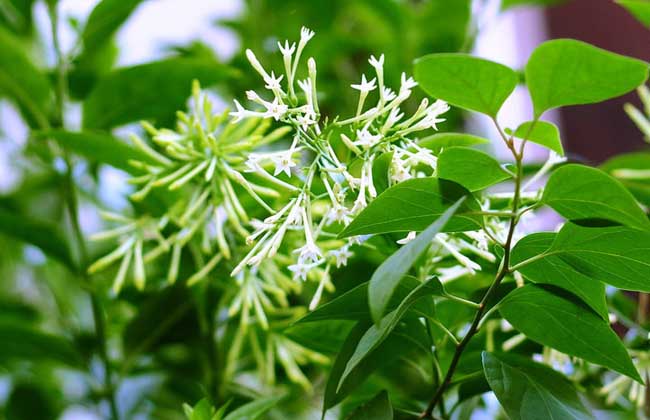
Tuberose (night-blooming jasmine) is a plant that many households love to grow. Its branches are slender, it blooms in summer and autumn, and its yellow-green flowers open in the evening, releasing waves of strong, penetrating fragrance. It is very suitable for home cultivation, but tuberose cannot be kept indoors for long periods, as it can cause dizziness, coughing, and even asthma and insomnia. Let's take a look below at when tuberose blooms!
When does tuberose bloom?
Generally, the flowering period of tuberose is from May to October. The reason this span is so wide is that it is affected by variety, temperature, humidity, soil, and the climates of north and south, thus presenting different seasons. In the north, the peak flowering period is in late June, while in the south it is mostly in August to September. This is because the summer heat in the south causes very high air humidity, which is suitable for tuberose to bloom profusely.
Why does tuberose bloom at night?
1. This plant, tuberose, relies on rather ugly-looking moths for pollination, unlike other flowers that rely on bees and other small creatures, and moths only appear at night. So, in order to attract night moths to pollinate, it chose to be intensely fragrant at night. This is the plant's adaptive ability to its environment.
2. The stomata of tuberose are completely opposite to those of many flowers. In other flowers, when air humidity is high the stomata close somewhat, and when air humidity is low they open wide, whereas tuberose is the reverse. If air humidity is very high, the stomata open very wide, and the aromatic substances inside can spread out more quickly, thus producing a strong fragrance. At night, because there is no sun to cause evaporation, the ground temperature drops suddenly, cold air descends, and humidity rises sharply. In such a humid environment, tuberose naturally opens more easily, and opens even more intensely.
Why does tuberose fail to bloom?
1. The flower buds of tuberose are already formed on the bulb in the previous year. It may be that small tubers were planted that had not reached flowering age, so they cannot bloom. Generally, the bulb diameter of tuberose must reach more than 2.2 cm, and in the previous year the primordium of the inflorescence has already formed inside; only after planting can it bloom.
2. Digging up the bulbs too late, or improper storage of the tubers in winter, with temperature too low or exposure to moisture or freezing, causes the flower buds inside the tubers to suffer cold damage or rot, and planting the next year will also fail to bloom.
3. Digging up the bulbs too early affects the differentiation of flower buds in the tubers, so that planting the following year cannot produce flowers.
4. Applying too much nitrogen fertilizer leads to excessive vegetative growth of stems and leaves, fewer flowers, and in severe cases even no flowers at all.