How to grow night-blooming jasmine? Learn the correct cultivation methods
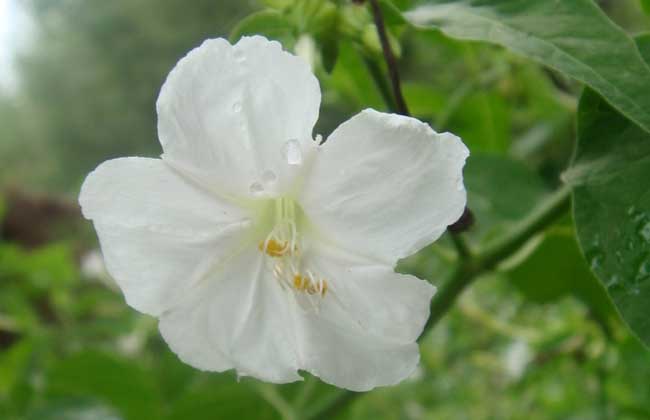
Night-blooming jasmine is also known as night fragrant flower, night orchid fragrance, night clove, thousand-mile fragrance, etc. It originated in South China and is now cultivated for ornamental purposes in all provinces and regions of southern China. Its flowers and leaves can be used medicinally, with effects of clearing the liver, brightening the eyes, and removing eye film. In South China, it is used among the people to treat conjunctivitis, malnutrition with eye symptoms, etc. Now let us take a look at the cultivation methods of night-blooming jasmine!
Night-blooming jasmine growth habits
Night-blooming jasmine mainly grows in jungles, woodlands, or thickets in subtropical and warm temperate regions. It likes warm, humid, sunny, well-ventilated, dry climates and environments with good drainage and loose, fertile soil. It is drought-tolerant and barren-tolerant, not waterlogging-tolerant, and not cold-tolerant. After leaf drop in winter, growth stops. After spring warms up, it sprouts branches and grows leaves, and bears fruit in winter. It has relatively high temperature requirements, with the average annual temperature controlled at around 20°C. It likes fertilizer, and during its growth process it should be fertilized in small amounts and multiple times. It also has high water requirements. In hot summer, it needs more watering. In winter, the soil should be kept moist, but waterlogging must be strictly avoided, and frost is especially taboo. In the Yangtze River basin, it can only be potted. It is tolerant of pruning.
Night-blooming jasmine cutting propagation
1. Cutting selection: For night-blooming jasmine cuttings, choose branches that grow robustly or are free of pests and diseases. On the same plant, choose current-year branches from the middle and upper parts facing the sun. The branches should have shorter internodes, thick and strong branches and leaves, and plump buds. Branches about to bloom and leggy branches should not be selected.
2. Substrate selection: For night-blooming jasmine substrate, use peat soil, leaf mold, and sand mixed respectively at 3:3:4. The bed soil prepared in this way has the characteristics of raising bed temperature, retaining water, aerating, being fertile, and being slightly acidic, and is suitable for branch rooting and sprouting.
3. Cutting treatment: Before cutting night-blooming jasmine, treat the cuttings with agents such as ABT rooting powder, which has the effect of promoting rooting. Cut the cuttings into sections of 8 cm to 12 cm, with 2 to 3 buds on them. The cut at the lower part of the cutting should preferably be 0.5 cm below a node. The cut should be smooth. Remove the lower leaves, leaving only 2 to 3 leaves at the top. The insertion depth is generally about 3 cm.
4. Rooting conditions: The suitable rooting temperature for night-blooming jasmine is 20°C to 24°C. Generally, soil temperature being 3°C to 5°C higher than air temperature is favorable for rooting. The relative air humidity of the cutting bed should be 80% to 90%, which is favorable for rooting, and the light requirement is about 30%. Moisture should be appropriate. In the early stage of cutting, moisture should be slightly greater, and later slightly drier. The suitable period for open-field cutting locally is from early May to mid-June. At this time, the climate is relatively good and can better satisfy the temperature and humidity conditions required for cutting rooting.
5. Post-cutting management: After cutting night-blooming jasmine, water thoroughly, cover with plastic film, and place in a relatively shaded place, or scatter straw on the film to prevent direct sunlight, and increase light at night to help the cuttings survive. Ventilate 1 to 2 times a day to supplement the required oxygen and prevent disease. Spray water frequently to keep the cutting bed moderately moist, but spraying water must not be excessive; otherwise, the cutting bed will be too wet, which often affects callus formation and rooting of the cuttings. When the new roots of the cuttings grow to 2 cm to 3 cm, they can be transplanted into pots at the appropriate time. After flowering, in the Nanjing area, they should be moved indoors for maintenance in winter.
Night-blooming jasmine cultivation methods
1. Pot soil: Night-blooming jasmine likes loose, well-drained, organic-rich, slightly acidic soil. Its pot soil is generally prepared with 3 parts peat soil or leaf mold plus 2 parts coarse river mud and a small amount of farmyard manure. When potting, about 1/5 of the depth at the bottom is filled with granular crushed brick pieces to facilitate pot drainage, and the upper part is cultivated with the prepared pot soil.
2. Light: Potted night-blooming jasmine requires well-ventilated environmental conditions. From early May to the end of September, it is suitable to place it in a sunny courtyard or on a balcony for maintenance. Although it likes sufficient sunlight, it should avoid scorching sun exposure at noon in summer.
3. Fertilization: During the growth process of night-blooming jasmine, liquid fertilizer should be applied once every 10 to 15 days. Starting in late April, apply dilute liquid fertilizer once every half month. From mid-May, continuous flowering can be ensured. If high-efficiency humic acid liquid fertilizers such as Chunquan 883 or Huimanfeng can be applied, the effect is even better.
4. Water regulation: Summer is the peak growth season for night-blooming jasmine. In addition to applying sufficient fertilizer, the pot soil must remain regularly moist. When necessary, water once a day. If it is a seedling, spray water on the leaf surface 1 to 2 times a day.
5. Suitable temperature: Every year in mid-to-late October, night-blooming jasmine should be moved into a shed or room. The shed or room temperature should be kept at 8°C to 12°C. If the temperature is lower than 5°C, the leaves will turn yellow and fall off until death.
6. Repotting: Repotting night-blooming jasmine is best done in early April in spring before it is moved outdoors. When repotting, remove part of the old soil and old roots, replace with new culture soil, and carry out heavy pruning to promote new branch growth. After repotting, keep the pot soil moist, but there must be no water accumulation in the pot. If the young leaves are found to droop slightly after repotting, water promptly.
7. Plant training: In the cultivation and management of night-blooming jasmine, a trellis needs to be set up. After the plant climbs onto the trellis, pinch the top promptly to promote more branching. After flowering, promptly cut off the residual flower stalks and apply additional fertilizer. After the flowers fade, cut off dead and dry branches and leaves and overly dense branches, and shorten leggy growth. Pruning: The branches of night-blooming jasmine grow relatively quickly. If allowed to grow naturally, they can grow about 1 m in 1 year. Therefore, annual pruning is needed to sprout more side branches and bloom more. Generally, pruning is carried out in autumn, retaining 10-12 cm in length for each side branch. After the flowers fade, cut off dead and dry branches and overly dense branches.
8. Harvesting: When 40-50% of the small flowers of night-blooming jasmine are in bud and a few flowers are open, pick the entire inflorescence. Generally, pick once a day. Open flowers should be removed to avoid affecting other flower buds and losing commercial value.
9. Disease prevention: The main pests of night-blooming jasmine are mites and scale insects, and the disease is wilt. For mite control, 800-fold dilution of Kangman 23 emulsifiable concentrate, 2000-fold dilution of 73% propargite, etc. can be used. For scale insect control, 600-800-fold dilution of 40% dimethoate emulsifiable concentrate can be used. For wilt control, 600-800-fold dilution of Kuwelilike, 600-fold dilution of 50% carbendazim, etc. can be used. If diseased plants with wilt are found, they should be removed promptly, taken outside the garden and burned, and the soil around the diseased plants should be turned over and quicklime scattered. Replant after 1 month.