Detailed Guide to Hydroponic Cultivation of Hydrocotyle sibthorpioides - Easy to Learn at a Glance
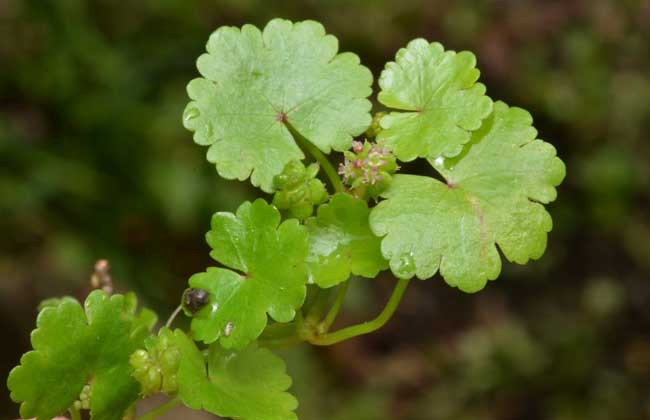
Hydrocotyle sibthorpioides is also known as Jiangxi money grass, money grass, white-haired pennywort, etc. It is a perennial creeping herbaceous plant of the genus Hydrocotyle in the family Apiaceae. Many friends are not particularly familiar with the hydroponic method for Hydrocotyle sibthorpioides, and problems always arise during the hydroponic process. So, how should Hydrocotyle sibthorpioides be grown hydroponically? Let us learn about it together next.
Growth Habits of Hydrocotyle sibthorpioides
Hydrocotyle sibthorpioides prefers warm and humid conditions. The best cultivation location is partial sun or shade, and direct sunlight should be avoided. It is not particular about cultivation soil, but soft, well-drained cultivation soil is best, or it can be grown directly in water. The most suitable water temperature is 22-28 degrees. It is shade-tolerant, moisture-tolerant, slightly drought-tolerant, highly adaptable, robust by nature, easy to plant, and fast to propagate. It can grow both in water and on land.
Hydroponic Cultivation of Hydrocotyle sibthorpioides
1. Propagation: Hydrocotyle sibthorpioides is generally propagated by division. In summer, use scissors to cut at the position where the stolon has rooted, and transplant the front plant into another water pot to propagate. In addition, in summer, Hydrocotyle sibthorpioides will produce small flowers, and the seeds it sets can also be used to propagate new plants.
2. Water quality: For hydroponic cultivation of Hydrocotyle sibthorpioides, ordinary tap water can be used. Change the water frequently. In summer, change the water once every 3-4 days, with the water level at half of the bottle. In winter, change the water once a week. In winter, leaf transpiration is low, so changing 1/3 of the water each time is enough.
3. Light: Hydrocotyle sibthorpioides relatively likes light. Generally, place it in a place where sunlight can reach, such as a windowsill. In summer, the light duration can be longer, and 4-5 hours is necessary. In winter, if there is little light, you can use a UV lamp or fluorescent lamp to replace sunlight.
4. Temperature: In the south, growing Hydrocotyle sibthorpioides hydroponically is effortless, because the southern climate is very suitable for cultivating Hydrocotyle sibthorpioides. Keeping the normal temperature at 10-26 degrees is very suitable. Too hot or too cold is not suitable for the growth of Hydrocotyle sibthorpioides.
5. Pests: The natural enemy of Hydrocotyle sibthorpioides is the aquatic snail. Aquatic snails will eat the roots and tender buds of Hydrocotyle sibthorpioides. If you see this kind of small insect in the water, do not show mercy. A large reproduction can kill your Hydrocotyle sibthorpioides.
6. Fertilization: It is not very recommended to fertilize Hydrocotyle sibthorpioides, because the nutrients produced by its own photosynthesis are enough. Of course, if you want it to be more lush, you can apply a moderate amount of fertilizer. Ordinary fertilizer can be dissolved in the water pot and left for it to absorb on its own, but be careful that the concentration is not too strong. A small amount is enough.
Precautions for Cultivating Hydrocotyle sibthorpioides
1. Hydrocotyle sibthorpioides is a plant that likes warm and humid environments, so when cultivating it, partial sun or shade is best, and direct sunlight should be avoided. It is not particular about cultivation soil, but soft, well-drained cultivation soil is best. If growing it in a water pot, change the water once a week and add a special nutrient solution for foliage plants.
2. When planting Hydrocotyle sibthorpioides, a very large pot is not needed. A bowl or pot of ordinary size can be used for pot cultivation. If growing it in soil, ordinary garden soil mixed with some river sand can be used as the substrate, and a small amount of organic fertilizer can be added as base fertilizer.
3. Hydrocotyle sibthorpioides is a relatively cold-sensitive plant. If it is kept outdoors in winter, all the water used to grow it should be poured out and it should be placed in a south-facing, sunny, wind-sheltered place.