Causes and Solutions for Yellowing Leaves on Pennywort
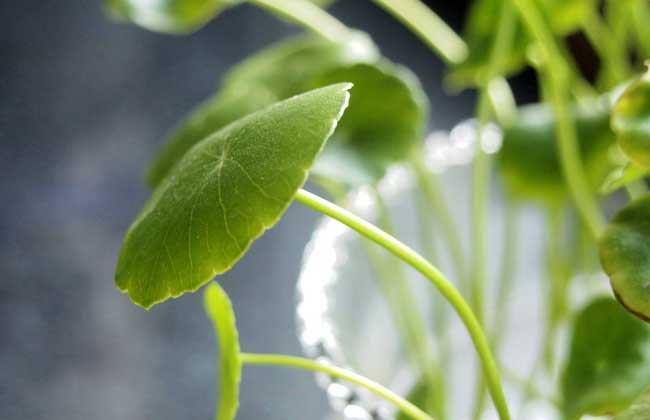
Pennywort (Hydrocotyle vulgaris) is a perennial herbaceous plant in the family Apiaceae (Umbelliferae) with a very strong spreading ability, making it an excellent ground cover plant. Many people like to grow it at home because it is cute and easy to keep, but the growing process is not always smooth sailing. There are always some surprises, such as pennywort leaves turning yellow. Let us take a look below at what to do when pennywort leaves turn yellow!
Causes of Yellowing Leaves on Pennywort
1. Watering with “half water”, that is, watering is not thorough, and no water seeps out from the bottom of the pot.
2. Exposure to cold in winter, and the root system has already been frostbitten.
3. After overwintering, rushing to move it outdoors and placing it in a warm spot to bask in the sun, so it temporarily cannot adapt to the sudden change in climate.
4. The potting soil has been too wet or too dry for a long time, without following the rule of watering as soon as the soil dries.
5. Long-term placement in an environment with poor ventilation.
6. Not spraying water on the leaves to clean them for a long time, so dust accumulates and hinders photosynthesis.
How to Prevent Pennywort Leaves from Turning Yellow
1. Full hydroponics tends to lack nutrients, and growth is not as good as soil culture. Full soil culture often does not have enough water, so water daily until water comes out of the bottom of the pot. Semi-hydroculture with semi-soil culture is best.
2. Sunlight must be very sufficient; even a little shade will prevent it from growing well.
3. The rhizomes grow extremely fast and will keep coiling up and piling up in the pot. Over time they absorb too many nutrients, and instead the leaves do not get enough nutrients. So after a period of time, such as two or three months, the roots must be cleaned and the pot changed. Discard the excess roots and keep just a small section. Pennywort is a plant that is easy to keep with minimal care and is very easy to grow. A small section of stem with a bit of root can grow into a large pot.
4. Applying a little fertilizer every month will make it grow better.
How to Grow Pennywort
1. Soil: Pennywort is not strict about soil requirements. It can grow in yellow loam, red loam or black loam, and even in poor soil. However, its drought resistance is not strong, and it is most suitable for growing in fine, slightly acidic, moist loam with low fertility. It is suitable for fertile, loose soil that absorbs a lot of water and has good water retention. It can also be cultivated in moist riverbanks, marshes, grasslands or freshwater with lower hardness. The cultivation soil can be made by mixing leaf mold, river mud and garden soil in a ratio of 5:2:2.
2. Light: Pennywort is shade-tolerant, and partial sun or a shaded place is best. It dislikes strong direct sunlight, and the more shaded the environment, the more easily the leaves rot. Pennywort does not compete for light, but if it receives 4 to 6 hours of scattered light every day, or is given 8 to 10 hours of artificial light, it will grow even better.
3. Temperature: Pennywort likes a warm and humid environment but is not cold-tolerant. It grows well at temperatures of 10 to 25°C. When the summer temperature rises above 32°C, it stops growing, and in winter the temperature must not be lower than 5°C.
4. Fertilizing: Pennywort has a relatively high demand for fertilizer. During the vigorous growth stage, apply fertilizer once every 2 to 3 weeks. If planted in a pot or container, then only a small amount of fertilizer is needed, such as the quick-acting fertilizer Hyponex No. 2, which can maintain its fertilizer effect in water for a relatively long time and ensure the water quality is slightly acidic or neutral.
5. Watering: Pennywort likes a relatively moist growing environment. Because it has many leaves and a high transpiration rate, in summer it is necessary to spray the plant frequently to maintain relatively high air humidity, and the leaves should be kept clean to facilitate photosynthesis. In winter, the potting soil should preferably be on the dry side, and watering should follow the principle of preferring wet over dry, avoiding water accumulation, otherwise the roots rot easily. Tap water in the north should be exposed to the sun and left standing for 1 to 2 days before use. During the growing period, water once every 2 to 3 days to keep the potting soil moist. For water culture, change the water once every 7 to 10 days in spring and summer, and once every half month in autumn and winter. If grown in water, be sure to change the water once a week and add a special nutrient solution for foliage plants. If soil culture is used, then water must be retained for a long time. Water once every early morning, and the amount of water should not be too much, with water flowing out of the bottom holes as the standard, ensuring the potting soil is thoroughly wet.
6. Pests and diseases: Pennywort has very few pests and diseases. It has strong growth adaptability and needs no deliberate care. After being grown for a period of time, pennywort will fill the entire container. Frequently spray water on the leaf surface to clean the leaves and keep them green and glossy. After growth becomes dense, attention should be paid to ventilation and air permeability, otherwise the plant is prone to yellowing.