Is pennywort suitable for growing in the bedroom?
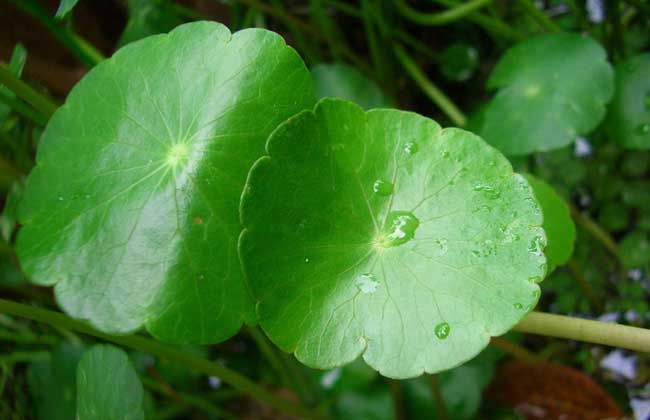
Pennywort is native to Europe and is now widely distributed in tropical and subtropical regions of the world. In China, it is mainly distributed in the provinces south of the Yangtze River. It has a very strong spreading ability and is an excellent ground cover plant. It likes warm and humid conditions, and is best cultivated in semi-shade or shade. It dislikes direct sunlight. It is robust by nature, easy to grow, and has high ornamental value. Let us take a look below at whether pennywort can be placed in the bedroom!
Is pennywort really toxic?
Pennywort is not toxic. It is said that pennywort is one of 52 plants that can cause cancer, so is pennywort really toxic? In fact, pennywort is not toxic. Not only is it non-toxic, pennywort can also be used medicinally. It can be used as medicine and has effects such as promoting diuresis, clearing heat and draining dampness, and detoxifying and reducing swelling. Then why is there such a rumor? The reason is that there is a plant called Jinqiancao, also known as pennywort, ground pennywort, etc. It is a perennial herbaceous plant and is not pennywort; it merely shares the same alias. What is toxic is Jinqiancao, not pennywort. These are two different plants. Therefore, we can grow pennywort with peace of mind.
Can pennywort be placed in the bedroom?
Pennywort can be placed in the bedroom. In warm regions, pennywort can be potted outdoors and is suitable for water trays, aquariums, ponds, and wetlands. It can be used for indoor water greening and can purify water quality. Moreover, the green leaves of pennywort can purify indoor air, so it is beneficial to the indoor environment. At the same time, pennywort is considered a symbol of wealth and also implies good feng shui. However, pennywort should not be kept in the bedroom for a long time. This grass very much likes dew and mist, and over a long period this way it will wither.
How to grow pennywort
1. Soil: Pennywort does not have strict soil requirements. It can grow in yellow loam, red loam, or black loam, and even in poor soil. However, its drought resistance is not strong, and it is most suitable for growing in fine, slightly acidic, moist, low-fertility loam. It is suitable for fertile, loose soil with high water absorption and good water retention. It can also be cultivated in moist riverbanks, swamps, grasslands, or low-hardness freshwater. The growing medium can be made by mixing leaf mold, river mud, and garden soil in a ratio of 5:2:2.
2. Light: Pennywort is shade-tolerant and is best kept in semi-shade or shade. It dislikes strong direct sunlight. The more shaded the environment, the more easily the plant's leaves rot. Pennywort does not compete for light, but if it receives 4-6 hours of scattered light every day, or is given 8-10 hours of artificial light, it will grow better.
3. Temperature: Pennywort likes a warm and humid environment, but is not cold-tolerant. It grows well in a temperature environment of 10-25°C. When the summer temperature rises above 32°C, growth stops. In winter, the temperature must not be lower than 5°C.
4. Fertilizing: Pennywort has a relatively high demand for fertilizer. During the vigorous growth stage, apply fertilizer once every 2-3 weeks. If planted in pots or containers, then only a small amount of fertilizer is needed, such as the quick-acting fertilizer Huabao No. 2, which can maintain fertilizer efficacy in water for a relatively long time and ensure that the water quality is slightly acidic or neutral.
5. Watering: Pennywort prefers a relatively moist growing environment. Because it has many leaves and a high transpiration rate, in summer it is necessary to spray water on the plant frequently to maintain relatively high air humidity. The leaves should be kept clean to facilitate photosynthesis. In winter, the potting soil should preferably be on the dry side. Watering should follow the principle of preferring wet over dry, and waterlogging should be avoided, otherwise root rot is likely. Tap water in the north should be exposed to the sun and left to stand for 1-2 days before use. During the growing period, water once every 2-3 days to keep the potting soil moist. For water culture, change the water once every 7-10 days in spring and summer, and once every half month in autumn and winter. If grown in water, be sure to change the water once a week and add a special nutrient solution for foliage plants. If soil culture is used, then water must be retained for a long time. Water once every early morning. The amount of water should not be too much, with water flowing out from the bottom hole as the standard, and it is enough to ensure that the potting soil is thoroughly wet.
6. Pests and diseases: Pennywort has very few pests and diseases. It has strong growth adaptability and requires no deliberate care. After growing for a period of time, pennywort will fill the entire container. Frequently spray water on the leaf surface to clean the leaves and keep them green and glossy. After growth becomes dense, attention should be paid to ventilation, otherwise the plant is prone to yellowing.