How to grow Hydrocotyle sibthorpioides? Growing methods and precautions
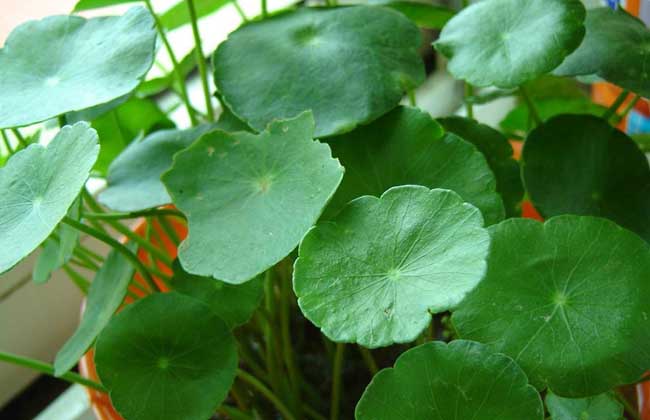
Hydrocotyle sibthorpioides is a perennial creeping herbaceous plant of the genus Hydrocotyle in the family Apiaceae. It is a plant that people rather enjoy growing, also known as Jiangxi jinqiancao, jinqiancao, baimao tianhusui, po tongqian and so on. It is a plant with medicinal properties such as clearing heat and resolving dampness, relieving cough and resolving phlegm, and reducing inflammation and dissolving stones. It is very suitable for growing at home. Let us take a look below at how to grow Hydrocotyle sibthorpioides!
Propagation methods of Hydrocotyle sibthorpioides
1. Hydrocotyle sibthorpioides can be propagated mainly by division or by cuttings, generally planted from March to May each year. It is relatively easy to cultivate, but when planting, the soil needs to be kept moist, and roots will develop within 1 to 2 weeks.
2. If Hydrocotyle sibthorpioides is to be grown in a pot, it can be potted once the small seedlings have grown into shape. Generally, for potting Hydrocotyle sibthorpioides, a medium-sized flower pot without drainage holes should be used as the planting container. In order to give the potted Hydrocotyle sibthorpioides a better ornamental effect, 1 seedling can be placed in each pot, and water is simply poured in after the operation is finished. To make it easier for the plants to recover from transplanting, the planting operation is best carried out on a cloudy day.
Growing methods for Hydrocotyle sibthorpioides
1. When growing Hydrocotyle sibthorpioides, the requirements for water quality are not strict. It can be cultivated in fresh water with relatively low hardness, and the salinity should not be too high. The pH of the water is best kept between 6.5 and 7.0, that is, slightly acidic to neutral. During the peak growing season of Hydrocotyle sibthorpioides, fertilizer should be applied once every 2 to 3 weeks. If it is planted in a pot or container, then only a small amount of fertilizer is needed, such as a quick-acting fertilizer (Huabao No. 2) or a slow-release fertilizer (Mofei).
2. Hydrocotyle sibthorpioides is a plant that relatively prefers an environment with sufficient light. If it is in a shaded place, its plants will grow poorly. Hydrocotyle sibthorpioides grows well in full sun; in half sun, its leaf stalks will stretch longer and grow toward the light, and its posture will need to be adjusted slightly to be more attractive. It is best to let it receive 4 to 6 hours of scattered sunlight every day. Hydrocotyle sibthorpioides is a plant that relatively prefers a warm environment and is rather afraid of cold. Its growing temperature is generally best at 10 to 25 degrees.
3. Hydrocotyle sibthorpioides is perennial, and it sprouts quickly and takes shape relatively fast. Without repotting, a shaped plant should not be continuously grown for more than 2 years, otherwise its growth may become weaker and weaker.
Precautions for growing Hydrocotyle sibthorpioides
1. Hydrocotyle sibthorpioides is a plant that likes warm and humid environments, so when growing it, a spot with half sun or shade is best, and direct sunlight should be avoided. There are no strict requirements for the growing soil, but a loose, well-draining growing soil is best. If it is grown in a water basin, then it needs to have its water changed once a week and a special nutrient solution for foliage plants added.
2. When planting Hydrocotyle sibthorpioides, there is no need for too large a pot; an ordinary-sized bowl or basin can be used for potting. If it is grown in soil, ordinary garden soil mixed with some river sand can be used as the substrate, with a small amount of organic fertilizer added inside as a base fertilizer.
3. Hydrocotyle sibthorpioides is a plant that is rather afraid of cold. If in winter it is grown outdoors, then all the water used to grow it must be poured out, and it should be placed in a south-facing, sunny, wind-sheltered spot.
Summary: How to grow Hydrocotyle sibthorpioides and the precautions for growing Hydrocotyle sibthorpioides have been introduced here for everyone. In fact, no matter what plant is being grown, as long as it is planted according to the plant's growth habits, it can be grown very well.