How to grow pennywort? A detailed guide to cultivation methods
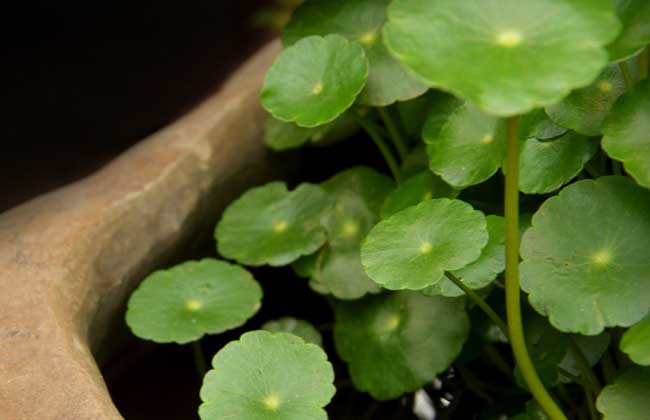
Pennywort is a perennial herbaceous plant of the genus Hydrocotyle in the Apiaceae family. Its leaves are perfectly round and its vitality is extremely strong. Whether grown in soil or hydroponically, its survival rate is very high, and its underground rhizomes grow rapidly, with each node able to produce new roots and leaves. In summer and autumn it also produces small yellow-green flowers. The rhizomes, leaves and stems can all be eaten as a vegetable, and it has the effects of clearing heat, removing dampness, promoting urination and detoxifying. Let's take a look at the cultivation methods for pennywort below!
Propagation methods for pennywort
Pennywort is mainly propagated by division or cuttings, usually carried out from March to May each year. It is easy to cultivate; keep the growing medium moist, and roots will form in about 1-2 weeks. The seeding method can also be used for raising seedlings. For the growing medium, a mixed substrate made of leaf mold, river mud and garden soil can be used, with a volume ratio of 0.5:2:2.
Soil selection for pennywort
Pennywort is not strict about soil requirements. It can grow in yellow loam, red loam or black loam, and even in poor soil. However, its drought resistance is not strong, and it grows best in fine, slightly acidic, moist loam with low fertility. It is suitable for fertile, loose soil that absorbs a lot of water and holds it well, and can also be cultivated on moist riverbanks, in swamps, in grassland, or in freshwater with low hardness. The growing medium can be made by mixing leaf mold, river mud and garden soil at a ratio of 5:2:2.
Light requirements for pennywort
Pennywort is shade-tolerant and does best in partial sun or a shaded spot. It dislikes strong direct sunlight, and the more shaded the environment, the more easily the leaves rot. Pennywort does not compete for light, but if it receives 4-6 hours of scattered light each day, or 8-10 hours of artificial light, it will grow better.
Temperature requirements for pennywort
Pennywort likes a warm, humid environment but is not cold-hardy. It grows well at temperatures of 10-25°C. When the summer temperature rises above 32°C, growth stops, and in winter the temperature must not drop below 5°C.
Fertilizing methods for pennywort
Pennywort has a relatively high demand for fertilizer. During the vigorous growth stage, apply fertilizer every 2-3 weeks. If planted in a pot or container, only a small amount of fertilizer is needed, such as the quick-acting fertilizer Huabao No. 2, which can maintain its fertilizing effect in water for a relatively long time. Just make sure the water is slightly acidic or neutral.
Watering methods for pennywort
Pennywort prefers a relatively moist growing environment. Because it has many leaves and a high transpiration rate, in summer you should frequently spray the plant with water to maintain high air humidity, and the leaves should be kept clean to aid photosynthesis. In winter, the potting soil should preferably be on the dry side. Water according to the principle of preferring moist over dry, and avoid waterlogging, otherwise the roots rot easily. Tap water in the north should be left in the sun to stand for 1-2 days before use. During the growing season, water once every 2-3 days to keep the potting soil moist. For water cultivation, change the water once every 7-10 days in spring and summer, and once every half month in autumn and winter. If growing in water, be sure to change the water once a week and add a special nutrient solution for foliage plants. If using soil cultivation, be sure to retain water for the long term. Water once every morning, but not too much; the amount is right when water flows out of the bottom hole, ensuring the potting soil is thoroughly moistened.
Pest and disease control for pennywort
Pennywort has very few pests and diseases. It is highly adaptable and needs no deliberate care. After being grown for some time, pennywort will fill the entire container. Frequently spray water on the leaf surface to clean the leaves and keep them green and glossy. After the growth becomes dense, attention should be paid to ventilation, otherwise the plant tends to turn yellow.
Points to note for pennywort
1. Pennywort likes warmth and high temperatures, and 80% sunlight is suitable. Insufficient light or excessive shading will cause the stems to grow leggy and the leaves to turn yellow and rot. Use a medium with good water retention and keep it moist at all times. The amphibious pennywort is commonly seen in aquatic ponds, wetlands and similar spaces, and is also very suited to water trays and aquariums.
2. Pennywort generally does not need heavy pruning. When the leaves become too dense, promptly remove withered lower leaves and old, diseased outer leaves to improve light and ventilation. In spring, when the pot is full of roots, repot and divide and reshape the plant. If the plant grows too tall, prune it back to encourage new shoots to sprout from the base of the stems and leaves.
3. Pennywort likes sunlight and water, and can be grown hydroponically, in soil, or in a half-water half-soil setup. Its leaves are round and very cute, and it is very easy to grow. In short, you can do whatever you like with it. It does not compete for fertilizer but likes light and water; as long as there is enough light and water, it will be full of vitality.
4. Pennywort does not need a very large pot; you can also plant it in a relatively large bowl, and a narcissus pot works too. When planting, you can lay it flat and cover the rhizomes so they are not visible; never plant too deep. Then place it in a semi-shaded spot for a week, and wait until new leaves have grown before giving it sunlight.
5. Pennywort sometimes develops yellow leaves, mainly caused by the following reasons, which should be avoided as much as possible. First, the potting soil is waterlogged or too dry for a long time, and watering is not done as soon as it dries. Second, the roots have already been frost-damaged in winter. Third, moving it outdoors too eagerly in spring means pennywort cannot adapt to the sudden change in climate for a time. Fourth, it is kept for a long time in an environment with poor ventilation. Fifth, the leaf surface is not sprayed and cleaned for a long time, so dust accumulates and hinders photosynthesis.
6. If you find that the new leaves are generally turning yellow, you can spray the leaves with a compound fertilizer based mainly on nitrogen. If water moss appears on the roots or in the water, clean it and change the water immediately, otherwise it is bad for the plant's growth and affects its ornamental value. Usually pay more attention to whether there is enough water in the container, and avoid letting it dry out.