How to grow pennywort (Hydrocotyle vulgaris) best? A full guide to care methods
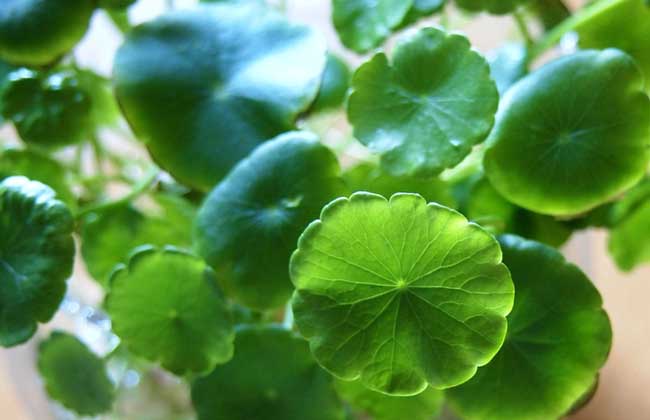
Pennywort is also known as South American pennywort, coin grass, round coin grass, shield-leaf pennywort, golden coin lotus, etc. Its leaves are round and peltate, like a copper coin, with long petioles and wavy margins. In summer and autumn it bears small yellow-green flowers. Cultivation and management are simple, the plant form is attractive, and the foliage is fresh green and very pleasing to look at, making it one of the favorite aquatic plants of gardening enthusiasts today. Let us take a look below at how to grow pennywort best!
The growth habits of pennywort
Pennywort likes warmth and moisture. It is best grown in partial sun or shade, and direct sunlight should be avoided. It is not particular about the growing medium, but a loose, well-draining growing medium is best, or it can be grown directly in water. The optimum water temperature is 22-28°C. It tolerates shade and moisture, is slightly drought-tolerant, and has strong adaptability. It is robust by nature, easy to plant, and propagates quickly, and can grow both in water and on land. Pennywort is afraid of cold. In winter, for pennywort kept outdoors, all the water can be poured off and the plant placed in a south-facing, sunny, sheltered spot, where it can winter safely; only some leaves will die off, and the underground roots will sprout again the following spring. In cold northern regions without heating, you can make a cover and put it over the whole pot, pour off the water, keep it moist, and as long as the room temperature does not drop below zero, it will likewise continue to grow the following year.
Propagation methods for pennywort
Pennywort is mainly propagated by division or cuttings, mostly carried out each year from March to May. Cultivation is easy; keep the growing medium moist, and roots will form in about 1-2 weeks. Seeding can also be used to raise seedlings. For the growing medium, a mixed substrate made of leaf mold, river mud, and garden soil can be used, in a volume ratio of 0.5:2:2 respectively. Potted planting can be carried out once the pennywort seedlings have formed. A medium-sized flower pot without drainage holes is mostly used as the planting container. To achieve a better ornamental effect, 1 seedling can be placed in each pot, and after the operation is finished, simply fill with water. To make it easier for the seedlings to recover, the planting operation is best carried out on a cloudy day.
How to grow pennywort best
1. Soil culture of pennywort: Potted pennywort can be handled once the seedlings have formed. A medium-sized flower pot without drainage holes is mostly used as the planting container. To achieve a better ornamental effect, 1 seedling can be placed in each pot, and after the operation is finished, simply fill with water. To make it easier for the seedlings to recover, the planting operation is best carried out on a cloudy day.
2. Water culture of pennywort: Pennywort is not strict about water quality and can be grown in soft freshwater; salinity should not be too high. The pH of the water is best kept between 6.5-7.0, that is, slightly acidic to neutral. It has a relatively high demand for fertilizer; during the vigorous growth stage, topdressing once every 2-3 weeks is sufficient. If planted in a pot or container, then only a small amount of fertilizer is needed, such as a quick-acting fertilizer - Huabao No. 2, or a slow-release fertilizer - Mofei (which can maintain fertilizer efficacy in water for a long time).
3. Semi-water, semi-soil culture method: When growing pennywort, it is best not to grow it in water alone. Pure water culture generally does not give very good results, while semi-water, semi-soil gives better results, just like growing water lilies and lotus, and this way it is very easy to grow. If using water alone, add a hydroponic nutrient solution, and also use river sand, ceramsite, or pebbles to weigh down the bottom. Pennywort is extremely fond of sunlight while growing, so it is best to place the water basin outdoors or by a window with ample light. If grown indoors, the daily sunlight exposure time should be no less than 4-5 hours.
Notes on growing pennywort
1. Pennywort likes warmth and high temperatures, with 80% sunlight being suitable. Insufficient light or excessive shading will cause the stems to become leggy and the leaves to turn yellow and rot. A medium with good water retention should be used, and it should be kept moist at all times. The amphibious pennywort is commonly seen in aquatic ponds, wetlands, and other spaces, and water trays and aquariums are also very suitable.
2. Pennywort generally does not need extensive pruning. When the leaves are too dense, promptly remove withered lower leaves and outer old leaves and diseased leaves to improve light and ventilation conditions. In spring, when the roots fill the pot, repot and divide and reshape the plants. If the plant grows too tall, it should be pruned back to encourage new shoots to sprout from the base of the stems and leaves.
3. Pennywort likes sunlight and water, and can be grown in water, in soil, or in semi-water, semi-soil. Its leaves are round and very cute, and it is very easy to grow. In short, you can do whatever you like with it. It does not compete for fertilizer, but it likes light and water. As long as light and water are sufficient, it will be full of vitality.
4. Pennywort does not need a very large pot; a relatively large bowl can also be used to plant it, and a narcissus basin works too. When planting, it can be planted flat, and the rhizomes should be covered so that they are not visible; be sure not to plant too deep. Then place it in partial shade for a week and wait for new leaves to grow before exposing it to sunlight.
5. Pennywort sometimes develops yellowing leaves, mainly caused by the following reasons, which should be avoided as much as possible. First, the potting soil is too wet or too dry for a long time, and the rule of watering as soon as it dries has not been followed. Second, the roots have already been frostbitten in winter. Third, in spring the plant is rushed outdoors, and pennywort cannot adapt for a time to the sudden change in climate. Fourth, it is kept for a long time in an environment with poor ventilation. Fifth, the leaf surface has not been sprayed and cleaned for a long time, and dust has accumulated, hindering photosynthesis.
6. If new leaves are found to be generally turning yellow, a compound fertilizer mainly based on nitrogen fertilizer can be sprayed on the leaf surface. When water moss appears on the roots or in the water, immediately clean it and change the water, otherwise it is unfavorable to plant growth and affects the ornamental value. Usually pay more attention to whether the water in the container is sufficient, to avoid drying up.