Can geraniums be grown indoors? Indoor care points to note
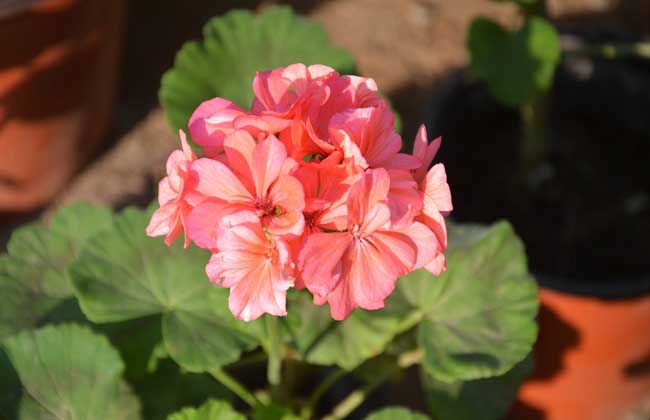
Geranium is a widely cultivated flowering plant, with colorful and rich blooms and a long flowering period. As a potted plant it can accent living rooms, bedrooms, conference venues and other public places, and it can also be used for cut flower production. It is one of the flower varieties many people choose to decorate their homes with, but do you know whether geraniums can be grown indoors? Let's take a look together below!
Can geraniums be grown indoors?
Geraniums are not suitable for being kept indoors for a long time. Geranium belongs to the conifer type of plants; if too many are placed indoors, they release a rather strong pine-like scent, which affects people's appetite, makes pregnant women feel nauseous, and may even cause allergic reactions in some people. In fact, it is not only geraniums; flowers such as tulips, night-blooming jasmine, Syringa oblata and elderberry also cannot be kept indoors for a long time. Friends who grow these flowers must pay close attention: if they are these flowers, never keep them indoors all the time, as it is very bad for your health.
Is geranium actually toxic?
Geranium is not toxic. Geranium itself is non-toxic, but its pollen easily causes allergic reactions in people with sensitive skin, so whether it is "toxic" depends on the individual; people with allergic skin, infants and pregnant women should still be careful. If there are no allergy-prone people in the home, geranium is still very suitable for home decoration. Its scent is a bit like rose and also a bit like mint. Not only is it non-toxic, it can also regulate hormones, stimulate lymphatic detoxification, balance skin oil secretion, and has a deep cleansing and astringent effect; it is also a very good insect repellent.
How to grow geraniums in pots
1. Soil: Geranium is also highly adaptable and can grow in all kinds of soil, but it grows best in sandy loam rich in humus.
2. Watering: Geranium likes dryness and dislikes dampness. In winter, watering should not be excessive; water only when the soil is dry. When the soil is wet, the stems are tender and soft, which is unfavorable for the sprouting and opening of flower branches. Long-term excessive moisture will cause the plant to grow leggy, the position where flower branches are borne to move upward, and the leaves to gradually turn yellow and fall off.
3. Sunlight: Geranium needs ample sunlight during its growing period, so in winter it must be placed in a sunny spot. With insufficient light, the stems and leaves grow leggy, the flower stalks are thin and soft, and the inflorescence develops poorly; flower buds under weak light often fail to open smoothly and wither prematurely.
4. Temperature: Geranium likes warm winters and cool summers. Indoors in winter, maintaining 10-15°C during the day and above 8°C at night allows it to flower normally. But the optimum temperature is 15-20°C.
5. Fertilizing: Geranium does not like heavy fertilizer; too much fertilizer will make geranium grow excessively and be unfavorable for flowering. To make flowering abundant, water once every 1—2 weeks with dilute fertilizer water (decomposed soybean cake water). Watering every 7-10 days with a 800-fold potassium dihydrogen phosphate solution can promote normal flowering.
6. Pests and diseases: When geraniums have poor ventilation and are too humid, they are prone to leaf spot disease and flower wilt disease. After discovery, attention should be paid to ventilation, and the diseased flowers and leaves should be removed immediately to prevent infection, and Bordeaux mixture of equal proportions should be sprayed for control. The main pests are red spider mites and whiteflies, which harm the leaves and flower branches; they can be killed by spraying with a 1000-fold dilution of 40% omethoate emulsion.
7. Pruning: Pruning branches and pinching out growing tips. To encourage geraniums with more branches to bloom more, the plant should be pinched back several times to promote more branching and flower bud formation. After the flowers fade, the spent flowers should be cut off in good time, and overly dense and weak branches should be cut off to avoid excessive consumption of nutrients, but in winter when it is cold, heavy pruning is not advisable.