Can Geraniums Repel Mosquitoes? An Analysis of Their Real Mosquito-Repelling Effect
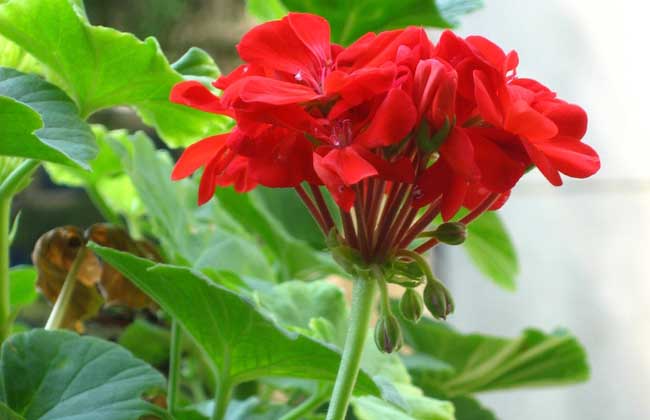
Geranium, also known as zonal geranium, fish geranium, and horse geranium, among other names, is a perennial herbaceous plant in the genus Pelargonium, family Geraniaceae. It is native to southern Africa and widely cultivated around the world. It has strong adaptability, bright flower colors, and a long blooming period, making it suitable for indoor display, flower bed arrangements, and more. Let us take a look below at whether geraniums can repel mosquitoes!
Can Geraniums Repel Mosquitoes?
Geraniums can repel mosquitoes. The geranium that repels mosquitoes is the scented geranium (rose-scented geranium), which, as the name suggests, is a plant that gives off fragrance, just like night-blooming jasmine, jasmine, and rosemary. There is also the cranesbill (Geranium), which likewise belongs to the geranium family; the fragrance it gives off can not only beautify the indoor environment and purify indoor air, but can also repel mosquitoes. However, scientists have not yet given a specific explanation for exactly why this is so. Still, we only need to know that scented geraniums really do have a mosquito-repelling effect.
How to Grow Geraniums
1. Soil: Geraniums require fertile, well-drained soil. For potting soil, you can use 1/3 leaf mold, 1/3 rice husk ash, and 1/3 garden soil, then add a small amount of superphosphate and mix evenly.
2. Watering: Geraniums tolerate drought and fear waterlogging. Therefore, during growth, control water appropriately. Too much watering, causing excessive water content in the potting soil, will lead to leggy growth or root rot. During the vigorous growth and blooming periods of spring and autumn, you can water a bit more, but it is still best to keep the potting soil moist. In winter, when temperatures are low and plant growth is slow, water as little as possible.
3. Fertilizing: During cultivation, in addition to applying sufficient base fertilizer, during the growing season, especially during peak blooming, apply a thin liquid fertilizer once every 7-10 days. Diluted well-rotted livestock and poultry manure with water is even better, or you can also water with well-rotted cake fertilizer solution. 3-5 days before fertilizing, water less or not at all; applying fertilizer when the potting soil is on the dry side is more conducive to root absorption.
4. Light: Geraniums are native to South Africa and prefer sunny, warm, well-ventilated environmental conditions. In spring and early summer, when light is not too intense, you can place the flowerpot in a spot with ample light so it receives sufficient sunlight. But in the hot seasons of midsummer and early autumn, it should be placed in shade and kept away from direct strong light; otherwise, the branches and leaves will be scorched.
5. Pruning: To make the plant shape attractive and produce more flowers, if the plant grows too vigorously in spring, you can carry out thinning and pruning. After blooming, promptly cut off spent flowers and overly dense branches. During the dormant period, prune once more, cutting off yellowed old leaves, thinning out dense branches, and shortening overly long branches, so that after the dormant period ends, new branches can sprout and continue to form buds and bloom. In addition, geraniums themselves have a special odor and rarely suffer from pest damage. So there is no need for pest control.
What Plants Repel Mosquitoes?
1. Night-blooming jasmine: Night-blooming jasmine, also known as night jessamine, is native to tropical America. Its leaves are heart-shaped with soft hairs along the edges. Every summer and autumn, clusters of yellow-green bell-shaped small flowers bloom in the leaf axils. When the moon rises above the treetops, it sends out waves of delicate fragrance, and this scent frightens mosquitoes, making it an excellent mosquito repellent.
2. Lavender: Lavender is a small blue-purple flower. Its place of origin is the Mediterranean, and it likes dry conditions. Its flower shape resembles a wheat ear, and it usually blooms in June. Lavender itself has an insecticidal effect. People often make sachets from lavender and place them in cupboards, and some also put it in the bedroom to repel mosquitoes.
3. Pitcher plant: The pitcher plant is a typical carnivorous plant. It has peculiar leaves, and at the tip hangs an oblong “pitcher”, with a lid at the mouth that can open and close. There are dozens of species of pitcher plants, and different species have different shapes, sizes, and colors of pitchers. Pitcher plants can be used medicinally and have certain therapeutic effects on hepatitis, stomach pain, high blood pressure, and colds, and they are even better at catching mosquitoes.
4. Geranium: Geranium flowers are clustered together, full and ball-shaped, and can adapt to both north and south. In hot seasons, place it outdoors in a partially shaded environment; in cold seasons, enjoy it indoors in a bright spot. Geraniums have a unique scent, and this scent makes mosquitoes and flies flee as soon as they smell it.
5. Orange jasmine: Orange jasmine is a small evergreen shrub that stays green all year round. Its shape is corymb-like, with many branches, small glossy leaves, and dense white flowers. After blooming, it can also bear red berries, adding beauty to a humble room. If you touch its leaves, you will smell a strong sweet fragrance, and its mosquito-repelling effect is very good.
6. Butterwort: Butterwort is a herbaceous plant in the Asteraceae family. It can grow to about 1 m tall. Its flowers are small and yellow, with hundreds of flower heads on a single plant. Around each flower head there is sticky fluid, like five extended little fingers, which is very interesting. As long as a small mosquito or insect lands on it, it gets stuck, and afterward the insect's corpse is slowly digested by the plant as nutrients for its growth. If dust sticks to it, after a few days it is also digested without a trace. Placing one potted plant at home catches mosquitoes and absorbs dust.
7. Jasmine: Jasmine has a rich fragrance and is the most common fragrant potted flowering plant. Jasmine is ranked first among mosquito-repelling flowers, mainly because jasmine's fragrance is so rich that mosquitoes cannot tolerate it. We can place jasmine in the bedroom, living room, and other places, and you can also dry jasmine, press it into juice, and spray it out like perfume. Let the buzzing mosquitoes “change color at the smell”.