What Is the Flower Language of Geraniums? Meaning and Symbolism Explained
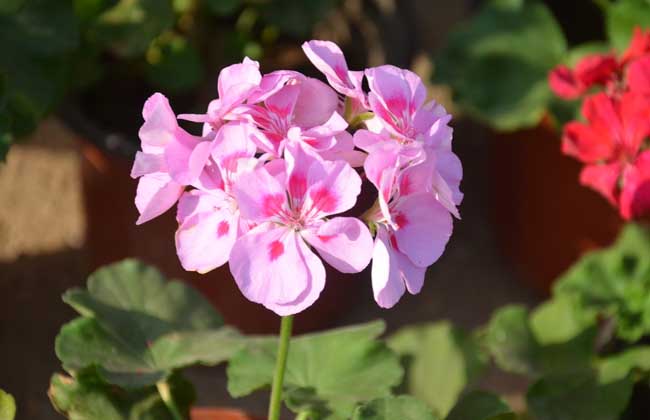
Geraniums originate from southern Africa and are widely cultivated around the world. They are a plant that represents happiness, with dazzling colors that are unforgettable, transformed into love and passed down through the world. Different colors of geraniums represent different meanings of love. Let us take a look below at what the flower language of geraniums is!
The flower language of geraniums
Chance encounters, happiness is right by your side. The flower language of red geraniums is that you linger in my mind; the flower language of pink geraniums is being glad to be by your side; the flower language of yellow geraniums is an unexpected meeting; the flower language of silver-leaf geraniums is recollection; the flower language of dark-colored geraniums is gloom; the flower language of trailing geraniums is a wedding gift; the flower language of scented geraniums is an anticipated meeting; the flower language of wild varieties of geranium is devotion and steadfastness; the flower language of variegated geraniums is sincere friendship.
The culture of geraniums
Geraniums have strong adaptability, bright flower colors, and a long flowering period. They are suitable for indoor placement, flowerbed arrangements, and more. They are not only the pride of African people but are also very popular in Europe and Asia. In the West, they are very good flowers for decorating windowsills and are especially common. Countries such as Germany, Spain, and Hungary all place great importance on the production and breeding of geraniums, and Hungary has even designated the colorful geranium as its national flower.
Types of geraniums
1. Regal geranium: Regal geranium is also known as butterfly geranium, house geranium, foreign butterfly, butterfly pelargonium, hairy-leaved zonal geranium, and more. It is a commonly cultivated plant in the north and a close relative of the plant geranium in the family Geraniaceae, genus Pelargonium. It is a cultivated plant with a height of 30-40 cm, and the whole plant is hairless or has sparse silky hairs. The leaves are ovate or nearly round, relatively thick, with longer petioles, densely and sharply serrated leaf margins, and wrinkled leaf surfaces. The umbel inflorescence is axillary, with flower stalks, and the flowers are relatively large. Flower colors include white, red, pink, purplish red, and variegated colors, with flower edges, and more. The flowering period is from May to July.
2. Zonal geranium: Geraniums originate from South Africa. The plant height is 30-80 cm. The stems are upright, cylindrical, and nearly succulent. The leaves are ovate-peltate or obovate, with dark brown horseshoe-shaped ring patterns on the leaf surface, and the leaf margins have blunt serrations. The flowers range from deep red to white, with fewer flowers, and the flowering period lasts throughout the year. It requires sufficient sunlight and is not cold-tolerant. The optimal growth temperature is 18-22°C. During the growth period, attention should be paid to fertilizer and water management, and pinching should be strengthened to promote branching and expand the plant width.
3. Scented geranium: Scented geranium is native to southern Africa, especially South Africa, and prefers a warm, humid environment with sufficient sunlight. It has poor cold tolerance and fears waterlogging and high temperatures. It is a perennial herb or shrub-like plant, reaching up to 1 m in height. The stems are upright, woody at the base, fleshy in the upper part, densely covered with glossy soft hairs, and fragrant. It can be used to make essential oil, whose main components include geraniol, citronellol, linalool, and more.
4. Ivy geranium: Ivy geranium is a perennial climbing or twining herbaceous plant in the family Geraniaceae, genus Pelargonium. It is distributed in Africa and various parts of mainland China, and has now been introduced and cultivated artificially. It grows 40-100 cm long, with stems 3-10 mm thick. The leaves are alternate, and the corymb inflorescence is axillary. It likes sunlight but is also relatively shade-tolerant. It fears cold and needs to be cultivated in a greenhouse. It is not tolerant of waterlogging and prefers loose, well-drained soil.