What are the propagation methods for Pelargonium domesticum? Explained clearly in one article
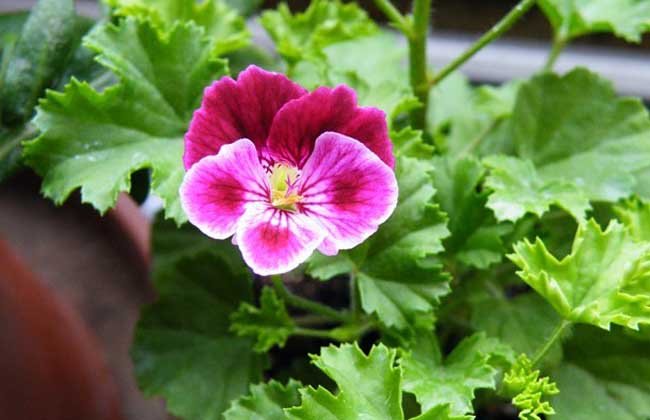
Pelargonium domesticum, also known as large-flowered pelargonium, foreign butterfly, etc., is a perennial herbaceous plant of the genus Pelargonium in the family Geraniaceae. It is distributed in Africa and in places such as Hubei in mainland China. It has now been introduced and cultivated artificially. Its flowering period is usually July to August. Let us take a look below at the propagation methods for Pelargonium domesticum!
Seed propagation of Pelargonium domesticum
Seed propagation of Pelargonium domesticum can be carried out in spring or autumn, with indoor pot sowing in spring being preferable. The suitable germination temperature is 20-25°C. Pelargonium domesticum seeds are not large, so after sowing the soil covering should not be deep, and they germinate in about 2-5 days. If sown in autumn, they can bloom in the summer of the following year. Seedlings grown from seed propagation can be selected to produce excellent intermediate-type varieties.
Cutting propagation of Pelargonium domesticum
Cutting propagation of Pelargonium domesticum can be carried out at any time except June to July, when the plants are in a semi-dormant state, with spring and autumn being preferable. In summer, high temperatures make cuttings prone to blackening and rotting. Choose cuttings 10 cm long, with the topmost part being best, as it has vigorous growth and roots quickly. After cutting the cuttings, let the cut ends dry for several days to form a thin film, then insert them into a sand bed or a mixed substrate of expanded perlite and peat. Be careful not to damage the stem bark of the cuttings, otherwise the wounds are prone to rot. After insertion, place them in a semi-shaded area and maintain a room temperature of 13-18°C. After insertion, they root in 14-21 days, and when the roots are 3-4 cm long they can be potted. During the cutting process, soaking the base of the cuttings in 0.01% indoleacetic acid solution for 2 seconds can increase the survival rate and rooting rate of cuttings. Generally, cuttings cultivated for 6 months will bloom, that is, cuttings taken in January bloom in June. Cuttings taken in October bloom in February to March of the following year.
Tissue culture of Pelargonium domesticum
Pelargonium domesticum can also be propagated by tissue culture, using MS medium as the basic medium, adding 0.001% indoleacetic acid and kinetin to induce explants to produce callus and adventitious buds, and using 0.01% indoleacetic acid to promote rooting. The tissue culture method provides a new approach for the breeding of superior varieties and the selection of new varieties of Pelargonium domesticum.