What are the cultivation methods for scented geranium?
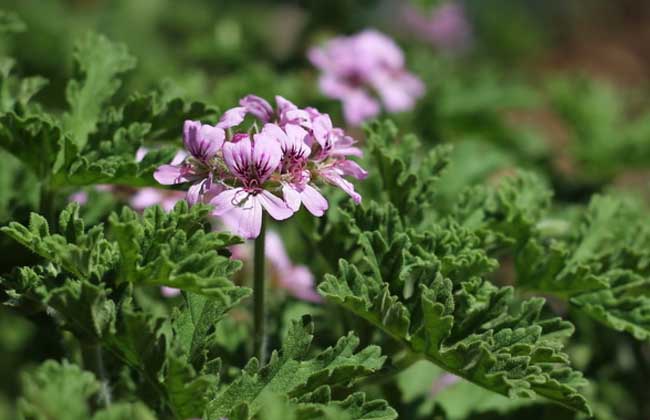
Scented geranium is a perennial herbaceous plant native to Morocco, Algeria, France, Egypt and other countries. It was introduced by the Kunming Institute of Botany in 1962, and after successful cultivation in Kunming, Yuxi, Shiping, Binchuan and other places, it has been cultivated in gardens everywhere. It is widely popular because the plant has a volatile fragrance and can be used to make essential oil. Let's take a look at the cultivation methods for scented geranium below!
Scented Geranium Growing Habits
Scented geranium likes warmth and tolerates drought, is not cold-hardy, and fears waterlogging. It has low water requirements and is suitable for growing in neutral or weakly alkaline soil. Its growth requires sufficient sunlight, so when choosing a cultivation area, a sunny, sun-facing location should be preferred. It requires deep, loose-textured, humus-rich fertile sandy soil or loam, while heavy clay soil and low-lying land with poor drainage are not suitable for cultivation. The suitable planting range requires areas below 1800 m in altitude with a frost period of less than 10 days.
Scented Geranium Propagation Methods
Scented geranium is mainly propagated by cuttings, and can also be grown from seed or by tissue culture. In April and May or September and October, cut sturdy branches with terminal buds, 5-8 cm long, let the cut end dry, then insert them as cuttings, keeping 2-3 terminal buds. Shade them and keep them moist, and they will root and survive in about 15-20 days. When breeding new varieties, artificial pollination is often used, and then seeds are collected and sown, germinating and emerging in 7-10 days at a temperature of 20°C.
Scented Geranium Cultivation Methods
1. Soil: Scented geranium requires fertile, well-drained soil. For potted plants, use 1/3 leaf mold, 1/3 rice husk ash and 1/3 garden soil, then add a small amount of superphosphate and mix evenly.
2. Watering: Scented geranium tolerates drought and fears water accumulation. Therefore, during growth, control water appropriately. Too much watering and excessive water content in the potting soil will cause leggy growth or root rot. In spring and autumn when growth and flowering are vigorous, water a little more, but it is still best to keep the potting soil moist. In winter, when temperatures are low and plant growth is slow, water as little as possible.
3. Fertilizing: When cultivating scented geranium, in addition to applying sufficient base fertilizer, during the growing season, especially at peak flowering, apply a thin liquid fertilizer once every 7-10 days. Diluted decomposed livestock and poultry manure is even better, or decomposed cake fertilizer water can also be used for watering. 3-5 days before fertilizing, water less or not at all; applying it when the potting soil is on the dry side is more helpful for root absorption.
4. Light: Scented geranium originates from South Africa and likes environments with ample sunlight, warmth and good ventilation. In spring and early summer, when sunlight is not too strong, the flowerpot can be placed in a spot with ample light so it receives sufficient sunlight, but in the hot seasons of midsummer and early autumn, it should be placed in shade and avoid direct strong light, otherwise the branches and leaves will be scorched.
5. Pruning: To make scented geranium's plant shape attractive and produce more flowers, if the plant grows too vigorously in spring, branch thinning and pruning can be carried out. After flowering, promptly cut off spent flowers and overly dense branches. During the dormant period, prune once more, cutting off yellowed old leaves, thinning out overly dense branches, and shortening overly long branches, so that after the dormant period new branches can sprout and continue to form buds and bloom. In addition, scented geranium itself has a special odor and is rarely attacked by pests, so no control is needed.