How to Propagate Snapdragons by Cuttings? Detailed Methods and Steps
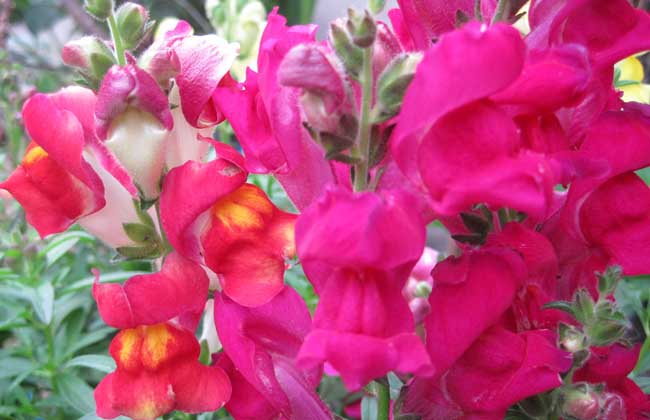
Snapdragons (Antirrhinum majus) are highly valued for their brightly colored flowers and are also a traditional Chinese medicinal herb, with effects of clearing heat and detoxifying, cooling blood and reducing swelling. In production, they are mainly propagated by seed. To increase the propagation rate of superior snapdragon varieties, cutting propagation can be used. Let's take a look at the snapdragon cutting propagation method below!
Cutting Selection
When snapdragon seedlings reach about 9 cm in height and have 8 to 10 true leaves, pinch off the growing tips. When pinching, leave the lower 4 to 6 true leaves and remove the tender tip with 4 true leaves, which can be used as a cutting for propagation.
Substrate Preparation
Use two parts sandy loam mixed with one part plant ash as the cutting substrate, mix thoroughly, and sift through a fine sieve. Rinse the seedling box or shallow seedling tray clean with water, then add the coarse sifted soil to about two-thirds of the height, then spread about 2 cm of fine soil on top, and spray water appropriately to moisten the substrate.
Cutting Method
When taking snapdragon cuttings, use a thin bamboo stick about 3 mm in diameter to pre-punch holes in the substrate. While making holes, insert the cuttings, and gently press the soil around the base of each cutting with two fingers. The planting density is about 2.5 by 3 cm, with the standard being that the leaves of adjacent cuttings touch but do not overlap. Then use a fine-nozzle watering can to water thoroughly, and move the tray to a shaded area for care.
After-Cutting Care
After taking snapdragon cuttings, spray water on the potting soil and cuttings twice a day, morning and evening, using a fine-nozzle watering can. Do not use too much water; the potting soil should just be moist. If air humidity is too low, the number of sprays can be appropriately increased. On cloudy days, as long as the potting soil does not turn pale, there is no need to water. Rooting is very easy. At a temperature of 15 to 20°C, roots generally emerge in about 10 days. After rooting, once the seedlings resume growth (about 15 to 20 days), they can be transplanted. Since snapdragons frequently produce side shoots during the growing season, cuttings can be taken frequently as long as the temperature is suitable. Tender shoots 3 cm long with 4 leaves can all survive as cuttings. The tender tips from the first pinching, after surviving as cuttings, if grown as single-stem plants, will have a flowering period basically close to that of the mother plant.