Drop a bit of kitchen waste into the soil of a snake plant and it will explode with growth, with upright leaves exceeding 1 m
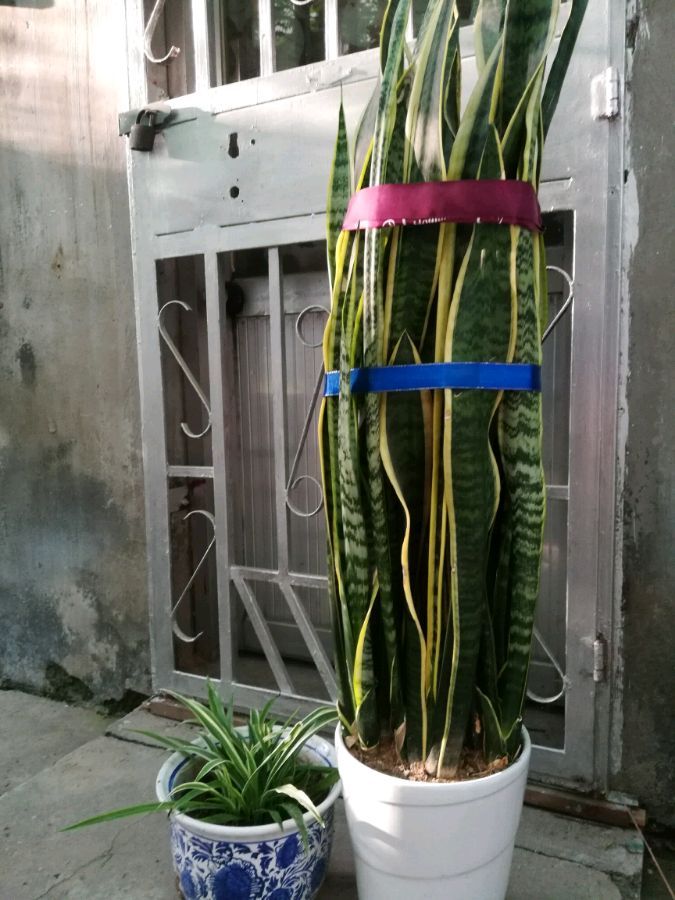
Snake plant, also known as mother-in-law's tongue, grows tall and handsome with emerald green leaves, is easy to cultivate and keep alive, and is a favorite of lazy gardeners. A friend of mine often shows off her snake plant on her social media, and it has grown past 1 m, drawing a flood of likes and making her absolutely delighted. Recently, I was going to visit her home, so it was a good chance to ask her about her tips for caring for this snake plant.
My friend is quite straightforward and very happy to share her care experience. She said that caring for a snake plant is actually very simple; as long as you do the following steps well, it can easily fill its pot, the leaves will shoot up rapidly, and it might even grow taller than Yao Ming.
1. Choosing a pot
The snake plant at my friend's home really grows too tall, and she even ties it with ribbons to hold its shape, otherwise it easily grows crooked. For caring for a snake plant, generally use a flower pot with a diameter of 20-30 cm, with a white plastic pot or purple clay flower pot being best, and repot about once every 2 years; when repotting, a pot 2 sizes larger than the previous one is enough. If it grows relatively fast, it should also be repotted within a year, otherwise a pot that is too small will hinder its growth.
It is best not to water for half a month before repotting, so that when repotting you can use a wooden stick to go around along the inner wall of the pot, gently tipping out the pot soil without damaging the root system. Pot soil that has been used for 1-2 years generally becomes somewhat compacted, and this is also one of the reasons for repotting flowers; if the pot soil is compacted, the roots have difficulty breathing, which affects growth. During usual care, it is recommended to use a microbial organic nutrient solution, which can not only supplement nutrients but also revitalize and loosen the soil and improve the soil environment.
2. Points to note when potting up
Pot soil can be a source of nutrients that plants directly absorb, so this is very key. The principle for mixing soil is fertility, air permeability and fertilizer retention. Many experienced gardeners do this when potting up: at the very bottom of the flower pot, put a layer of crushed bricks or coal cinders, or small stones are also fine; this is to ensure the air permeability of the pot soil and make it easier for the root system to breathe.
Next is the secret that made my friend's snake plant grow very tall. It turns out she buried a layer of soybeans above this breathable layer. These soybeans really are a treasure for growing flowers, and can be used when repotting many flowers, because soybeans contain relatively high nitrogen and can continuously provide nutrients to green plants later on. Just yellow leaves alone are not enough, though; the next step must also be done well.
My friend also mixed eggshells, leaves and these soybeans together, and this fertilizer slowly ferments at the bottom of the pot, fully ensuring that the snake plant in the pot does not lack fertilizer. If gardeners want to imitate this, it is recommended to first separately compost these eggshells, soybeans, tree bark and the like, and then put them into the flower pot; that will be safer.
Then add a layer of leaf mold on top, and that is enough; this can play a role in retaining fertilizer. Before using this soil, it is best to sterilize it with chemicals or by burning, because there are many insect eggs in the soil, which are also a source of pests and diseases. Then you can water to settle the pot and keep it in a cool, ventilated place to grow.
This snake plant is growing so well. After two months, we must promptly and regularly supplement fertilizer, but we must also pay attention to applying thin fertilizer frequently. We use a root-strengthening organic nutrient solution for fertilizer supplementation. It is an organic fertilizer fermented purely from plants, rich in nitrogen, phosphorus and potassium elements. During the vigorous growth period, dilute it 500 times and use it once a week; at other times, dilute it 1000 times and use it once every 10 days, adjusting fertilizer use in a targeted way, and the snake plant is more likely to grow until it fills the pot.