Clematis, the queen of vines, is especially appealing, and wherever it climbs with a little support, flowers follow.
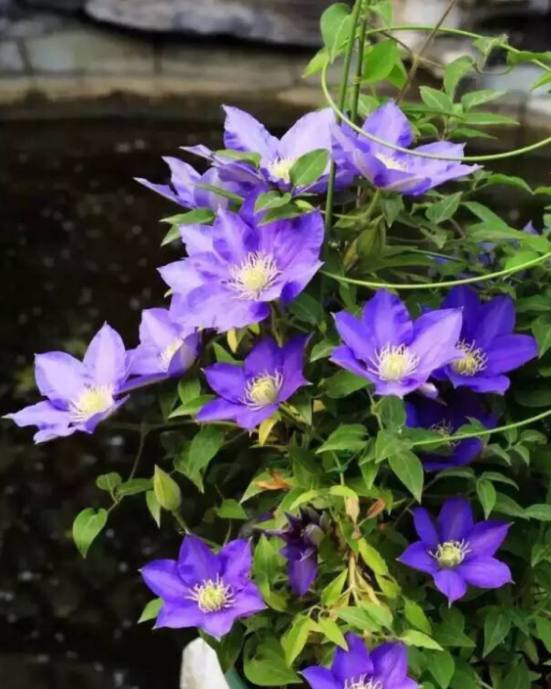
As the saying goes, those who loved growing flowers in a past life are sure to be great beauties in the next; this flower is especially appealing, hailed as the queen of vines, and with a little support it climbs upward, with flowers everywhere it reaches, truly an excellent choice for potted planting.
This flower is called clematis, also known as leather flower; it comes in a wide range of colors and blooms from June to September. It can be grown in pots to decorate a balcony, or planted in the ground to adorn a courtyard, and paired with roses it looks even more brilliant and eye-catching.
Its flowers are gorgeous and elegant, highly ornamental, and can release a fragrant scent that lifts the spirits of anyone who smells it and also drives away indoor odors, making it a very popular flowering plant today.
Clematis has a very strong climbing habit, and it produces an enormous number of flowers in a single bloom, so many that the leaves can barely be seen; it is spectacular and beautiful, and its title as queen of vines is well deserved.
For such a beautiful flower, care and propagation are both very simple.
It likes loose, fertile, well-drained sandy soil; you can use garden soil plus leaf mold plus river sand, and add decomposed chicken manure. And unlike other plants, clematis likes to grow in alkaline soil.
In addition, it likes to climb, so you can place it in a corner where it can climb upward along the wall, or insert a bamboo pole into the potting soil; after it blooms, it is even more ornamental.
Like roses, it is prone to attracting red spider mites and aphids, so when grown indoors, ventilation and air exchange must be strengthened to reduce the occurrence of red spider mites and aphids.
It is not drought-tolerant, so in summer you can water it once a day and keep misting the leaves to prevent wilting and withering, which would affect its ornamental effect.