How to Grow Snapdragons? Detailed Guide to Cultivation Methods and Precautions
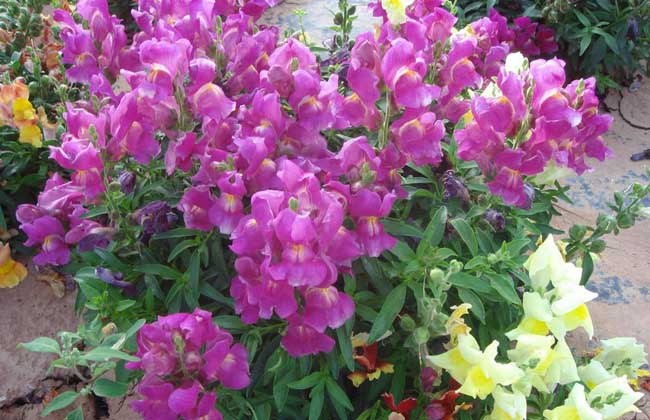
Snapdragon, also known as dragon's head flower, lion flower, dragon's mouth flower, and parrot flower, is a perennial herbaceous plant of the genus Antirrhinum in the family Scrophulariaceae, often grown as a biennial or annual. It blooms in summer and autumn and is widely planted in Chinese gardens. It is suitable for mass planting in flower beds and flower borders, and combines especially well with zinnias, petunias, marigolds, and scarlet sage. Let's take a look below at how to grow snapdragons!
Cultivation Value of Snapdragons
1. Ornamental value: The snapdragon is a flower whose every small petal, just like its name suggests, resembles a glistening fish scale. Its many brightly colored flowers form a large, dense cluster of snapdragons, giving it high ornamental value. The flowers come in white, pink, deep red, flesh-colored, orange, and many other colors. Most astonishingly, a single flower spike of the snapdragon can produce two different colors of flowers, and these bicolor flowers are truly amazing, making it a plant of extremely high ornamental value.
2. Decorative use: Snapdragon flowers are large and beautiful, so many countries place great importance on using snapdragons to beautify the environment and decorate courtyards. Snapdragons are generally planted in flower beds, outside windows, or kept indoors as potted plants, or their flower spikes are used alone to make cut-flower arrangements and other crafts. In recent years, snapdragons have risen to fame in the cut-flower and flower-arrangement world and have won the affection of many floral enthusiasts.
3. Edible value: An important use of the snapdragon is as an oil crop. It can be pressed to extract oil for human consumption, and the oil is very healthy and rich in nutrients.
4. Medicinal effects: The snapdragon is a traditional Chinese medicine. It tastes slightly bitter, and the entire plant can be used as medicine. It is a cooling-natured Chinese medicine with the functions of clearing deficiency heat, removing toxins, activating blood circulation, and relieving swelling and pain. It can treat summer heat colds and symptoms of headache and feverishness, and can also treat conditions such as fractures, sprains, and skin abscesses. It can be taken internally or applied externally. For internal use, the snapdragon is ground up and decocted. However, because the snapdragon is somewhat toxic, it should be taken according to a doctor's instructions, following the dosage and method. For external application, simply apply the ground snapdragon powder to the suppurating area.
Snapdragon Cultivation Methods
1. Soil: Snapdragons are not very demanding about soil, but they grow best in fertile, loose, well-draining, slightly acidic sandy loam.
2. Watering: Snapdragons are very sensitive to water. The potting soil must be kept moist, and when growing seedlings in pots, they must be watered thoroughly. However, the potting soil must have good drainage and must not become waterlogged, otherwise it will easily cause root rot as well as yellowing, withering, and wilting of stems and leaves.
3. Sunlight: The snapdragon is a light-loving herbaceous plant and needs to grow under conditions of sufficient sunlight. The plants are dwarf and compact in clumps, grow very neatly, maintain a consistent height, and bloom uniformly with vivid flower colors. If grown under semi-shaded conditions, the plants will grow taller, the flower spikes will elongate, and the flower colors will be dull.
4. Temperature: Snapdragons are relatively cold-tolerant but not heat-tolerant. The most suitable temperature for growth is 7-10°C. High temperatures are detrimental to growth and development, and the most suitable temperature for flowering is around 15-16°C. For some varieties, if the temperature exceeds 15°C, they will not branch and the plant form will be affected.
5. Fertilizing: Strengthening the management of fertilizer and water is necessary. When fertilizing, pay even more attention to the balance of phosphorus, potassium, and so on, because the plant itself has root nodules and therefore has the ability to fix nitrogen. Under normal circumstances, there is no need to apply nitrogen fertilizer. During the growing period, in combination with watering, apply fermented oil residue water once every half month. Before fertilizing, also loosen the soil and remove weeds appropriately.
6. Pruning: For snapdragons, only by cutting off the flowered branches after each flowering period ends can new branches be better encouraged to sprout and continue to bloom.
Snapdragon Disease Control
1. Gray mold
[Damage characteristics] Gray mold is an important disease of snapdragons cultivated in greenhouses. The stems, leaves, and flowers of the plant can all be affected, with flowers being the main target.
[Solution] In the early stage of the disease, use 70% thiophanate-methyl wettable powder at 1000 times dilution, or 50% carbendazim wettable powder at 800 times dilution, and spray for control. Spray once every 10-15 days, for 2-3 consecutive sprays.
2. Blight
[Damage characteristics] High temperature, frequent rain, and high humidity favor the occurrence of snapdragon blight. On leaves, the center of the lesion is grayish-white, and the edge is brown and slightly raised. The lesion diameter can develop from about 1 mm to 15 mm, and concentric rings appear. On stems, the lesions mainly occur at the base, and the center of the lesion is slightly sunken; the rest is similar to the lesions on leaves. When the disease is severe, leaves fall early and plants become stunted.
[Solution] When disease is found, promptly spray 70% thiophanate-methyl at 1000 times dilution or 65% zineb wettable powder at 500 times dilution for control. Spray once every 10 days, for 2-3 consecutive sprays, to effectively control the condition.
3. Snapdragon rust
[Damage characteristics] Snapdragon rust mainly damages the leaves, tender stems, and calyxes of snapdragons.
[Solution] In the early stage of the disease, spray 15% triadimefon wettable powder at 2000 times dilution or 65% zineb wettable powder at 500 times dilution.
4. Leaf blight
[Damage characteristics] Leaf blight mainly occurs on the leaves and stems of snapdragons.
[Solution] In the early stage of the disease, spray equal-strength Bordeaux mixture, or 65% zineb wettable powder at 600 times dilution, or 50% benomyl wettable powder at 2000-2500 times dilution.
5. Stem rot
[Damage characteristics] Stem rot mainly damages the stems and roots of snapdragons. In the early stage of the disease, light brown lesions appear at the root-stem area, and in severe cases the plant dies.
[Solution] In the early stage of the disease, spray the affected area with 40% fosetyl-aluminum wettable powder at 200-400 times dilution, or drench the root-stem area of the plant with 50% captafol wettable powder at 1000 times dilution.
6. Seedling rot
[Damage characteristics] Seedling rot mainly damages snapdragon seedlings. In the early stage of the disease, the base near the soil surface or the roots of the seedlings become water-soaked, and finally rot, causing the whole plant to lodge or wilt and die.
[Solution] In the early stage of the disease, spray 50% carbendazim wettable powder at 800 times dilution or 75% chlorothalonil wettable powder at 800 times dilution.