What are the propagation methods for cockscomb?
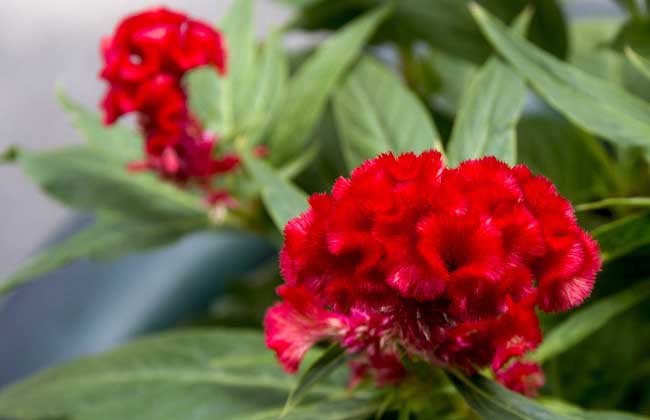
Cockscomb is surely familiar to everyone. It originated in tropical Africa, the Americas and India, and is now widely cultivated around the world. Its flowers are mostly red, and it is grown in many places to beautify the environment, especially now in roadside flower beds and residential landscaping. Besides beautifying the environment, cockscomb also has high medicinal value. Let's take a look at the propagation methods for cockscomb below!
Cockscomb growing habits
Cockscomb is an annual herbaceous plant of the genus Celosia in the Amaranthaceae family. Varieties can be divided by inflorescence shape into broom cockscomb, comb cockscomb, lovebird cockscomb, fringe cockscomb, and so on. It prefers a warm, dry climate, fears drought, likes sunlight, is not tolerant of waterlogging, frost, or poor soil, and prefers loose, fertile, well-drained soil. Cultivation in well-drained sandy loam is better, and it is a new way to develop courtyard economy at present.
Cockscomb origin and distribution
The origins of cockscomb in China are mainly distributed in Anhui, Beijing, Fujian, Gansu, Guangdong, Guangxi, Guizhou, Hainan, Hebei, Heilongjiang, Henan, Hong Kong, China, Hubei, Hunan, Jiangsu, Jiangxi, Jilin, Liaoning, Inner Mongolia, Ningxia, Qinghai, Shaanxi, Shandong, Shanxi, Sichuan, Taiwan, China, **, Tibet, Yunnan, Zhejiang and other places.
Cockscomb propagation methods
1. Seed sowing: Cockscomb propagation commonly uses the seed propagation method. Around Qingming, choose a good plot, apply sufficient base fertilizer, plow finely and harrow evenly, level and make beds, evenly scatter the seeds over the bed surface, cover the seeds lightly, firm the soil and water thoroughly. Generally, at a temperature of 15-20°C, seedlings emerge in 10-15 days. For summer sowing after Mangzhong, seize the dry period to clear stubble, and it can also be intercropped with white peony, tree peony or other crops, using one jin of seed per mu.
2. Seedling stage management: When cockscomb seedlings are 2 cun tall, thin them to a row spacing of 1 chi and a plant spacing of 8 cun. The thinned seedlings can be transplanted to other fields, and after transplanting they must be watered. During the seedling stage, be sure to weed and loosen the soil, and when it is not too dry, water as little as possible. When the seedlings are about 1 chi tall, apply a topdressing once. After the rows close, appropriately remove old leaves. When flowering and heading, if the weather is dry, water appropriately, and in the rainy season strictly prevent water accumulation in low-lying areas. After heading, the flower buds in the leaf axils on the lower part can be removed to help nutrients concentrate on the growth of the main spike at the top.