When Does the Cockscomb Bloom
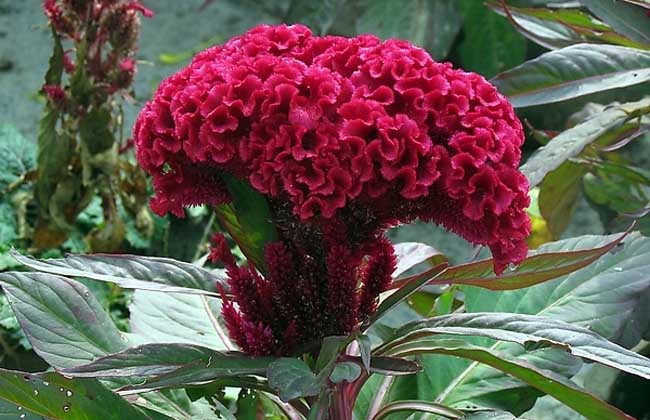
Cockscomb, also known as jijihua, laolaihong, luhua jiguan, and bi jiguan, is native to Africa, tropical America, and India, and is widely cultivated around the world. Cockscomb flowers generally come in three colors: red, white, and yellow. It blooms in summer and autumn, and the flowers are mostly red and shaped like a cockscomb, which is why it is called cockscomb. So when does the cockscomb bloom? Let's take a look below.
When Does the Cockscomb Bloom
The flowering period of cockscomb is generally from July to October, and the fruiting period is from September to November. The inflorescences vary in form. By form, cockscomb can be divided into broom cockscomb, fan cockscomb, mandarin duck cockscomb, and yingluo cockscomb. By shape, it can be divided into spherical flower type, feathery flower type, and spear-shaped flower type. Each flower type has its own unique advantages and character.
The Origin and Distribution of Cockscomb
Cockscomb is native to Africa, tropical America, and India, and is widely cultivated around the world. It is an annual herbaceous plant. In China, it is mainly distributed in Anhui, Beijing, Fujian, Gansu, Guangdong, Guangxi, Guizhou, Hainan, Hebei, Heilongjiang, Henan, Hong Kong, China, Hubei, Hunan, Jiangsu, Jiangxi, Jilin, Liaoning, Inner Mongolia, Ningxia, Qinghai, Shaanxi, Shandong, Shanxi, Sichuan, Taiwan, China, **, Tibet, Yunnan, and Zhejiang.
Classification of Cockscomb Varieties
1. Feather cockscomb: Feather cockscomb is an annual herbaceous plant. The plant height is 80-120 cm, and the spike-shaped inflorescences gather into a triangular terminal form, with colors such as red, yellow, and purplish red. Its natural flowering period is from July until frost. The flower spikes are plump and shaped like torches, making them seasonal floral materials for summer and autumn. They can withstand relatively long dry storage, but after opening the box they must be placed in water as soon as possible. Commercially available preservative solutions can also be used to extend vase life.
2. Multi-headed cockscomb: Multi-headed cockscomb is a plant of the genus Celosia in the Amaranthaceae family. Its inflorescences are twisted and folded, closely resembling a cockscomb, commonly known as head-shaped cockscomb. The slender spikes of the spike-shaped inflorescence are reed-flower-like and torch-shaped, and are called feathery cockscomb. Because of its long flowering period, rich and vivid flower colors, and easy cultivation, cockscomb is the most common potted flower in gardens.
3. Yingluo cockscomb: Yingluo cockscomb is five to six chi tall, with narrow, long, pointed leaves arranged alternately and small stipules. In autumn, flower crowns emerge at the ends of the stems, and the spikes all hang down, just like yingluo. Its colors include red, yellow, white, and others. The stems are long, strip-shaped, and soft, and wither as soon as cold arrives. The flower spikes differ from those of ordinary cockscomb: the terminal inflorescence has one larger crown-like section, while the rest resemble small cone-shaped cockscomb. In the past, it was propagated by sowing. After the main section of the terminal inflorescence grows large, it is very prone to lodging. The flower type is smaller than that of ordinary head-shaped cockscomb, and the cone-shaped inflorescences grow laterally.