Is it good to keep a cactus in the bedroom? An analysis of the pros and cons for you
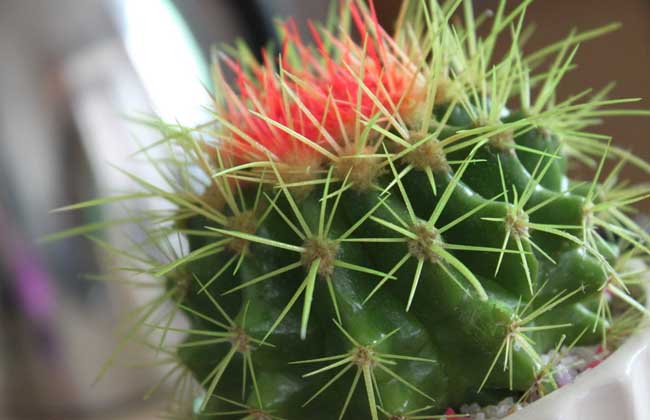
The cactus, commonly known as the grass ball, Changsheng pill, short-haired pill and so on, is a perennial succulent herbaceous plant of the Cactaceae family. It generally blooms in the early morning or evening, lasting from a few hours to a day. Its stems, leaves and flowers all have high ornamental value, and it is also an artistic masterpiece among hydroponic flowers. It also has the functions of absorbing electromagnetic radiation, adsorbing dust and purifying the air. Let us take a look below at whether it is good to put a cactus in the bedroom!
Is it good to put a cactus in the bedroom?
1. Environmental protection: The cactus has an anti-radiation function. In life and work, people often ask, does the cactus protect against radiation? The answer is yes. The cactus's stomata open at night, and while absorbing carbon dioxide it can release a large amount of oxygen. Placing a cactus near electrical appliances at home or in the office can effectively reduce the electromagnetic radiation pollution produced by various electrical and electronic products, and increase the concentration of negative ions in the indoor air. Therefore, placing a cactus plant near electrical appliances at home or in the office can help the human body reduce as much as possible the radiation released by computers.
2. Natural oxygen bar: Most plants carry out photosynthesis during the day, absorbing carbon dioxide and releasing oxygen. At night they carry out respiration, absorbing oxygen and releasing carbon dioxide. Some plants are the opposite. For example, the cactus releases carbon dioxide during the day, and at night absorbs carbon dioxide and releases oxygen. In this way, having a cactus in the bedroom at night can supplement oxygen and help sleep. Do not underestimate the cactus, it is also an expert at adsorbing dust! Placing a cactus indoors, especially a hydroponic cactus (because a hydroponic cactus is cleaner and more environmentally friendly), can play a role in purifying the air.
How to care for a cactus
1. Temperature: The cactus likes high temperatures and a dry environment. In winter, the room temperature should be kept above 20°C during the day, and the nighttime temperature should not be lower than 10°C. If the temperature is too low, the root system is prone to rotting, but if the temperature is too high, scale insect damage is likely to occur.
2. Light: The cactus requires plenty of sunlight, but in summer it must not be exposed to strong direct sunlight and needs appropriate shading. For indoor cultivation, artificial light can be used to make it grow robustly.
3. Soil: The cactus is suitable for growing in well-drained sandy loam soil. For indoor cultivation, artificial culture soil is mostly used, usually prepared by mixing half peat soil and half fine sand. You can also use crushed pine needles added to fine sand, mixed into a culture soil for planting.
4. Watering: The cactus requires a dry environment and is afraid of water accumulating in the pot soil. Generally, the pot soil should be kept “dry when it should be dry, wet when it should be wet”. It is best to use water that has been left to stand for watering. Note that when watering, you must water thoroughly.
5. Fertilizing: When changing the pot soil for a cactus, apply a small amount of base fertilizer at the bottom of the pot, such as horseshoe slices, bean cake or sesame paste residue. During the growing season, water once every half month with fermented organic liquid fertilizer (a concentration of 20% is appropriate). Never let the fertilizer concentration be too high.
Precautions for growing a cactus
1. Household cactus planting generally uses pot cultivation. For the culture soil, use 6 parts humus soil, add 4 parts sand and 2 parts rice husk ash. If you add a little bone powder, even better. Stir evenly and it can be planted.
2. In spring and summer, when the cactus begins to grow, apply fertilizer once every half month, preferably a mixed fertilizer of nitrogen, phosphorus and potassium. In addition, provide appropriate shade, and never expose it to the scorching sun.
3. In winter, move the potted cactus indoors. It can safely overwinter when the room temperature is above 5°C. At this time, a household potted cactus can be placed in a glass tank indoors to keep warm through the winter, or it can be covered with a double-layer plastic bag to keep warm through the winter. In winter, the cactus is in a dormant period, and the pot soil should be relatively dry, otherwise the roots are prone to rotting.
4. The cactus is not suitable for too much watering, otherwise the roots will rot. In spring and summer, it is best to water once every one to two months; in autumn and winter, once every two to three months is enough.
5. Place it at home out of the reach of young children.