Can ball cacti actually absorb formaldehyde?
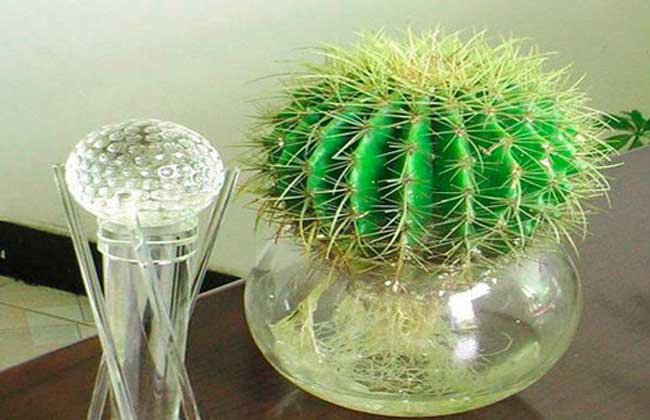
The ball cactus is the collective name for plants of the Cactaceae family with a spherical shape, commonly known as grass ball, changshengwan, and duanmaowan. It is a plant whose stems, leaves, and flowers all have high ornamental value, has the effect of absorbing electromagnetic radiation, and is also a natural air freshener, with the effect of adsorbing dust and purifying the air. Many people do not know whether ball cacti can absorb formaldehyde, so let us take a look below!
Do ball cacti absorb formaldehyde?
The formaldehyde-absorbing effect of ball cacti is relatively small. The leaf flesh of the ball cactus is very thick and it is especially drought-tolerant. It will not have much of a problem even if it is not watered for a long time, and its effect in absorbing formaldehyde is relatively small. However, the ball cactus can absorb dirt in the air and electromagnetic radiation waves, is very suitable for keeping at home, and is also relatively easy to grow.
How to grow ball cacti
1. Temperature: The ball cactus likes high temperatures and dry environments. In winter, the indoor room temperature should be kept above 20°C during the day, and the nighttime temperature should not be lower than 10°C. If the temperature is too low, it easily causes root rot, but if the temperature is too high, it is also prone to scale insect damage.
2. Light: The ball cactus requires sufficient sunlight, but in summer it cannot be exposed to strong direct sunlight and needs appropriate shading. For indoor cultivation, light can be used for irradiation to make it grow robustly.
3. Soil: The ball cactus is suitable for growing in well-drained sandy loam soil. For indoor cultivation, artificial culture soil is mostly used, usually prepared by mixing half peat soil and half fine sand. Crushed pine needles mixed with fine sand can also be used as the culture soil for planting.
4. Watering: The ball cactus requires a dry environment and is afraid of water accumulating in the pot soil. Usually, the pot soil should be kept "dry when it should be dry and wet when it should be wet". It is best to use water that has been left to stand for watering. Note that when watering, it must be watered thoroughly
5. Fertilizing: When changing the pot soil for the ball cactus, apply a small amount of base fertilizer at the bottom of the pot, such as horseshoe slices, bean cake, or sesame paste residue. During the growing season, water once every half month with fermented organic fertilizer liquid fertilizer (a concentration of 20% is appropriate). Be sure not to make the fertilizer concentration too high.
Common plants that absorb formaldehyde
1. Spider plant: The spider plant is a strong formaldehyde-removing plant. One to two pots of spider plants in a room of 8 to 10 sq m can absorb more than 80% of the harmful gases indoors. Its ability to absorb formaldehyde is extremely strong, equivalent to an air purifier. It can kill 80% of harmful substances in a room within 24 hours and absorb 86% of formaldehyde. It can also absorb various harmful gases such as nitrogen oxides, methane, benzenes, carbon monoxide, carbon dioxide, sulfur dioxide, and chlorine peroxide, making it an expert at purifying the air.
2. Snake plant: The snake plant is a strong formaldehyde-removing plant with an extremely strong ability to absorb formaldehyde. During the day it can release a large amount of oxygen and can absorb more than 80% of various harmful gases in a room of about 10 sq m. Two pots of snake plants can basically purify the air in an ordinary living room.
3. Aloe: Aloe is a super formaldehyde-removing plant. If there is lighting within 24 hours, it can eliminate 90% of the formaldehyde in 1 cubic meter of air.
4. Ivy: Ivy is a strong benzene-removing plant. One pot of ivy can break down 90% of the benzene in a room of 8 to 10 sq m, can take in tiny dust, and absorb formaldehyde.
5. Agave: Agave is an all-around plant. In a room of about 10 sq m, it can eliminate 70% of benzene, 50% of formaldehyde, and 24% of trichloroethylene.
6. Chinese rose: The Chinese rose is an all-around plant and can effectively break down and absorb harmful gases such as hydrogen chloride, hydrogen sulfide, phenol, and ether.
7. Chrysanthemum: The chrysanthemum is an all-around plant and can break down and absorb xylene and formaldehyde.
8. Golden pothos: Golden pothos is a strong formaldehyde-absorbing plant, long known by the nickname "formaldehyde-absorbing expert", and can remove harmful gases such as formaldehyde, benzene, carbon monoxide, and nicotine.
9. Begonia: Begonia is a strong formaldehyde-absorbing plant. In addition to being able to absorb formaldehyde and purify the air, it is also highly ornamental.