Origin Distribution and Main Producing Areas of the Night-Blooming Cereus
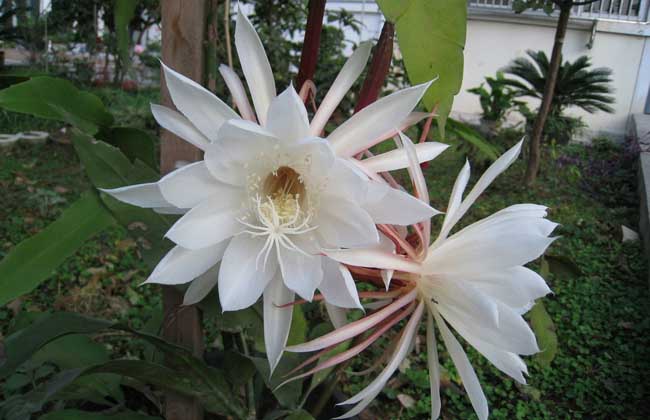
The night-blooming cereus, also known as Qionghua, Tanhua, Guizaihua, Weituohua, Beauty Under the Moon, etc., is an epiphytic succulent shrub of the genus Epiphyllum in the cactus family. Because its blooming time is extremely brief, there is the saying "a fleeting glimpse of the night-blooming cereus." It is widely cultivated in various regions of the world and has high cultivation value. Let us take a look at the origin distribution of the night-blooming cereus below!
Origin Distribution of the Night-Blooming Cereus
The night-blooming cereus is native to Mexico, Guatemala, Honduras, Nicaragua, Suriname, Costa Rica and other places. It is now widely cultivated in various regions of the world, and is commonly cultivated in various provinces and regions of China. According to specimen collection records from 1936, it has become naturalized in southern Yunnan, growing at an altitude of 1000-1200 m.
Origin Environment of the Night-Blooming Cereus
The night-blooming cereus prefers a warm, humid, semi-shaded, warm and moist environment. It is not tolerant of frost and avoids intense direct sunlight. In particular, its temperature requirements are higher than those of its place of origin, at 15-25°C. In spring and summer, the night temperature needs to be 16-18°C, and the daytime temperature 21-24°C. The overwintering temperature is 10-12°C, and the soil should not be too dry. In winter it can withstand low temperatures of around 5°C. The soil should preferably be a slightly acidic sandy soil rich in humus, with good drainage, loose and fertile; otherwise the roots are prone to rot.
Why It Blooms at Night
The night-blooming cereus originates from the tropical deserts of Mexico to Brazil in the Americas. The climate there is dry and hot, but it becomes much cooler at night. Blooming at night can avoid intense sunlight exposure, shorten the blooming time, and also greatly reduce water loss, which is beneficial to its survival. This allows its life to continue. Thus, over a long period of time, the characteristic of the night-blooming cereus blooming for a short time at night gradually formed and has been passed down from generation to generation to this day.
Cultivation Value of the Night-Blooming Cereus
1. Ornamental value: The night-blooming cereus is a famous ornamental flower, commonly known as the Beauty Under the Moon. Whenever the summer and autumn seasons come, when the sky is full of stars and the night is quiet, the night-blooming cereus blooms, displaying its beautiful posture and elegant colors. While people are still deep in dreams, the pure and fragrant night-blooming cereus has already closed and withered in an instant, hence the name "a fleeting glimpse of the night-blooming cereus." Its wonderful blooming habit often attracts great interest from flower enthusiasts.
2. Medicinal value: The night-blooming cereus has the effects of softening the bowels and removing toxins, clearing heat and treating asthma. It mainly treats large intestine heat syndrome, constipation and bloody stool, swelling and sores, pneumonia, blood streaks in phlegm, asthma and other conditions, and also treats high blood pressure and high blood lipids.
3. Ecological value: Placing a few pots of green plants at home not only allows you to absorb healthy fresh air every day, but is also beneficial to health and beautifies the environment.
① Green plants generally carry out photosynthesis during the day, absorbing carbon dioxide and releasing oxygen. At night they all become like the human body, absorbing oxygen and exhaling carbon dioxide. However, the night-blooming cereus is exactly the opposite. It is a common plant with CAM metabolism (Crassulacean acid metabolism). During the day it releases oxygen and only carries out the light reaction. At night, after the surrounding ambient temperature drops to an appropriate level, it absorbs carbon dioxide to carry out the dark reaction. Therefore, the night-blooming cereus can improve the indoor environment to a certain extent.
② The night-blooming cereus can increase the negative ion content indoors. Although its flowering period is very short, when it blooms it is beautiful and noble, with a rich fragrance filling the air. It can release negative ions, making the indoor air fresh and pleasant. Negative ions can be said to be the vitamins of the air. If the negative ion content in a room decreases, people will feel suffocated and short of breath. Therefore, the night-blooming cereus, which can increase the concentration of negative ions in the air, is indeed a rare, beautiful and beneficial flower.
③ The scent of the night-blooming cereus has the ability to sterilize and inhibit bacteria, filling the home environment with a healthy atmosphere.