What are the propagation methods for the night-blooming cereus? Explained clearly in one article
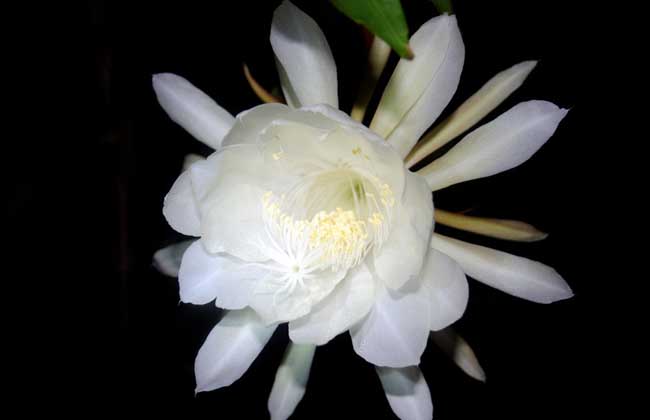
Because the night-blooming cereus always blooms at midnight, people call it the "Beauty under the Moon." A brief glimpse of the night-blooming cereus lasts only an instant, yet that single moment represents eternity. Its flowers are as white as jade and fill the air with a delicate fragrance. Because it is beautiful yet retains its elegance, it has won the affection of people around the world. Now let us take a look together at the propagation methods for the night-blooming cereus!
Seed propagation of the night-blooming cereus
Seed propagation of the night-blooming cereus is often used in hybrid breeding; it takes 4-5 years from sowing to flowering.
Grafting propagation of the night-blooming cereus
1. Grafting time: The night-blooming cereus has a strong regenerative capacity, and grafting can be done at any time except in severe winter, but it is best in spring and autumn.
2. Grafting method
① On a night-blooming cereus plant, select several current-year stem segments with good growth. Disinfect the base of the stem segments with an alcohol cotton ball, then use a sterilized knife to cut the cortex and the thicker fleshy part on both sides of the stem segment into a tongue shape.
② Select a normally growing cactus ball with a diameter of 60-90 mm as the rootstock. The larger the cactus ball, the better, because it will look more attractive after taking shape. After disinfecting the top of the ball with alcohol, cut away several patches of cortex. In the middle part where the cortex has been removed, use a sterilized small knife to insert a small slit downward; the width and depth of the cut should be just right for inserting the scion. Then insert the stem segment into the cactus ball's cut from the slit.
③ Insert one of the cactus ball's own spines into the lower part of the cortex of the grafted bud to secure it.
3. Post-grafting care: The cactus ball is a succulent plant, and too much water can easily cause rot, so water should be appropriately reduced. After grafting the night-blooming cereus, place it in a cool, ventilated place and protect it from being soaked by rain. After one week, if the grafted bud shows no abnormality, it means the graft has survived. After half a month, it can be placed under scattered light and enter normal care. Before the wound has healed, do not spray water on the ball to prevent rot. At the same time, in hot seasons, prevent direct sunlight.
Cutting propagation of the night-blooming cereus
1. Cutting time: May to June is most suitable; with greenhouse conditions, it can be done all year round. The cuttings grow roots in about 20-30 days.
2. Cutting method
① Selection of cuttings: Choose slightly older, two-year-old leaf-like branches as cuttings, preferably those that are robust and thick. Cuttings that are too tender are prone to rot or shriveling after planting and are not suitable. Cut the cuttings from the mother branch, use a sharp knife to cut them into sections 10-15 cm long, place them in a cool, ventilated place for half a day to one day, and only insert them for cutting when the cut surface has dried into a thin film.
② Soil for cuttings: Use a mixture of 7 parts garden soil and 3 parts equal-amount rice husk ash. Plain sandy soil can also be used; the main requirement is good drainage and looseness to facilitate rooting. The soil should first be exposed to strong sunlight to prevent the occurrence of moss or mold that could cause rot.
③ Pots for cuttings: Cutting can be done in a sand bed or in a pot. It is best to use a seedbed pot (tower pot). First place broken tile pieces at the bottom of the pot, then add culture soil until the pot is eight-tenths full. The cutting depth is about 1/3 of the cutting. After cutting, press the base slightly firm, then place it in a cool indoor place and do not move it around much.
④ Post-cutting care: If placed in a greenhouse, do not let sunlight shine directly on it, so as to avoid shriveling the cuttings and affecting root sprouting. After cutting, watering is necessary; after watering, straighten any tilted branches. If high temperatures cause the cuttings to wilt, use a fine sprayer to spray clean water. The soil should be slightly moist.