Where is the banyan tree native to? A detailed introduction to its main distribution areas
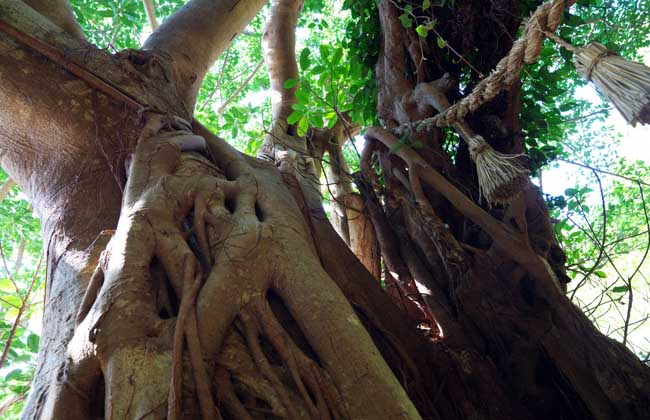
The banyan tree is also known as the small-leaved banyan, Evergreen, banyan aerial root, etc. It is a large tree of the genus Ficus in the mulberry family, usually used in landscape garden design. Besides serving as a street tree and shade tree, it can also fully display its ornamental value as a garden landscape tree and a specimen tree. Let us take a look at the native distribution of the banyan tree below!
The native distribution of the banyan tree
The banyan tree is native mainly to Taiwan, China, Zhejiang, Fujian, Guangdong, Guangxi, Hubei, Guizhou, Yunnan and other places. Abroad, it is also distributed in Sri Lanka, India, Myanmar, Thailand, Vietnam, Malaysia, the Philippines, Japan, Papua New Guinea and northern and eastern Australia, extending as far as the Caroline Islands.
The native environment of the banyan tree
The banyan tree has strong adaptability and prefers loose, fertile acidic soil. It can also grow in barren sandy soil, while in alkaline soil its leaves turn yellow. It is not drought-tolerant and is relatively tolerant of moisture and waterlogging, and short periods of waterlogging will not cause root rot. It grows poorly under dry climatic conditions, and in humid air it can develop aerial roots, greatly enhancing its ornamental value. It prefers a sunny, warm and humid climate and is not cold-tolerant; except in South China, it is mostly grown as a potted plant. It is not strict about soil requirements and can grow in both slightly acidic and slightly alkaline soil, but it fears exposure to scorching sun.
Common types of banyan tree
1. Weeping fig: The weeping fig, also known as the weeping fig, weeping branch fig, small-leaved fig, white fig, etc., is a species of the same genus. It is an evergreen broadleaf tree, and when potted it appears shrub-like. It has many branches, and the branches are soft and mostly drooping. The leaves are relatively small, drooping, green, thin and leathery. It is a popular indoor foliage plant both at home and abroad.
2. Variegated fig: The variegated fig, also known as the variegated weeping fig, is a cultivar of the weeping fig. It is an evergreen shrub with sparse branches. The plant form is relatively upright. The leaves are densely alternate, ovate, and both the veins and leaf margins have irregular pale yellow markings, giving it high ornamental value.
3. Variegated weeping fig: The variegated weeping fig is a cultivar of the weeping fig, and the plant is relatively short. The leaves are smaller than those of the weeping fig, green, with irregular creamy yellow markings on the leaf surface, giving it even higher ornamental value.
4. Variegated small-leaved weeping fig: The variegated small-leaved weeping fig is a cultivar of the weeping fig. The branches droop and the branching is dense. The leaves are even smaller than those of the variegated weeping fig, and the leaf surface has irregular alternating yellow-green markings, giving it even more ornamental value than the variegated weeping fig.
5. Red fruit fig: The red fruit fig, also known as the mountain fig, bird fig, red-fleshed fig, military tube fig, green-stalk club, etc., is a common species of the same genus. It is an evergreen tree with drooping aerial roots. The bark is smooth and dark brown. The leaves are broad and large, oblong, with entire margins and blunt tips, 10-20 cm long, concentrated at the tips of lateral branches. It is at its most ornamental when new leaves emerge. It is extremely shade-tolerant and can be grown indoors in pots for a long time.
6. Golden fig: The golden fig, also known as yellow fig, golden-leaf fig, etc., is a cultivar of the banyan tree. The leaves are golden yellow, smooth and glossy, and the leaf color looks even more beautiful when grown under strong light. In recent years it has become
7. Triangular fig: The triangular fig is a common species of the same genus. It is a low shrub with inverted triangular leaves. It is not cold-tolerant and is suitable for small potted cultivation.
8. Variegated triangular fig: The variegated triangular fig is a cultivar of the triangular fig. The leaf surface has irregular markings alternating yellow, white and green. It has higher ornamental value than the triangular fig and is even less cold-tolerant. It is suitable for potted foliage display.
9. Fiddle-leaf fig: The fiddle-leaf fig is a common species of the same genus. It is an evergreen tree with black branches. The leaves are fiddle-shaped, with entire wavy margins, large, 20-30 cm long and 13-20 cm wide. The leaf surface is dark green, and the leaf underside is brown, gradually turning white. It has strong cold tolerance. It is suitable for indoor potted cultivation.