What are the reasons for a bonsai ficus losing its leaves
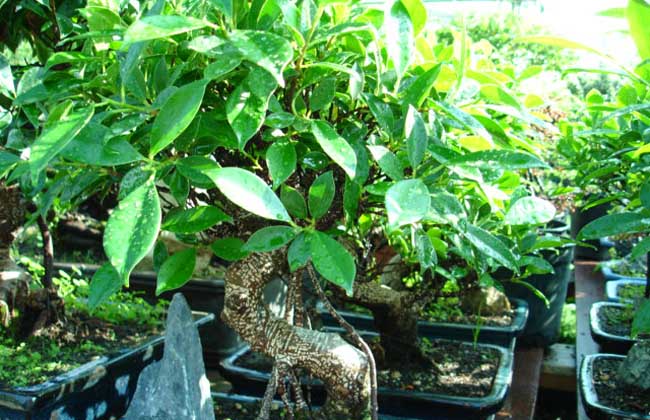
Bonsai ficus is a fairly common ornamental plant in everyday life, and gardeners who grow bonsai ficus often find that it drops leaves. Normal leaf drop means old leaves fall so new leaves can grow, while other abnormal leaf drop is caused by poor daily care. Below, let us take a look at the reasons for a bonsai ficus losing its leaves and the solutions!
Improper watering causes leaf drop
When watering a ficus, you must stick to the principle of not watering until dry, and watering thoroughly when you do. Here, dry means the surface of the potting soil is dry, not that the potting soil has dried out completely. Of course, even if it dries out completely, it will not cause great harm to the ficus in a short time, because ficus leaves are thick and small and have a certain drought tolerance.
Improper fertilizing causes leaf drop
Fertilizing a ficus should be done with light fertilizer applied frequently. Avoid using high-concentration chemical fertilizers or unfermented, undecomposed organic fertilizers, otherwise fertilizer damage will occur, with mild cases causing leaf drop and severe cases causing death.
Insufficient light causes leaf drop
Ficus grows well in an environment with sufficient light. In the high-temperature summer period, if 30-50% shade can be provided, the leaf color will appear even more emerald green, but when the temperature is below 32°C, it is best not to shade, so as to avoid leaf drop.
Pests cause leaf drop
The main pests that cause leaf drop in ficus are red spider mites and scale insects. Although there is also damage from “thrips”, this pest only curls leaves and sucks sap, and its harmfulness is somewhat less than the above two. Moreover, thrips are also easy to control; you only need to remove and destroy the curled leaves. Red spider mites are relatively small, and the usual damaged area is the back of the leaves. They are caused by poor ventilation and dry air. After washing the whole plant with plenty of water, spray with acaricides specifically for mites, such as manjing and keman. Scale insects mostly damage areas such as stems and leaf stalks, vary in size and color, and come in shapes such as round and oval. They generally do not move, but they are quite harmful and need timely control. They can be brushed off with a toothbrush or wiped clean with a cloth, or controlled by spraying a 0.2% solution of washing powder or essential balm, or by spraying pesticides such as methidathion. All have good results.
Solutions for a ficus losing leaves
1. Within four weeks, water less, and usually just keep the growing medium at 50% to 60% moisture. Too much water increases the chance of wounds on the root system rotting. A relatively dry medium is beneficial to the growth of new roots.
2. Provide 50% to 70% shade, or place it in a semi-shaded environment for three to four weeks. Light that is too strong will increase transpiration.
3. Spray the leaves with water more often to keep the micro-environment at a relatively high air humidity and keep the leaves moist. This can lower leaf temperature, reduce leaf transpiration, and reduce water loss.
4. Ginseng ficus is native to the south and likes slightly acidic water and soil. For the growing medium, it is recommended to use peat soil. The water used for irrigation also needs to be softened. Soak one jin of activated carbon or peat soil wrapped in gauze in a bucket of water for 24 hours to reduce the pH of the water.
5. Do not consider fertilizing within four weeks. The ginseng ficus itself contains a large amount of water and nutrients to sustain it for a period of time. If you fertilize before the wounds on the root system have completely healed, not only will the root system be unable to absorb it, but fertilizer that is too concentrated will also force water in the root cells to flow back into the medium. After four weeks, it is recommended to apply the nutrient solution sold in flower markets.