Ficus bonsai cultivation methods and precautions
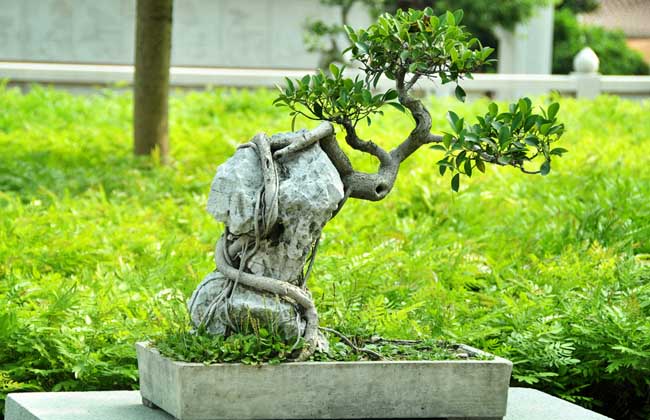
Ficus bonsai has been one of the choices for many flower enthusiasts growing green plants in recent years. Its simple, desolate yet rich style is truly appealing, simple and tasteful, with extremely high ornamental value. Among household plant bonsai, it is also relatively popular because of its evergreen characteristic. Let us take a look at the cultivation methods of Ficus below!
Ficus bonsai cultivation methods
1. Light: Ficus belongs to subtropical plants and likes a sunny, well-ventilated, warm and humid environment. It is drought-tolerant and tolerant of partial shade. Generally, it should be placed in a ventilated and light-transmitting place, with a certain amount of spatial humidity. Insufficient sunlight, poor ventilation, and no certain spatial humidity can cause the plant to turn yellow and dry out, leading to pests and diseases, and even death.
2. Watering: When Ficus is planted in a pot, if water is not added for a long time, the plant will wither due to lack of water. Therefore, it is necessary to observe in time and water according to the dryness and wetness of the soil to maintain soil moisture. Water until water seeps out from the drainage hole at the bottom of the pot, but do not give half-hearted watering (that is, wet on top and dry below). After watering once, wait until the soil surface turns pale and the surface soil is dry, then water a second time. Never wait until the potting soil is completely dry before watering. In hot seasons, frequently spray water on the leaf surface or the surrounding environment to lower the temperature and increase air humidity. Water less often in winter and spring, and more often in summer and autumn.
3. Fertilizing: Ficus does not like heavy fertilizer. Applying more than 10 granules of compound fertilizer each month is sufficient. When fertilizing, note to bury the fertilizer into the soil along the edge of the flower pot, and water immediately after fertilizing. The main components of the fertilizer are nitrogen, phosphorus, and potassium.
4. Pruning: For a wild stump to become a bonsai, pruning is a very important process. In the first year, first cultivate its root foundation and preserve its vitality, only removing buds that are not in the right position. Only after the branches grow thick and woody in the second year can pruning begin. Pruning should be the main method, with binding as a supplement. Pruning once a year is appropriate. For vigorous growth, pruning can be done twice. After the forked branches growing from the shortened branches become thick and strong, prune again. Repeat this process. If pruned properly and skillfully, within four years a good bonsai will appear in your hands.
Ficus bonsai leaves turning yellow
1. Water-yellow: Tender leaves are dark yellow and lack luster, old leaves show no obvious change, branches are thin and yellow-green, and new shoots shrink and do not grow, indicating excessive watering. Remove the plant from the pot and place it in a ventilated and cool place to let the soil ball dry naturally, then put it back into the pot.
2. Drought-yellow: Yellowing due to lack of water is different from yellowing due to too much water. Yellowing due to lack of water shows as leaf tips or edges becoming withered and dry, with old leaves turning yellow and falling from bottom to top, but new leaf growth is relatively normal. Just pay attention to watering enough and watering thoroughly.
3. Sunburn-yellow: Strong direct sunlight shining on some shade-loving flowers (such as spider plant, peacock arrowroot, hosta, etc.) easily causes the leaf tips and leaf edges to wither, and yellow spots appear on the sun-facing parts of the leaves. Move them to a shaded place.
4. Lack of light: If placed in a shaded environment for a long time, the leaves cannot receive enough sunlight and cannot form chlorophyll. The entire plant's leaves turn yellow and then fall off. Supplementing light can avoid this problem.
5. Fertilizer-yellow: Yellowing of flowers caused by excessive fertilizing or too high concentration shows as dry brown tips on new leaves. Generally, the leaf surface is thick and lacks luster, and is uneven and not smooth, while old leaves scorch, turn yellow, and fall off. Stop fertilizing immediately. In severe cases, use a large amount of clean water to rinse out part of the fertilizer.
6. Lack of fertilizer: Lack of fertilizer shows as tender leaves becoming lighter in color, yellow or light green, while old leaves are relatively normal or gradually turn from green to yellow. Check the potting soil. If there is hardening, replace the soil. Usually apply light fertilizer frequently and water with some alum water at the appropriate time.
Precautions for Ficus bonsai
1. Improper watering: When watering Ficus, be sure to adhere to the principle of not watering until dry, and watering thoroughly when watering. The dryness here refers to the surface of the potting soil being dry, not the potting soil being completely dry. Of course, even if it is completely dry, it will not cause great harm to Ficus in a short time, because Ficus leaves are thick and small and have a certain drought tolerance.
2. Improper fertilizing: Ficus fertilizing needs to be carried out with light fertilizer applied frequently. Avoid applying high-concentration chemical fertilizer or organic fertilizer that has not been fermented and decomposed, otherwise fertilizer damage will occur, with light cases causing leaf drop and severe cases causing death.
3. Insufficient light: Ficus grows well in an environment with sufficient light. In the high-temperature period in summer, if 30-50% shade can be provided, the leaf color will appear more emerald green, but when the temperature is below 32°C, it is best not to shade, so as to avoid leaf drop.
4. Caused by pests: The main pests causing Ficus leaf drop are red spider mites and scale insects. Although there is also harm from “thrips”, this pest only curls leaves and sucks sap, and its harmfulness is somewhat less than the above two. Moreover, thrips are also easy to control; simply remove and destroy the curled leaves. Red spider mites are relatively small, and the usual damage site is the back of the leaves. It is caused by poor ventilation and dry air. After rinsing the whole plant with plenty of water, spray miticides specifically for mites, such as Miejing, Kemite, etc. Scale insects mostly damage stems, leaf stalks, and other parts. They vary in size and color, and in shape may be round, oval, etc. They generally do not move, but they are quite harmful and need timely control. They can be brushed off with a toothbrush or wiped clean with a rag. They can also be controlled by spraying a 0.2% solution of laundry detergent or essential balm, or by spraying pesticides such as methidathion. The effects are all good.