Detailed tutorial on how to make a bonsai from a banyan tree, shared
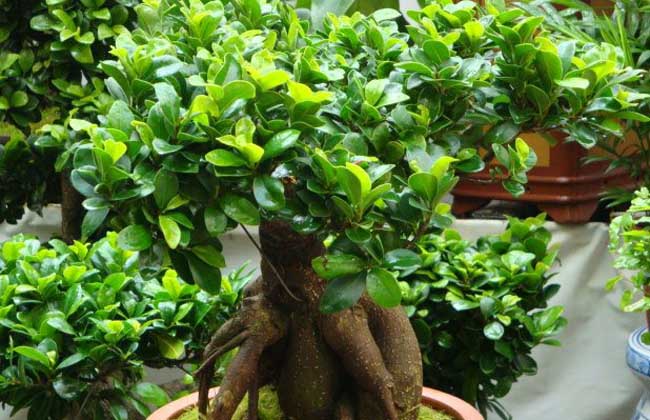
Banyan bonsai is famous for "a single tree forming a forest." During the production process, it needs long-term control of its growth and development through pruning, branch training, wiring and hanging, grafting and other methods to make it a unique artistic shape, with morphological characteristics such as the beauty of aerial roots, the beauty of creeping roots, the beauty of tuberous roots, the beauty of branches, the beauty of bark color, the beauty of leaves, and the beauty of fibrous roots. Let us take a look below at how to make a banyan bonsai!
Selection of tree stump
The simplest and most commonly used method for selecting a banyan bonsai tree stump is to select a natural wild stump. The collection time for wild stumps is from February to October each year, among which April to July is the most suitable. During this period, the climate is mild and the air is humid, the stump takes root and sprouts quickly, and the survival rate is high. After the wild stump is collected, it should be processed as soon as possible, and cut and selected according to the stump material and cultivation goal. The banyan tree has strong vitality and heals wounds quickly, so the stump can be cut to the final form in one step.
Soil for bonsai
The cultivation soil for banyan bonsai is generally required to be loose, breathable, and slightly acidic black stone powder mud, river sand, construction stone powder, coal cinder, etc., and these cultivation soils are relatively easy to obtain.
Water requirements
For banyan bonsai cultivation, it is enough to cover the roots with cultivation soil, and for planting the tree, a depth of about 3 cun is appropriate. After watering with settling water, place it in a cool and wind-sheltered place for care; for ground planting, use a cover for shade. Watering can be done according to weather conditions, keeping the cultivation soil moist but not waterlogged. Too much waterlogging easily causes the roots to turn black and necrotic. If a surviving banyan tree is waterlogged for a long time, it easily results in only roots growing and no branches or trunk growing. During the dog days of summer, if it is not watered for two or three days, the tree will not die, but once it is watered, the leaves will wither and fall off, affecting growth. Therefore, water management should follow "see dry, see wet."
Light requirements
Banyan bonsai should generally be placed in a ventilated and light-transmitting place, and there should be a certain amount of spatial humidity. If sunlight is insufficient, ventilation is poor, and there is no certain spatial humidity, the plant may turn yellow and dry, leading to the occurrence of pests and diseases, and even death.
Bonsai pruning
Pruning is a means of shaping a banyan tree. Through pruning, the purpose of making the banyan tree beautiful in form can be achieved. Pruning should be timely and suited to the tree. Banyan trees can generally be pruned in all four seasons. In actual maintenance and shaping, pruning is the main method and binding is auxiliary. Cutting once a year is appropriate; for those with vigorous growth, pruning can be done twice, and pruning should be done again after the forked branches growing from the shortened branches become thick and strong. The specific pruning methods for banyan trees include pinching, bud removal, leaf removal, short cutting, reduction pruning, and thinning pruning.
Fertilizing bonsai
The banyan tree is a tree species that likes heavy water and heavy fertilizer, and can tolerate both drought and moisture. After the tree stump enters normal care, use decomposed human and animal manure and urine or rotted cake fertilizer as topdressing, and apply foliar topdressing once or twice a day. When transplanting or changing pots, decomposed chicken manure, bean cake, and bone meal can also be mixed into the cultivation soil as base fertilizer. Sufficient fertilizer will make the branches and trunk grow quickly and thicken quickly, allow more pruning times per year, and achieve the purpose of shortening the cultivation period.