Key points for pest and disease prevention and control in winter jasmine: detect early, treat early
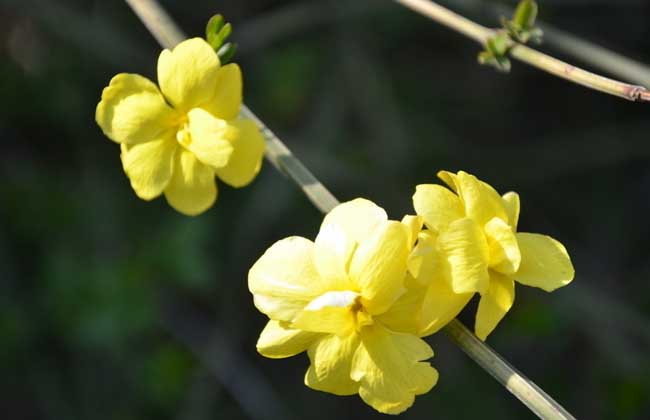
Winter jasmine (Jasminum nudiflorum) is a deciduous shrub in the genus Jasminum of the family Oleaceae. It likes light, tolerates slight shade, is slightly cold-tolerant, and fears waterlogging. It requires a warm and humid climate and loose, fertile, well-drained sandy soil. It grows vigorously in acidic soil and grows poorly in alkaline soil. Its roots have strong sprouting ability, and the parts of branches that touch the ground root very easily. Now let us take a look at the pest and disease prevention and control techniques for winter jasmine!
Mosaic disease
[Symptoms] Mosaic disease is a whole-plant disease caused by cucumber mosaic virus (CMV). The symptoms are smaller and deformed leaves, distributed with dark green markings or yellowing. Infected plants do not bloom, or if they do bloom, the flowers are also short, small, deformed, and marked. The main transmission route is virus transmission by green peach aphids and cotton aphids, and the main source of infection is infected weeds nearby.
[Control] First, remove weeds promptly to reduce the source of infection. Second, aphids should be controlled early to eliminate the virus-transmitting vector.
Brown spot disease
[Symptoms] Brown spot disease mostly occurs on Primula obconica and is caused by Alternaria fungi in the Deuteromycotina. Infected plants have brown spots on the leaves. The transmission route is conidia spread by wind and rain.
[Control] At the early stage of the disease, spray fungicides such as 70% chlorothalonil wettable powder at 1000 times dilution.
Gray mold
[Symptoms] Gray mold is one of the common diseases of winter jasmine and occurs throughout the country. After the plant is infected, the whole plant turns yellow and dies. This disease mainly infects leaves, young stems, flower organs, and other parts, mostly at leaf tips and leaf margins. At the early stage of the disease, water-soaked spots appear on the leaves, then gradually expand, turn brown, and rot. Later, a gray-yellow mold layer forms on the surface of the lesions. After the stem is infected, the lesions are brown and gradually rot. After the flower organs are infected, they also turn brown, rot, and fall off. Under humid conditions, a gray mold layer appears on the diseased parts, which is a major feature of this disease.
[Control] Planting density should be reasonable. Pay attention to ventilation and reduce air humidity. Remove diseased leaves and diseased plants promptly to reduce the source of infection. At the early stage of the disease, spray 50% procymidone or 50% iprodione wettable powder at 1500 times dilution. It is best to alternate with 65% dimethachlon wettable powder at 500 times dilution to prevent the development of fungicide resistance.
Leaf spot disease
[Symptoms] Leaf spot disease mainly harms plant leaves. The disease spreads from the lower part of the plant to the upper part. The lesions are usually 3 to 4 mm in diameter and brown. In severe cases, diseased leaves wither and die, causing defoliation. It is caused by Pleospora primulae. The pathogen overwinters on diseased residues as mycelium or conidiomata, and seeds can also carry the pathogen, becoming the primary infection source for the following year. It mainly spreads by conidia with air and rainwater, and reinfection is frequent during the growing season. Plants are usually susceptible to the disease in warm and humid weather and when nitrogen fertilizer is applied excessively. It generally begins in July and becomes epidemic from August to October.
[Control] Breed disease-resistant varieties, strengthen fertilizer and water management, apply more organic fertilizer and phosphorus and potassium fertilizer, and avoid excessive application of nitrogen fertilizer. At the early stage of the disease, spray 70% thiophanate-methyl at 1000 times dilution plus 75% chlorothalonil wettable powder at 1000 times dilution, or 1:1:100 Bordeaux mixture.
Leaf spot disease
[Symptoms] Leaf spot disease mostly occurs on leaves and receptacles. At first, water-soaked irregular lesions appear along the leaf veins, then yellowing and browning occur, the lesions expand, the leaf margins dry up, and in severe cases the lower leaves wither and die.
[Control] Strengthen cultivation management, cultivate disease-free seedlings, disinfect seedbed soil, and ventilate greenhouses promptly to reduce air humidity. Remove diseased plant residues promptly. After the disease occurs, spray 50% copper bis(dihydrogen phosphate) wettable powder at 500 times dilution, or 72% agricultural streptomycin wettable powder at 4000 times dilution.