How to propagate winter jasmine? A detailed introduction to common propagation methods
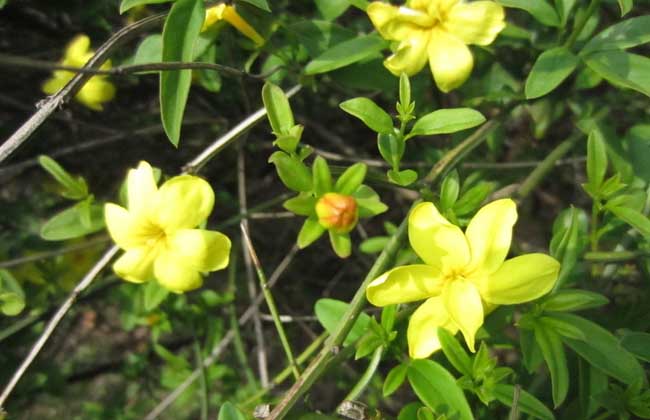
Winter jasmine (Jasminum nudiflorum) is cultivated in all parts of China. Because of its strong adaptability to soil, drought tolerance, lively and beautiful plant form, and growth habit of tolerating pruning, it is widely used as greening material for garden lawns, courtyard ornamentals, and soil and water conservation. Propagation is mainly by cuttings, and layering and division can also be used. Let's take a look at the propagation methods of winter jasmine together below!
Cutting propagation
It can be done in spring, summer, and autumn. Cut semi-lignified branches 12-15 cm long, insert them into sandy soil, keep moist, and they will root in about 15 days.
Layering propagation
Bury longer branches shallowly in sandy soil without wounding. They will root after 40-50 days, and in the following spring they can be separated from the mother plant and transplanted.
Division propagation
It can be done in spring when the buds begin to swell. When transplanting in spring, cut off part of the aboveground branches and stems, and keep the original soil around the roots. Dry planting can also be used, that is, insert cuttings in a prepared seedbed and then water thoroughly. Cuttings can be taken from mid-October to mid-November or in spring.
Water propagation
1. Time: It can be done all year round. In winter, the container for water propagation can be placed indoors in a sunny spot. In summer, pay attention to shading to prevent direct sunlight. During water propagation, the water temperature should be kept at 15-20°C. Cuttings root quickly and the survival rate is high.
2. Cuttings: Select branches of the current year that are robust, plump, and have full buds. The length of the cuttings is generally 8-12 cm, and 2-4 nodes can be retained. Cut flat at about 2 mm below the lowest node. Tie every 10 cuttings into a bundle. If there are too many leaves on the upper half of the cuttings, they can be appropriately removed to help rooting.
3. Container: Use a basin with a larger diameter, or a shallow wide-mouth bottle, or containers such as a glass jar or porcelain jar, and wash them clean before use.
4. Method: Fill the container with clean rainwater, river water, or tap water to a depth of 8/10 cm, then place the tied cuttings in the water in rows, with the submerged depth at 4-6 cm. Then place the container outdoors in a ventilated, semi-shaded place. The water quality must be kept fresh and clean, and the water can be changed once every 3-5 days. Generally, after about 20 days, tumor-like callus tissue can grow, and after about 35-40 days, fibrous roots can grow.
5. Cultivation: When the fibrous roots grow to 3-5 cm, they must be planted in time. Be careful during operation not to damage the root system. Generally, after planting, provide shade treatment for about 10 days, and then normal management can be carried out.