Detailed Guide to the Growth Habits of Winter Jasmine: Sun-Loving, Cold-Tolerant and Easy to Care For
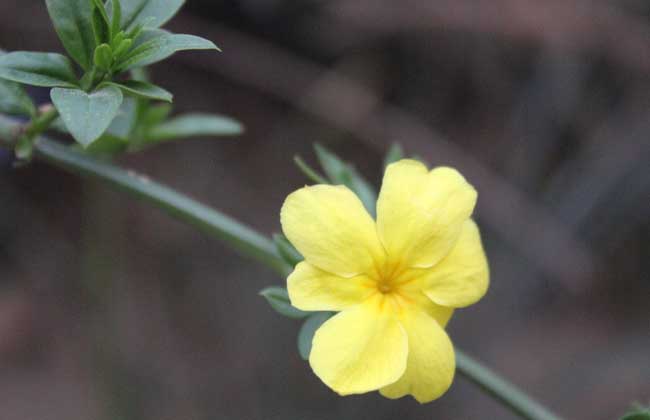
Winter jasmine, together with plum blossom, narcissus and camellia, is collectively known as the “Four Friends in the Snow” and is one of the common flowers in China. It has always been loved by people for its dignified and beautiful flowers and extraordinary temperament, and it is characterized by fearlessness of cold, indifference to soil and climate, and strong adaptability. It has long been cherished by people. Now let us take a look at the growth habits of winter jasmine!
The Growth Habits of Winter Jasmine
Winter jasmine loves light, tolerates slight shade, is slightly cold-tolerant and fears waterlogging. In North China and Yanling it can overwinter outdoors. It requires a warm and humid climate and loose, fertile, well-drained sandy soil. It grows vigorously in acidic soil and poorly in alkaline soil. Its roots have strong sprouting ability, and the parts of the branches that touch the ground root very easily.
Propagation Methods of Winter Jasmine
1. Cuttings: Can be done in spring, summer and autumn. Cut semi-lignified branches 12-15 cm long, insert them into sandy soil, keep moist, and they will root in about 15 days.
2. Layering: Bury longer branches shallowly in sandy soil without wounding them; they will root after 40-50 days, and can be separated from the mother plant and transplanted in the spring of the following year.
3. Division: Can be done in spring when the buds begin to sprout. When transplanting in spring, cut off part of the above-ground branches and keep some of the original soil. Dry planting can also be used, that is, insert cuttings in a prepared seedbed and then water thoroughly. Cuttings can be taken from mid-October to mid-November or in spring.
Variety Classification of Winter Jasmine
1. Red Jasmine: Red jasmine, also called red-flowered jasmine, is a climbing shrub with four-angled, striped young branches. Leaves are simple, alternate, ovate-lanceolate, with acuminate tips. Cymes are terminal with 3 flowers; the corolla is red to rose-red and fragrant. Flowers and leaves appear together, and the flowering period is in May. It is produced in Sichuan, Yunnan, Guizhou and other provinces.
2. Jasmine: Jasmine, also called large-flowered jasmine, is an erect shrub with drooping, angular branches. Leaves are opposite, pinnately compound, with 5-7 leaflets that are elliptical or ovate with acuminate tips. Flowers are solitary or several in terminal cymes, white and fragrant. The flowering period is from June to July. It is produced in Yunnan and Guangxi. It is also distributed in Vietnam, Myanmar, Sri Lanka and India.
3. Tanchun Flower: Tanchun flower, also called Yingxia, is a semi-evergreen shrub with spreading, arching and drooping branches. Odd-pinnate compound leaves are alternate, with 3-5 ovate or elliptical leaflets. Flowers are yellow, in terminal many-flowered cymes. Berries are elliptical-ovate and green-brown. The flowering period is in May, and the fruiting period is in December. It is native to central and northern China.
4. Yellow Jasmine: Yellow jasmine, also called Yunnan winter jasmine, is an evergreen vine-like shrub with hairless, square branchlets with shallow angles. Leaves are opposite, with 3 leaflets that are long-elliptical-lanceolate; the terminal one is larger and narrows at the base into a short stalk, while the two lateral ones are small and stalkless. Flowers are solitary, pale yellow with dark spots; the petals are longer than the flower tube, often nearly double, and fragrant. The flowering period is from March to April. It is native to Yunnan and is now cultivated in various places.
5. Common Jasmine: Common jasmine is a semi-evergreen shrub with slender, angular branchlets. Leaves are opposite, pinnately compound, with 5-9 ovate or lanceolate leaflets with sharp tips. Cymes are terminal with several white, fragrant flowers. The flowering period is from June to July. It is produced in Sichuan, Yunnan and Tibet.