What are the hydroponic cultivation methods for the Radermachera sinica (China doll tree)?
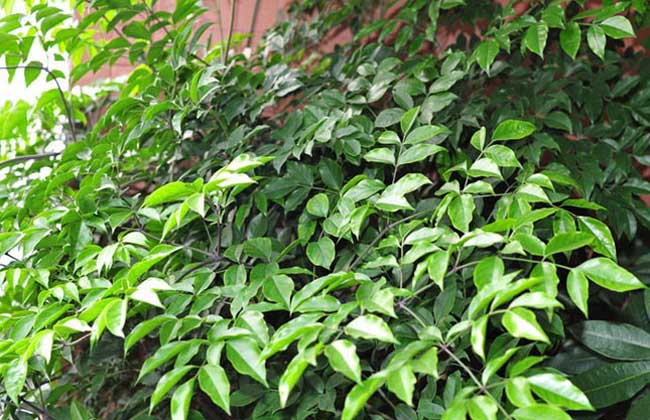
Radermachera sinica is a common ornamental plant, and everyone must be especially curious about whether it can be grown hydroponically. In fact, theoretically all plants can be grown hydroponically, because the nutrients plants need are all nutrients dissolved in water. As long as the nutrient solution for Radermachera sinica is properly prepared, it is fine. Below, let us take a look at the hydroponic methods for Radermachera sinica!
Hydroponic methods for the Radermachera sinica
1. Hydroponic cultivation: To grow Radermachera sinica hydroponically, you must first choose a healthy plant free of disease. Then remove the soil from the roots, wash them clean with clear water, washing several times, trying not to damage the roots. Before this, you can use drugs such as carbendazim to sterilize once, which makes root rot less likely. Pass its roots through the plastic seedling-holding grid attached to the hydroponic glass container. If it is too small, the grid can be cut larger. Fill the container with clear water to two-thirds of its volume, and immerse one-third of the roots in the water.
2. Change the water in time: For hydroponic cultivation of Radermachera sinica, you must pay attention to changing the water once a week until enough new roots grow. Wash the container clean, replace with a specially prepared nutrient solution, also filling two-thirds of the volume, with the other operations the same as above, and regularly renew the nutrient solution.
Reasons for Radermachera sinica losing leaves
1. Water reason: One of the most common reasons in daily life is the amount of watering. We know that Radermachera sinica is a plant that rather likes water, but too much or too little can cause it to lose leaves. If you are rather lazy and always only remember to water once a week, at this time the soil is too dry and the roots are fragile. If you suddenly water too much, the roots will be damaged, hindering leaf growth and causing them to drop. But usually do not water too much either, to avoid root rot.
2. Light reason: All plants need light to ensure growth. If you place Radermachera sinica in a dark place for a long time, it will make it unhappy. Especially in winter, you should often take it out to get some sun. Of course, in the hot summer, it must not always be in the sun, to prevent the leaves from being scorched.
3. Temperature reason: Radermachera sinica likes a warm and mildly hot environment, and the suitable growth temperature is 20°C to 30°C. In the hot summer, everyone needs to pay attention to moisture retention, provide appropriate shading, and increase humidity in the environment and by spraying water on the leaves. In the north, everyone should pay attention to temperature and place Radermachera sinica in a room with a suitable temperature.
4. Fertilizer reason: For potted Radermachera sinica, in addition to requiring an appropriate amount of decomposed cake fertilizer and 3% multi-element compound fertilizer in the culture soil, topdressing should also be given continuously. During the growing season, a quick-acting liquid fertilizer can be applied once a month, and usually decomposed cake fertilizer water can be used. For a small number of potted plants at home, or for large potted plants displayed in public places for a long time, a small amount of multi-element slow-release compound fertilizer granules can be buried and applied regularly, and a mixed solution of 0.2% urea plus 0.1% potassium dihydrogen phosphate can also be used for watering.
Cultivation methods for Radermachera sinica
1. Temperature: Radermachera sinica likes a warm and humid environment, and temperature is the most important. The daytime temperature should be controlled between 19°C-21°C, and the nighttime temperature should be controlled between 18°C-20°C. This is the most suitable growth temperature. Too high or too low will affect its growth. In the hot midsummer, the temperature should be kept below 27°C as much as possible. When the ambient temperature is very high, appropriate shade should be provided with a shed. Increase environmental humidity, thereby increasing leaf surface humidity. In winter, the temperature must not be lower than 8 degrees, and the humidity must not be less than 5 degrees; otherwise, below this temperature it will be frostbitten.
2. Humidity: Radermachera sinica rather likes moisture in both its soil environment and indoor environment requirements. Indoor humidity should be controlled between 70-80%. In large banquet halls where humidity cannot be controlled, we spray the leaf surfaces once in the morning and once in the evening. If the humidity is too low or it is in a dry environment for a long time, the leaves will curl and turn yellow, affecting ornamental value.
3. Light: Radermachera sinica is a plant that likes sunlight and is also shade-tolerant. Light is very important. Radermachera sinica likes to grow in a semi-shaded environment. In the north, under normal circumstances we all grow it indoors, so there is no problem of direct sunlight. What it fears is being placed in a dark place for a long time, where neither direct light nor scattered light can reach. After a long time, it will certainly lose leaves. So in winter it should be placed on a balcony or in front of a window with sufficient sunlight to get enough light.
4. Watering: In summer, potted Radermachera sinica should be watered once every 3 to 4 days, but this also depends on the individual situation. In winter, indoors in the north, Radermachera sinica almost stops growing, and watering should be controlled so that the pot soil is just not dry. If you water, water it thoroughly; if you do not water, then you cannot pour a single drop of water into the pot. This is the principle, please everyone remember it.
5. Pruning: The purpose of growing Radermachera sinica is for ornament and to complement the indoor environment. If the tree shape does not look decent, then it is not beautiful, so it should be pruned carefully. Generally it is pruned into a mushroom shape or a round mound shape. Cut off some old leaves and yellow leaves.
6. Soil: When Radermachera sinica is growing, soil is equally important. Choose a soil quality that is loose, breathable, well-draining, and nutritious. Usually it is prepared with garden soil : leaf mold : decomposed organic fertilizer : river sand = 5:3:1:1. Persist in loosening the soil once a month during the growing season to ensure that its root area is always in a well-aerated state. If water accumulates in the pot, drain it as soon as possible, and after drying the pot soil, repot and change the soil to maintain better growth of Radermachera sinica.
7. Fertilizing: During the growing period, fertilize Radermachera sinica diligently to ensure vigorous growth. Compound fertilizer or nitrogen-phosphorus-potassium 20:10:10 or farmyard manure, etc. In winter, fertilizing can be stopped.
8. Pest and disease prevention: To deal with pests on Radermachera sinica, there are generally scale insects, mites, and aphids. Use jiebisiding, methidathion, manjing, pyridaben, phoxim, omethoate, and decis to kill the insects. As long as there is frequent ventilation and air exchange, generally pests will not occur. The disease resistance of Radermachera sinica is still quite strong. If the pest problem is not severe, you may remove them by hand.