What to Do When the Radermachera (Happy Tree) Drops Its Leaves? Causes and Solutions
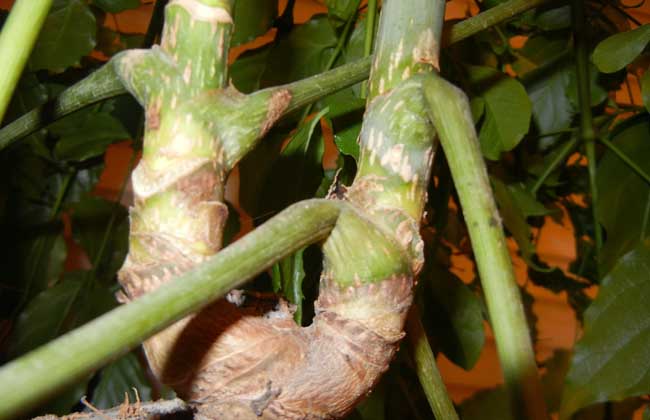
The Radermachera sinica (Happy Tree) is a green plant widely grown indoors in pots. Its emerald color and beautiful leaves make it very popular, but sometimes, if we care for it improperly, we find it dropping its leaves, and in severe cases the leaves basically all fall off leaving only a dry, bare trunk. Let's take a look below at what to do when the Happy Tree drops its leaves!
Temperature Causes
The Happy Tree likes warm, hot environments, with an optimum growing temperature of 20°C to 30°C. During the intense heat of midsummer, when the ambient temperature reaches above 30°C, it should be given appropriate shade with a canopy, with increased spraying of water on the environment and leaf surfaces, or moved to a ventilated, cool spot with dappled shade to spend the summer. When late autumn arrives and the ambient temperature drops to around 10°C, it should be moved promptly into a shed or indoors.
Light Causes
The Happy Tree is a light-loving plant that also tolerates shade somewhat; full sun and semi-shade environments are both acceptable. Its seedlings are relatively shade-tolerant, and in summer a canopy should be set up for shading. For potted plants, during indoor display they should be placed by a window with ample light or indoors. If they are left for a long time in a dim indoor spot, leaf drop is easily caused. For home potted plants, during the winter they can be placed near a window or in a higher position in front of a balcony so they receive as much light as possible.
Water Causes
During cultivation, the soil and the display environment should be kept relatively moist. During the seedling-raising period, the seedbed must be kept moist; in the hot season, sufficient water must be supplied, and in the hot season the plant should be sprayed with water 2 to 3 times a day. For plants kept outdoors for care in summer and autumn. For plants kept indoors in winter, the plant enters a dormant state, so it must not be watered too much, to avoid root rot.
Soil Causes
For potted Happy Trees, a loose, fertile culture soil that drains and breathes well and is rich in organic matter should be used, usually mixed as garden soil : leaf mold : decomposed organic fertilizer : river sand = 5:3:1:1. During the growing season, loosen the soil once a month to ensure the root area is always in a well-aerated state. Generally, for small and medium-sized plants grown as home potted plants, repotting can be done once a year in early April when they are brought out, to meet their soil fertility needs for a full year of growth.
Fertilizer Causes
For potted Happy Trees, in addition to adding an appropriate amount of decomposed cake fertilizer and 3% multi-element compound fertilizer to the culture soil, topdressing should also be given continuously. During the growing season, a quick-acting liquid fertilizer can be applied once a month, usually decomposed cake fertilizer water. For a small number of home potted plants, or for large potted plants displayed for long periods in public places, a small amount of multi-element slow-release compound fertilizer granules can be buried periodically, or a mixed solution of 0.2% urea plus 0.1% monopotassium phosphate can be used for watering.