How to Propagate Canna Lilies? A Detailed Guide to Common Propagation Methods
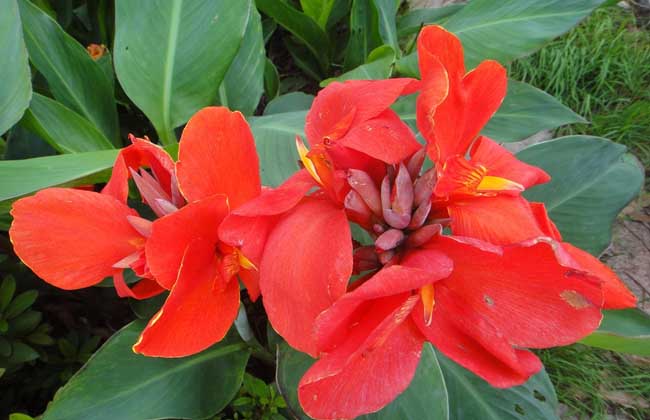
Canna lilies are perennial herbaceous plants with fleshy roots, native to tropical regions such as tropical America, India, and the Malay Peninsula. They have large, brightly colored flowers in rich hues, a good plant form, and are easy to cultivate. They help purify the air and protect the environment, making them ideal flowers for greening, beautifying, and purifying the environment. They are usually propagated by sowing seeds or dividing rhizomes. Let's take a look at the propagation methods for canna lilies below!
Seed Propagation
Before sowing canna lily seeds, first file the hard seed coat with a file, then soak them in water at 25°C for 24 hours, and then sow them in individual spots in plain sandy soil. The soil covering should not be too thick, ideally 1-2 times the diameter of the seed. After sowing, keep the soil moist at a temperature of around 20°C. They will sprout after 1 week. When the seedlings reach 5 cm in height, they can be transplanted separately.
Rhizome Propagation
Rhizome propagation of canna lilies is usually done in early March each year. Cut the rhizomes stored from the previous year into pieces, remove any rotten parts, and make sure each piece has two or three buds. Then plant them directly in flower pots or bury them in plain sand. Be careful to keep the soil moist and maintain a temperature between 10-15°C. After about 20 days, when the shoots are 4-5 cm long, they can be divided into separate pots.
Division Propagation
Division propagation of canna lilies is generally done in June-July on rainy days or in the evening. For plants or clumps with a spacing of more than 4-5 cm that have not yet produced flower spikes, use a sharp tool to cut vertically downward between the plants, quickly dividing the plants or clumps. Be careful to keep plenty of original soil and not damage the branches and leaves. Then plant them directly into the planting holes and water thoroughly immediately after planting. If the environment is relatively dry, provide appropriate shade to increase humidity. After about 10 days of care, the new plants can develop into complete plants.