How to Grow Aquatic Canna? A Detailed Guide to Cultivation Methods
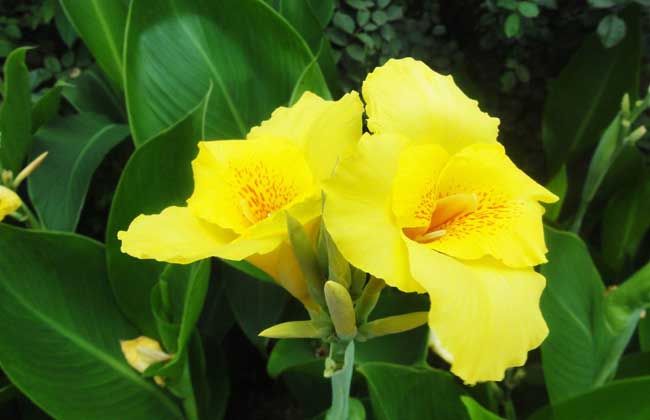
Aquatic Canna, also known as Florida Canna, is a large perennial herbaceous plant native to South America. It is a famous ornamental flower and has been introduced and planted in many parts of the world. It produces yellow flowers resembling those of daffodils. Its peak blooming period is in spring, but it can continue to bloom sporadically into summer. The plant grows about 1.2 m tall. Let's take a look at the cultivation methods for Aquatic Canna!
Market Prices of Aquatic Canna
The cultivation methods for Aquatic Canna are particularly simple, and market prices are very affordable. Small plants cost 0.75 yuan per plant, while larger ones cost 1.6 yuan per plant. The specific price still depends on the local market, and the variety will also affect its price.
Growth Habits of Aquatic Canna
Aquatic Canna is robust by nature with strong adaptability. It prefers light and fears strong winds. It is suitable for growing in moist and shallow water areas. It grows well in both fertile soil and sandy soil. The suitable growth temperature is 15-28°C; below 10°C is unfavorable for growth. In its place of origin, it has no dormant period and grows and blooms year-round. In cold northern regions, it goes dormant in winter, and the rhizomes need greenhouse protection to overwinter.
Propagation Methods for Aquatic Canna
1. Seed propagation: Sowing is done indoors in March-April. Before sowing, the seed coat needs to be filed open with a steel file, soaked in warm water for 1 day, then the seeds are removed, drained of water, and sown.
2. Rhizome division: Rhizome division propagation usually involves taking out the rhizomes from the soil in March-April, removing debris, and dividing them with a shovel or sharp knife. Each rhizome should have 2-3 robust buds and serve as propagation material.
Cultivation Methods for Aquatic Canna
1. Substrate: When planting Aquatic Canna outdoors, appropriate fertilization should be applied. For household indoor planting, relevant nutrient solutions can be purchased.
2. Temperature: The suitable growth temperature for Aquatic Canna is 15-28°C; below 10°C is unfavorable for growth. When planted in open ground in the south, it can overwinter outdoors. In northern regions where winters are cold, the aboveground stems and leaves should be cleared before late October each year, the rhizomes dug out, briefly dried, and stored in a cellar or greenhouse piled with sandy soil, with the temperature kept at 5-7°C. In warm regions, after 2-3 years, the rhizomes need to be dug out and replanted in the same location after division.
3. Light: Aquatic Canna prefers light and should be grown in a place with ample sunlight.
4. Watering: Aquatic Canna is tolerant of flooding and can grow normally in water 20 cm deep. For open-ground planting, choose moist areas by pond edges or shallow water, dig holes and plant in clumps, bury the rhizomes in the soil, cover with 7-10 cm of soil, and maintain moisture or shallow water after planting.
5. Fertilization: When Aquatic Canna grows to 4-5 leaves, it is a sign that flower spikes are about to emerge. At this point, begin topdressing with potassium dihydrogen phosphate 2-3 times, or spray on the leaves, at a concentration of 0.3%-0.5%.
6. Pests and diseases: Aquatic Canna has strong resistance and no major pest or disease problems. However, attention should be paid to keeping the water clean, promptly removing duckweed, and clearing weeds. In southern regions, attention should also be paid to snail damage. The control method is to mix trichlorfon with sawdust, put it into a cloth bag, then tie the bag to the pseudostem so that the bag floats on the water surface and moves with the water. After the liquid medicine diffuses, snail damage can be controlled.